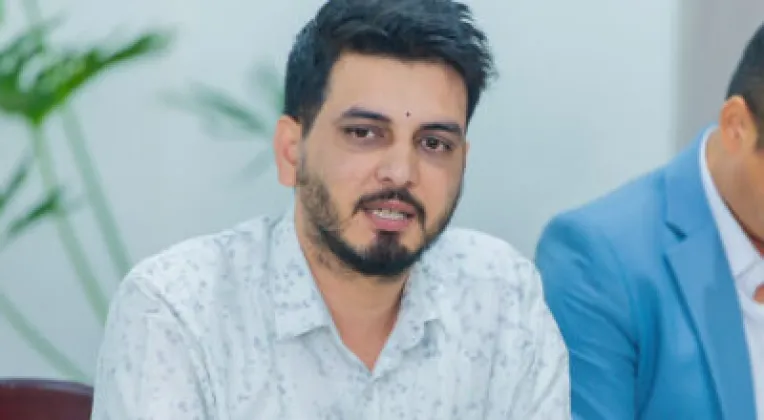
Minister for Infrastructure Development Sunil Lamsal has said that infrastructure development is the top priority in Rupandehi, announcing that the necessary budget will be allocated for road expansion, rural road construction, the establishment of hospitals and the upgrading of health posts and schools across the district. Lamsal made the remarks during a recent inspection visit to Rupandehi, one of the key districts of Lumbini Province, where he laid out a development agenda built around roads, healthcare and education. According to the minister, road construction, healthcare facilities and educational infrastructure will be prioritized to accelerate development in the region. His comments were reported by My Republica and Khabarhub.
Connectivity First: Roads at the Centre of the Agenda
During the inspection, Lamsal made it clear that roads form the backbone of the development push he envisages for the district. He said the government will arrange the necessary budget for the expansion of the existing road network as well as for the construction of rural roads, two streams of work that together determine how easily people, goods and services move within Rupandehi and beyond it.
The minister presented road construction not as an isolated project but as a driver of broader regional development. The logic is straightforward: connectivity shapes access to nearly everything else, from markets and employment to hospitals and schools, and it is often on the condition of local roads that communities first feel the presence, or the absence, of public investment. By placing both road expansion and rural road construction at the top of his list, Lamsal signalled that the ministry intends to work on the larger corridors that bind the district together as well as the smaller routes on which village households depend for their daily movement.
The pledge carries particular weight in a district like Rupandehi, where the pace of development is frequently judged by the state of its road network. For rural settlements that remain difficult to reach, the promise of new rural roads speaks directly to long-standing demands to be brought into the development mainstream, while for the district's growing urban and commercial centres, road expansion is central to keeping pace with increasing movement of people and goods.
Health and Education: The Social Side of Infrastructure
Alongside transport, Lamsal placed health and education firmly within the priority framework. He said budget will also be allocated for the establishment of hospitals and for the upgrading of health posts and schools, making clear that the ministry's approach pairs physical connectivity with investment in essential services.
The combination matters. Roads alone do not treat patients or educate children, and the value of improved connectivity is realized in full when people can reach functioning hospitals, health posts and schools at the end of those roads. By committing to the establishment of hospitals alongside the upgrading of grassroots health facilities and educational institutions, the minister indicated that development in the region is to be measured in access to services as much as in kilometres of road built.
Lamsal's framing of the three sectors, road construction, healthcare facilities and educational infrastructure, as a single set of priorities suggests a coordinated agenda rather than piecemeal intervention. According to the minister, it is this combination that will be pursued with the aim of accelerating development across Rupandehi.
Budget Assurance: From Announcement to Allocation
A recurring theme in Lamsal's remarks was the assurance of funding. He stated that the necessary budget will be allocated for the works he identified, a commitment intended to signal that the priorities announced during the inspection will be backed by resources rather than remain statements of intent.
What the Pledge Covers
The minister's budget assurance spans four broad areas:
- Road expansion, to strengthen the district's existing transport network
- Rural road construction, to connect settlements that lie outside the main network
- Hospital establishment, to expand access to healthcare services
- Upgrading of health posts and schools, to improve the quality of frontline health and education services
Budget commitments occupy a sensitive place in infrastructure planning, where announcements frequently outpace execution and where the real test of a pledge lies in allocation and spending. By tying each of his stated priorities to funding, Lamsal has effectively set a benchmark against which the ministry's performance in Rupandehi can be measured in the period ahead.
The Road Ahead for Rupandehi
Ministerial inspections of this kind typically raise expectations among local residents, and Lamsal's visit to Rupandehi will now be judged by what follows. The priorities he announced, covering expanded roads, new rural routes, hospitals and upgraded health posts and schools, form a framework through which the government says it intends to accelerate development in the region. Turning that framework into visible progress will require budgets to be released on schedule and projects to be executed on the ground.
For now, the message from the minister is one of clarity of intent. Infrastructure development, Lamsal said, is the top priority, and the sectors he identified are the channels through which that priority will be pursued. As budget allocations and project selection move forward, attention in Rupandehi will focus on whether the commitments made during the inspection translate into construction activity, upgraded classrooms and better-equipped health facilities across the district.