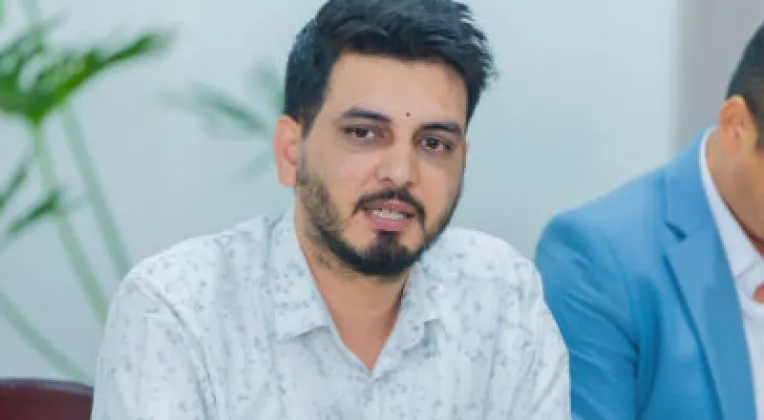
Minister for Infrastructure Development Sunil Lamsal has declared that infrastructure development is the top priority of his ministry, announcing during an inspection visit to Rupandehi district that the necessary budget will be allocated for road expansion, rural road construction, the establishment of a hospital, and the upgrading of health posts and schools. Speaking during the visit, as reported by Khabarhub and My Republica, Lamsal said road construction, healthcare facilities and educational infrastructure will be prioritized to accelerate development in the region.
Road Connectivity at the Center of the Agenda
The minister's remarks placed roads first among the district's needs. According to Lamsal, the budget process will support two parallel tracks: the expansion of the existing road network and the construction of rural roads that link smaller settlements to the wider grid. The stated goal is to accelerate development, with the minister framing road construction as a precondition for progress rather than a standalone project.
In many of Nepal's districts, rural roads remain the single most decisive piece of public infrastructure. They determine how quickly farm produce reaches markets, how easily students get to schools, and how soon patients can be taken to health facilities. That is why announcements about rural road construction tend to carry weight far beyond the transport sector itself. When a minister responsible for infrastructure signals that roads will be funded as a priority, the expectation in a district like Rupandehi is that connectivity gains will ripple into agriculture, trade and daily life.
Lamsal's road-related commitments can be summarized as follows:
- Expansion of the existing road network across the district
- Construction of new rural roads to connect outlying settlements
- Dedicated budget allocation to keep these projects moving forward
Health and Education Infrastructure in the Same Frame
What distinguishes the minister's announcement is that roads are only part of the package. Lamsal said the necessary budget will also be allocated for the establishment of a hospital and for the upgrading of health posts and schools, signaling that the ministry's definition of infrastructure extends beyond transport into social service delivery.
The upgrading of health posts matters most at the primary care level, where communities first interact with the health system. Improved buildings and better facilities at these posts can reduce the distance people must travel for basic treatment. Similarly, the upgrading of schools addresses the physical conditions in which children learn, a factor long associated with attendance and learning outcomes. By grouping a hospital, health posts and schools together with road construction in a single priority list, the minister has effectively presented a district-level development package in which connectivity and services reinforce one another.
Why Rupandehi Carries Weight
Rupandehi, a district in Lumbini Province in southern Nepal, is among the country's most consequential regions for both economy and identity. It is home to Lumbini, the birthplace of Gautama Buddha and one of the world's most visited pilgrimage and heritage sites, as well as Butwal, one of the province's principal commercial hubs. The district lies near the border with India, and its urban centers have grown rapidly in recent decades.
That growth is precisely why infrastructure announcements in Rupandehi attract attention. Pressure on roads, health facilities and schools rises quickly where populations and traffic are expanding. The minister's decision to conduct an inspection visit there, and to publicly list the district's priorities, indicates that the region's development needs are being viewed through the lens of infrastructure first. For residents, the measure of the visit will be whether the promised budget allocations materialize in the roads, facilities and schools they use every day.
From Announcement to Budget
As with any ministerial commitment, the test now lies in implementation. Lamsal's statement that the "necessary budget will be allocated" sets a clear expectation, but allocations must still be translated into planning documents, procurement and contracts before residents see results on the ground. Road projects in particular require sustained funding across multiple fiscal years, while health and education infrastructure depends on coordination with local governments, which are responsible for operating many of the facilities once they are upgraded.
None of this diminishes the significance of the announcement. A minister openly naming road expansion, rural road construction, a new hospital, and the upgrading of health posts and schools as priorities gives district stakeholders a clear benchmark against which to judge future budget papers and work plans. If the allocations follow at the scale implied, Rupandehi could see a coordinated push across transport, health and education infrastructure. If they do not, the visit will be remembered for its language rather than its results.
For now, the message from the ministry is unambiguous: infrastructure development comes first in Rupandehi, and the budget, the minister says, will follow the priority.