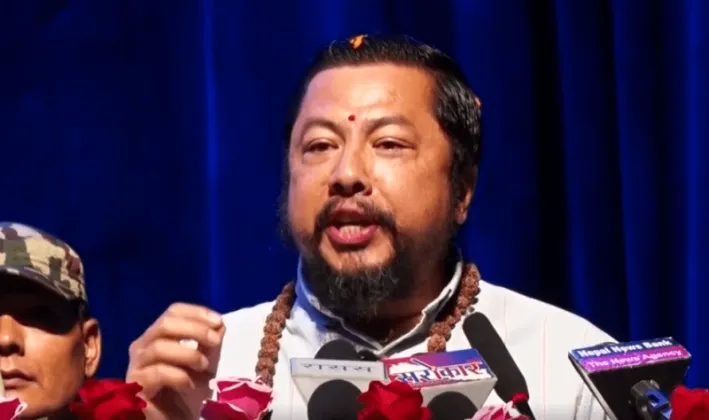
Energy, Water Resources and Irrigation Minister Birajbhakta Shrestha on Wednesday called for renewable energy to be linked with private investment, new technology and local entrepreneurship, speaking at the 30th anniversary ceremony of the Alternative Energy Promotion Centre (AEPC) in Kathmandu. He said renewable energy should not remain limited to subsidy-based programmes, but should help build an energy-based economy. Shrestha also said large hydropower projects should move forward alongside solar energy and small-scale initiatives.
A broader role for renewable energy
Shrestha’s remarks framed renewable energy as more than a matter of providing subsidies for individual programmes. He called for investment, technology and entrepreneurship to be brought into the sector, describing those connections as necessary to develop an economy based on energy. His message places private participation and local initiative alongside public support as elements of renewable energy development.
The minister’s emphasis on private investment points to a shift in how renewable energy programmes are considered: not only as activities supported through subsidies, but also as opportunities connected to investment and enterprise. The remarks did not set out a specific financing model or name particular projects. Instead, Shrestha presented the wider direction he believes is needed to strengthen the relationship between energy development and economic activity.
Local entrepreneurship was another key part of his appeal. By including local enterprise alongside private investment and new technology, Shrestha highlighted the role that businesses and initiatives within communities could play in the sector. He did not identify particular entrepreneurs or explain how such participation would be organised, but his remarks underscored that renewable energy development should involve more than subsidy programmes alone.
Hydropower, solar and small-scale initiatives
Shrestha also called for a mix of energy development approaches. He said large hydropower projects should be pursued together with solar energy and small-scale initiatives, rather than treated as competing priorities. The combination he described brings large projects into the same development picture as solar and smaller efforts.
That approach was central to his message at the anniversary event: an energy-based economy would require attention to different forms and scales of energy development. His comments did not specify how investment or support should be divided among hydropower, solar energy and smaller initiatives. They did, however, make clear that he wants these areas considered alongside one another.
The minister’s call therefore joined two themes: broadening the economic role of renewable energy and maintaining a varied approach to energy projects. Private investment, new technology and local entrepreneurship were presented as links that could help move renewable energy beyond subsidy-based programming, while large hydropower, solar power and small-scale initiatives were all included in the development mix he outlined.
Remarks at AEPC anniversary
Shrestha made the comments during the 30th anniversary ceremony of the Alternative Energy Promotion Centre in Kathmandu. The occasion provided a platform for his call to connect renewable energy with investment and enterprise, as well as to pursue different kinds of energy projects in parallel. His message focused on the direction of the sector rather than on a specific project announcement or funding commitment.
The remarks put the emphasis on how renewable energy can contribute to a wider economic objective. For Shrestha, the goal is to build an energy-based economy by linking the sector to private investment, technology and local entrepreneurship, while also advancing large hydropower projects alongside solar energy and smaller initiatives. He said renewable energy should not be confined to subsidy-based programmes as Nepal pursues that broader approach.