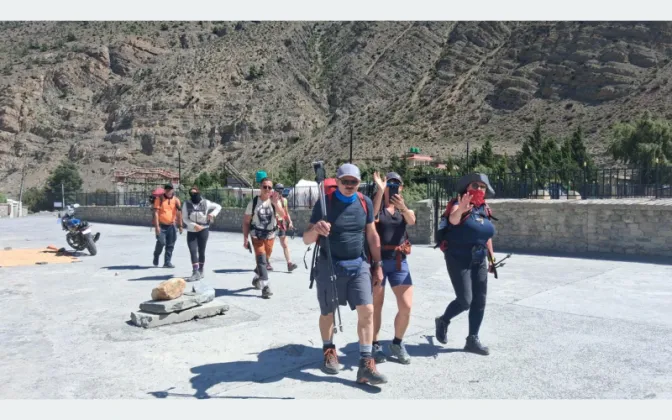
Millions of rupees are collected every year from tourists who travel to Nepal's restricted areas, according to reports published by Baahrakhari and Nepal Views. The income is generated through permits issued to visitors entering zones where access is otherwise prohibited, and it flows directly into the national treasury. The reports describe the collections as a significant economic contribution from a corner of the tourism sector that operates away from the country's most visited destinations, and they frame the revenue within broader discussions of the economy, politics and technology. The full report is available on Nepal Views.
How the Permit System Generates Annual Revenue
At the heart of the story is a simple mechanism. Restricted areas are not open for casual, unrestricted travel. Visitors who wish to enter these zones must first obtain permits, and each permit issued converts a tourist's journey into revenue for the state. Because tourists continue to seek entry year after year, the collections repeat annually, and according to the reports the total now runs into millions of rupees every year.
The key points highlighted by Baahrakhari and Nepal Views can be summarized as follows:
- Revenue is collected every year from tourists visiting restricted areas.
- The money is generated from permits issued to visitors entering these prohibited zones.
- The annual amounts involved run into millions of rupees.
- The income is described as a significant economic contribution to the national treasury.
- The coverage links the revenue to the wider themes of economy, politics and technology.
The emphasis on the word "annually" is important. This is not presented as a one-off windfall but as a recurring stream of income, one that replenishes itself each year as a new cycle of tourists applies for and receives the permits they need to enter the restricted zones.
A Significant Contribution to the National Treasury
The second strand of the reporting concerns where the money goes. According to the reports, the permit revenue collected from restricted-area tourists represents a significant contribution to the national treasury. In other words, the value of this form of tourism is not measured only in the experiences of the travellers themselves; a portion of that value is captured by the state through the permit system and recorded as public income.
The coverage draws attention to a revenue stream that can be easy to overlook. Much of the public conversation about tourism earnings tends to focus on the sector's most visible segments, while income generated from visitors to restricted and prohibited areas accumulates more quietly. The reports serve as a reminder that this less conspicuous flow of funds is substantial enough to be measured in millions of rupees each year, and the Nepal Views report places particular weight on this treasury angle.
Positioned Within Economy, Politics and Technology
Beyond the headline figures, the reports situate the story within three wider themes. The first is the economy: permit revenue is presented as one of the channels through which tourism feeds into state income, adding to the financial significance of the sector. The second is politics: as the coverage suggests, restricted areas exist through decisions about who may enter them and under what conditions, which makes the management of these zones and the fees attached to them a matter of governance and regulation. The third is technology: the story itself has circulated through digital news platforms, including Nepal Views, illustrating how economic reporting now reaches audiences through online channels.
By tying these threads together, the coverage frames restricted-area tourism as more than a travel story. It is simultaneously a story about public finance, about the regulatory framework that keeps certain areas closed to open access, and about the digital media environment through which citizens learn about the money the state collects.
A Recurring Stream the State Can Count On
The final takeaway from the reports concerns the reliability of this income. Because the revenue is described as being collected every year, it has the character of a recurring source of funds rather than an occasional bonus. As the reports indicate, tourists continue to visit these prohibited areas and permits continue to be issued, which is what sustains the flow of millions of rupees into the treasury on an annual basis.
For readers, the reports offer a concise picture of an often unnoticed pillar of tourism income. The sums involved are significant enough to register in the national accounts, and the permit-based system that produces them turns the regulation of restricted areas into a source of revenue in its own right. The reporting by Baahrakhari and Nepal Views makes clear that the tourists who venture into the country's restricted zones are contributing in a very direct way to the public purse, year in and year out.