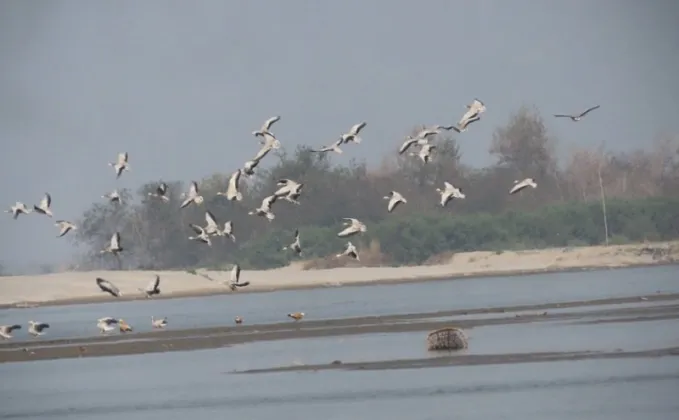
As the winter cold intensifies across Nepal, migratory birds have started descending from the Himalayan region to the Tarai in search of food and more favourable conditions. Indigenous and foreign guest birds are now being seen in Chitwan National Park and its surrounding areas, marking the beginning of the annual winter bird migration season in the district.
According to reports, the arrivals include a variety of duck species as well as birds of prey such as eagles and kites. The movement of these birds from higher altitudes to the lowlands is a regular seasonal phenomenon, driven largely by the drop in temperatures and the freezing of water sources in the Himalayan region, which make food harder to find there.
Winter Migration Reaches Chitwan
Chitwan National Park, with its network of rivers, wetlands, grasslands and dense forests, serves as an important wintering ground for migratory birds. As temperatures fall in the high Himalayan areas, water bodies begin to freeze, pushing birds downward to the Tarai where rivers such as the Rapti and Narayani continue to provide open water and abundant food.
The newly arrived guest birds have been sighted in and around the national park, which is one of Nepal's most significant protected areas for wildlife. Both indigenous species that move locally within the country and foreign species that travel from farther regions are part of this seasonal influx, according to reports from the area.
Species Spotted Among the Arrivals
Among the migratory birds arriving in Chitwan, duck species feature prominently, gathering along the park's rivers, oxbow lakes and wetland areas. Alongside these waterbirds, raptors including eagles and kites have also been observed, adding to the diversity of the season's arrivals.
The presence of birds of prey alongside waterfowl reflects the range of habitats that the Chitwan area offers, from open water and grasslands to forested zones that support hunting raptors. The seasonal gathering of these birds draws the attention of bird watchers, tourists and researchers who visit the park during the winter months.
Why the Birds Migrate
The movement of these birds is closely tied to the changing season. As winter cold increases in the Himalayan region, conditions at high altitudes become increasingly difficult, with diminishing food supplies and frozen water sources. The Tarai, by contrast, offers a milder climate, open water and plentiful food, making it a natural destination for the birds during the coldest months of the year.
Chitwan National Park and its buffer zones provide the mix of habitats that migratory birds rely on, including wetlands for feeding, grasslands for shelter and safe roosting sites. This ecological richness is why the park and its surroundings consistently host large numbers of guest birds each winter.
Seasonal Attraction for the Park
The arrival of migratory birds adds to the appeal of Chitwan National Park during the winter tourism season. Visitors to the park often have the opportunity to observe these guest birds along the riverbanks and wetlands, complementing the park's more famous wildlife attractions.
The annual migration underscores the importance of conserving the wetlands and habitats of the Tarai, which serve as critical winter refuges for birds that breed in the Himalayas and beyond. As the cold season continues, the number of migratory birds in Chitwan is expected to grow, offering bird watchers and nature enthusiasts ample opportunities to witness the seasonal spectacle.