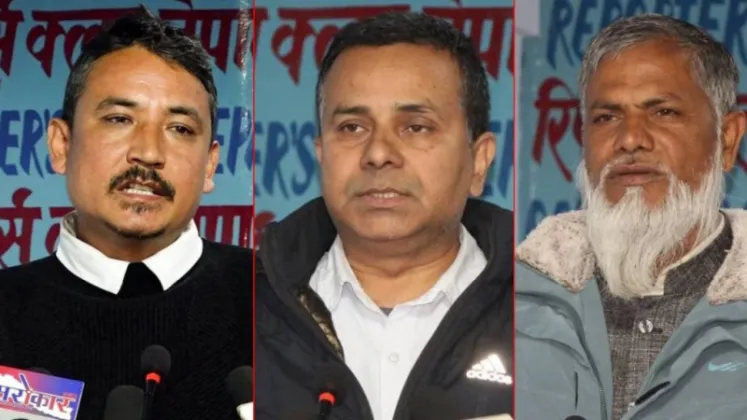
Meat traders in Kathmandu have voiced strong anger at the government over the growing export of Nepal-produced goats, sheep and chickens to India, warning that the trend could leave Nepali markets short of meat, push prices sharply upward and force many of their shops to shut down permanently. Speaking at a programme held at the Reporters Club Nepal on Wednesday, the traders accused the government of standing by while livestock raised in Nepal crosses the southern border, despite the country's own domestic demand for meat remaining high.
The traders said the export of livestock, which they described as largely illegal, has reached a point where it directly threatens the survival of their businesses. If the trade is not stopped immediately, they cautioned, consumers will feel the impact through shortages and rising prices, while meat shops across the country could be forced to close.
Traders accuse government of inaction
At the centre of the traders' complaint is what they see as a failure of state oversight. They accused the government of failing to control the export of goats, sheep and chickens produced within Nepal, allowing the animals to flow across the open border with India even as domestic demand for meat continues to grow.
Speaking at the Reporters Club Nepal event on Wednesday, the traders made it clear that they hold the authorities responsible for the situation. Their message to the government was direct: stop the illegal export of livestock now, or face the consequences in the market, in the form of empty shops, higher prices and lost livelihoods in the meat trade.
Shortages and price rises feared
The traders warned that the continued outflow of Nepal-produced livestock will soon be felt by ordinary consumers. If goats, sheep and chickens raised in Nepal are exported rather than sold in domestic markets, they said, Nepali households will struggle to find meat at reasonable prices.
For a country where meat is a central part of the daily diet and where festivals and family gatherings drive strong seasonal demand, a supply squeeze of this kind could translate into steep price rises. The traders argued that the export trade is effectively diverting locally produced animals away from the very markets that depend on them, creating an artificial scarcity at home.
Businesses on the verge of closure
The most stark warning from the traders concerned their own future. They said that meat shops across the country are now on the verge of closing, as the supply of locally raised livestock shrinks and the cost of sourcing animals climbs.
According to reports of the event carried by Nepali news outlets, the traders painted a picture of a sector under real pressure: shops that cannot secure a steady supply of animals cannot operate, and businesses that have long served local communities risk shutting their doors. They framed the issue not simply as a commercial dispute but as a threat to livelihoods across the meat trade, from shopkeepers to the wider chain of suppliers who depend on the domestic market.
Calls for immediate action
The traders' demand was unambiguous: the government must act immediately to stop the illegal export of livestock to India. They argued that the state has both the responsibility and the means to control the movement of animals across the border, and that its failure to do so has allowed the situation to deteriorate to the point where the domestic meat market is now at risk.
By bringing their grievances to a public forum at the Reporters Club Nepal, the traders sought to raise public awareness of the issue and put pressure on the authorities to respond. Their warnings about shortages, price hikes and closures were aimed squarely at making the export of Nepal-produced livestock a matter of national concern rather than a quiet trade at the border.
What lies ahead
The programme at the Reporters Club Nepal on Wednesday made clear that tensions between the meat trade and the government are rising as the export of goats, sheep and chickens to India continues. Whether the authorities will move to curb the trade, and how quickly, remains to be seen.
For now, the traders have signalled that they will not stay silent. With their businesses described as being on the verge of closure, they have pledged to keep pressing the government to act, warning that the longer the illegal export of livestock continues unchecked, the greater the damage will be to Nepal's meat markets, to consumers facing higher prices, and to the thousands who make their living selling meat across the country.