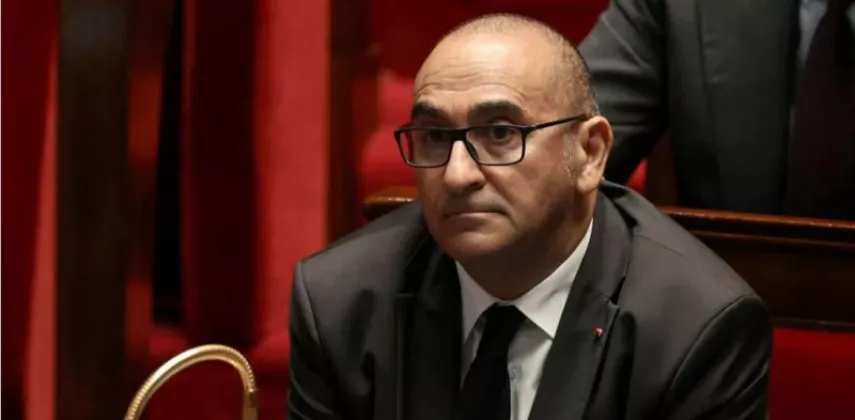
French President Emmanuel Macron has rejected the resignation of Interior Minister Laurent Nunez, who offered to step down after violent protests erupted in France over the rising cost of living, weak public services and the poor state of the country's schools. Rather than accepting the departure of the official responsible for internal security, the Élysée Palace directed that the weaknesses in the security arrangements be corrected, keeping Nunez in office with a clear instruction to restore order. The political drama unfolded as Macron himself departed for a Gulf visit, leaving the interior ministry to confront street anger that has yet to subside, as reported by RatoPati and Nagarik News.
A resignation offered and refused
Nunez holds one of the most consequential posts in the French government. The interior ministry is the office responsible for the police and the wider security apparatus, which means that any failure of public order lands first and foremost at the minister's door. It was against that backdrop that he tendered his resignation as the protests turned violent, a move that amounted to taking political responsibility for the disorder.
Macron's answer was a firm refusal. According to reports, the president rejected the resignation outright, and the Élysée Palace, the president's official office and residence, instead directed that the failings in the security arrangements be fixed. The decision keeps Nunez in place, but it converts his attempted departure into something closer to a conditional reprieve: he remains in office on the explicit understanding that the lapses which allowed the situation to slip will be corrected.
That choice carries its own risks. Accepting a resignation at the height of a crisis can be read as an admission that the government has lost its grip, while refusing one keeps the team intact but leaves the minister exposed to renewed criticism if the unrest flares again. By rejecting the resignation and ordering corrections, the Élysée has effectively tied Nunez's political survival to his ability to bring the situation under control.
Why the streets erupted
The protests were fueled by a set of everyday grievances that have long simmered in French public life. Demonstrators took to the streets over:
- The cost of living, which has squeezed household budgets and sharpened economic frustration
- Weak public services, which many citizens feel have been allowed to deteriorate
- The state of the schools, adding an education dimension to a movement rooted largely in pocketbook anger
What began as an expression of grievance turned violent, and it was the violence, rather than the complaints themselves, that precipitated the ministerial crisis. Nunez acknowledged the scale of the failure, conceding that the police and security agencies had lost control of the situation in some places. For an interior minister, whose core mandate is the maintenance of public order, the admission was an unusually blunt one, and it helps explain why he moved to offer his resignation in the first place.
The concession also frames the Élysée's response. If the problem is treated primarily as one of security arrangements, of planning, deployment and command, then the remedy lies within the interior ministry itself. Hence the presidential directive that the weaknesses be corrected rather than the minister replaced, a calculation that keeps the government's structure intact while demanding a visible improvement on the ground.
Macron departs as protests continue
In a striking piece of timing, Macron left for a Gulf visit even as the protests continued, a detail highlighted by Khabarhub. The president's decision to proceed with the foreign trip rather than remain in Paris underscores the Élysée's calculation that the immediate response to the unrest can be handled by the interior ministry operating under its corrected security arrangements.
The departure nonetheless leaves a politically combustible scene behind. Nunez, having failed to persuade the president to accept his resignation, now carries a double burden: restoring public order and demonstrating that the security shortcomings identified by the palace have been addressed, all while his head of state is abroad. Any further loss of control would fall squarely on a minister who has already conceded that his forces were overwhelmed in places.
The stakes for the French government
The episode crystallizes the government's dilemma. On one side stands a protest movement animated by economic pressures over the cost of living, public services and schools, grievances that no quantity of police deployment can resolve on its own. On the other stands a security failure, acknowledged by the interior minister himself, that demanded a political response.
Macron's solution, retaining Nunez while ordering the security arrangements corrected, attempts to separate the two. It signals continuity and firmness, averts the optics of a minister walking away from a crisis, and places the responsibility for restoring calm directly on the man who offered to resign. Whether that balance holds depends on whether the violence subsides and whether the underlying frustrations that brought demonstrators onto the streets continue to build in the days ahead.