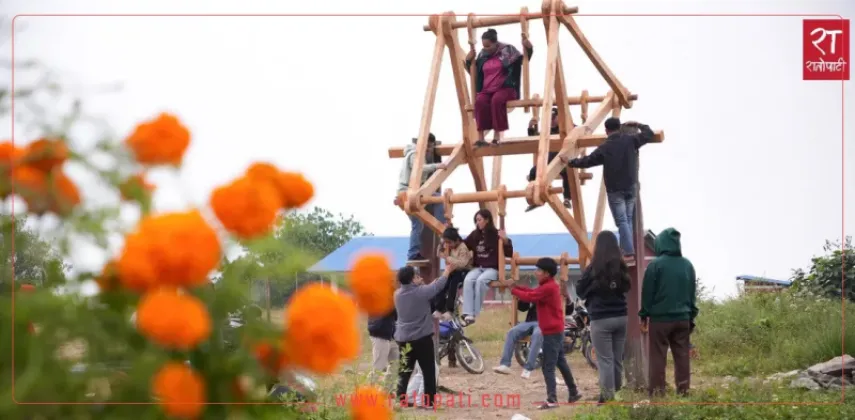
Sirandanda, a scenic village within Ajirkot Rural Municipality in Gorkha district, has come alive with festive cheer as locals celebrate Bada Dashain around a traditional rote ping, a rotating swing built collectively by the community. With people returning to their home village from various places to mark the country's biggest festival, day-to-day activity in the settlement has visibly increased, and the newly erected swing has become the centre of entertainment for residents young and old.
The construction of the swing, carried out jointly by villagers, reflects the continuing hold of Dashain-era customs in Nepal's hills, where swings have long been an inseparable part of the festival season. According to Rato Pati, residents came together to build the rote ping specifically for the festival, continuing a tradition that adds joy and colour to the Dashain atmosphere in the village.
A Swing Built by the Whole Community
What makes the Sirandanda rote ping special is not merely the fun it provides, but the way it was brought to life. Rather than relying on any single household or individual, villagers pooled their effort to construct the swing together, turning the task itself into a communal act. This spirit of shared labour is a defining feature of swing-building during Dashain in rural Nepal, where preparing for the festival is treated as a collective responsibility as much as a celebration.
The rote ping, in essence, offers the village several things at once:
- Entertainment for all ages - children, teenagers and adults alike take turns riding the rotating swing throughout the festival period.
- A gathering point - the swing naturally draws villagers out of their homes, creating a common space where neighbours meet, chat and enjoy the season together.
- A living tradition - each year the swing is rebuilt, passing the custom on to a new generation and keeping the cultural practice alive.
Unlike the tall bamboo linge ping erected on open grounds and fields, the rote ping is a rotating swing that spins riders around, offering a different kind of thrill. Its simplicity is part of its charm: with little more than rope and community effort, the village has created hours of amusement for the entire festival period.
The Village Comes Alive for Dashain
The swing's arrival coincides with a seasonal transformation of the village itself. As Dashain approaches, people who have migrated to cities for work and study, as well as those living abroad, begin making their way back to their villages. In Sirandanda, this homecoming has noticeably raised the level of activity, with households preparing for the festival and the streets and courtyards buzzing with reunion and celebration.
This annual return is one of the most significant social phenomena tied to Dashain. For hill villages like Sirandanda, which often grow quiet at other times of the year, the festival brings a brief but powerful reversal: families reunite, homes are cleaned and decorated, and community spaces, including the swing, become lively hubs of interaction. The rote ping stands at the heart of this revival, giving returning residents an immediate and familiar way to reconnect with their roots.
The timing could not be more fitting. Bada Dashain, observed over fifteen days in the month of Ashwin, is the most important festival in the Nepali calendar, and the days around it are traditionally reserved for family gatherings, blessings and communal enjoyment. In that sense, the swing is not a distraction from the festival but an expression of it.
Swings and the Spirit of Dashain
Swinging during Dashain is a practice with deep cultural roots across Nepal. Swings of various kinds are traditionally erected during the festival, and enjoying them is regarded as an essential part of the celebration, particularly for the young. The tradition is so cherished that Nepali folklore holds that one should not miss out on swinging during Dashain even in one's dreams, a saying that underlines just how central the pastime is to the festival's identity.
The rote ping in Sirandanda is a continuation of this broader heritage. While modern entertainment has spread even to remote villages, the persistence of the swing shows the enduring appeal of customs that require nothing more than rope, effort and company. Each spin of the swing carries forward a form of festival entertainment that generations of Nepalis before the present one would instantly recognise.
Festive Cheer in the Hills
For now, the rote ping in Sirandanda is doing exactly what such swings have always done: entertaining, gathering and delighting. As Bada Dashain celebrations continue in Ajirkot Rural Municipality and across the country, the sight of villagers taking turns on the rotating swing offers a small but vivid picture of the festival as it is experienced in Nepal's villages, where tradition, community and celebration remain closely woven together.
The collective construction of the swing also sends a quiet message about the strength of rural communities. In an era when many traditions fade with each passing year, the residents of Sirandanda have shown that with shared effort, the customs that define Dashain can remain a joyful part of village life.