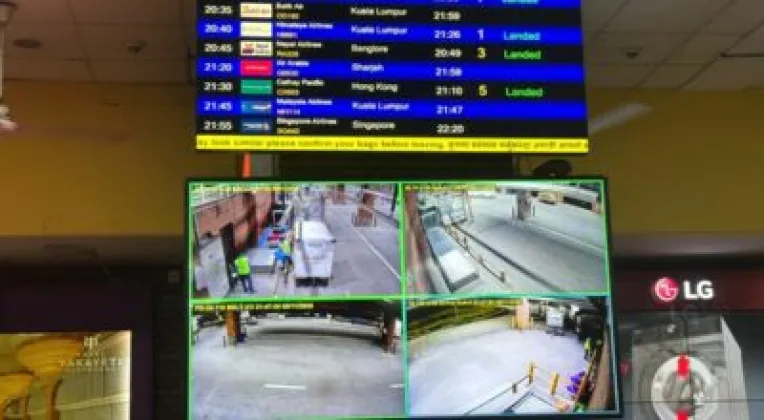
Tribhuvan International Airport in Kathhmandu has introduced a live feed service that shows the handling of passenger baggage in real time, a move the Ministry of Culture, Tourism and Civil Aviation says is designed to make luggage management more transparent, organized and passenger-friendly. The feed is available in the baggage collection area of the airport's international arrivals hall, meaning travellers arriving on international flights can follow the status of their luggage as they wait for it to be delivered. The launch, confirmed by the ministry, was reported by Khabarhub, Onlinekhabar and Ratopati.
A live window into the baggage hall
For most international travellers, the stretch of time between stepping off the aircraft and collecting checked luggage is one of the least predictable parts of a journey. Passengers typically wait at the belt with little idea of how their bags are progressing behind the scenes, and any delay or confusion in handling becomes apparent only once the luggage finally appears, or fails to appear, on the carousel.
The newly launched live feed is intended to close that information gap. Displayed in the baggage collection area of the international arrivals hall, the service shows the status of baggage handling, giving arriving passengers a way to view how their luggage is being processed. According to the ministry, the arrangement applies to travellers arriving on international flights, the category of passengers who pass through the airport's international arrivals facility with checked baggage.
As Ratopati framed it in its coverage, baggage management at Tribhuvan International Airport is now more transparent, and passengers can view the status of their luggage through the live feed. That framing captures the core purpose of the initiative: turning an opaque, behind-the-scenes process into something visible to the people most affected by it.
What the ministry aims to achieve
The ministry has outlined three clear objectives behind the launch of the live feed service. Together, they signal an effort to improve the arrival experience not just through infrastructure, but through better information and accountability.
-
Transparency: By making baggage handling visible to passengers in the arrivals hall, the system allows travellers to see the status of their luggage rather than waiting blindly at the belt. A process that once unfolded out of sight is now open to observation.
-
Organization: A live feed of baggage handling also creates a structured, real-time picture of how luggage is moving through the airport's system. Visibility of this kind encourages more orderly management of the baggage flow on the ground.
-
Passenger-friendliness: Above all, the service is pitched as a convenience for travellers. Knowing where their bags stand reduces uncertainty during the wait in the arrivals hall and helps passengers feel better informed from the moment they land.
The ministry's statement placed particular emphasis on the passenger-facing side of the initiative, describing the arrangement as an effort to make baggage management more organized and passenger-friendly for those arriving on international flights.
A different arrival experience for international travellers
The practical effect of the live feed is that a passenger's wait at Tribhuvan International Airport becomes an informed wait rather than a passive one. Instead of standing at the carousel wondering whether a bag has been unloaded, delayed or misrouted, an arriving traveller can consult the feed and see the status of baggage handling as it unfolds. For those on long-haul international flights, where luggage waits can feel especially long, that added visibility can meaningfully change the tone of the arrival process.
There is also an accountability dimension built into the service. When baggage handling is displayed on a live feed in a public area of the arrivals hall, the work of moving luggage from aircraft to belt happens in full view of the passengers whose trips depend on it. A visible process is one in which delays and irregularities are harder to overlook, and in which smooth, efficient handling is apparent to everyone watching. The ministry's decision to describe the service as a transparency measure suggests that this visibility is central to its intent, not incidental to it.
Real-time information as a rising standard
The launch at Tribhuvan International Airport reflects a broader shift in how airports approach the passenger experience. Travellers today are accustomed to real-time information at every other stage of a journey, from live flight status updates to digital boarding passes, and the wait for checked baggage has often been the one环节 without comparable visibility. By extending live information into the baggage collection area, Nepal's main international gateway is aligning the final stage of the journey with the standards passengers have come to expect elsewhere.
For the tourism and travel sector more broadly, the arrival experience at the international gateway shapes a visitor's first impression of the country. A baggage process that feels transparent and well managed contributes to a smoother, more welcoming start to a stay, which is precisely the outcome the ministry's description of the service points toward.
Looking ahead
The ministry's announcement focused on the launch of the live feed and its placement in the international arrivals hall, and the initial reports did not detail additional features or expansion plans. Even so, the introduction of the service marks a clear change in how baggage handling at Tribhuvan International Airport is presented to the travelling public. Passengers arriving on international flights can now view the status of their luggage via the live feed in the baggage collection area, and the ministry's stated goal, a baggage process that is more transparent, organized and passenger-friendly, is now on display for every arriving traveller to see.