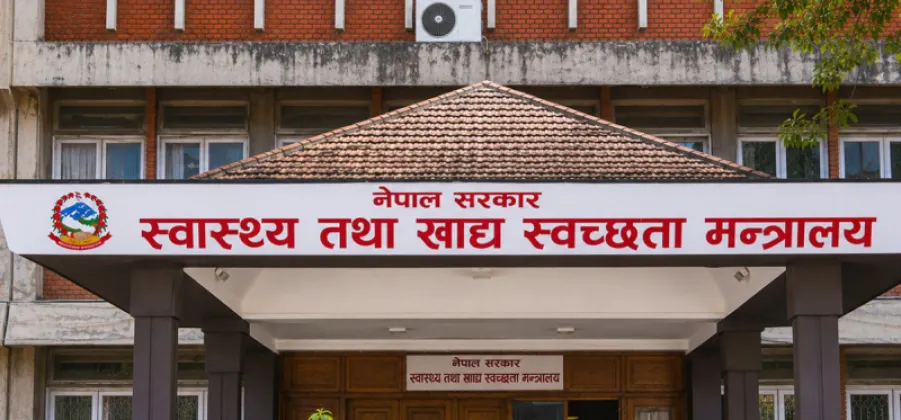
The Ministry of Health and Food Sanitation has approved the "Standards on Management of Altitude Sickness in High Mountain and Himalayan Regions, 2083", a new set of official standards aimed at ensuring the timely identification and proper treatment of altitude sickness among tourists, trekkers, mountaineers and local residents travelling at high altitudes. The decision was reported from Kathmandu on November 6, 2026. With the approval, Nepal's health authorities have moved to formalise how one of the most persistent health risks in the country's high mountain and Himalayan regions is recognised and managed, establishing a government-backed reference point for the care of everyone exposed to high-altitude conditions.
A Formal Framework for a Known Risk
The document approved by the Ministry carries the full title "Standards on Management of Altitude Sickness in High Mountain and Himalayan Regions, 2083". The year 2083 refers to Nepal's Bikram Sambat calendar, which runs ahead of the Gregorian year and corresponds to the 2026-2027 period, matching the date on which the decision was reported. According to the reports of the decision, the standards have one clear objective: to make sure that altitude sickness among people travelling at high altitudes is identified in time and treated properly.
Both elements of that objective carry weight. Timely identification speaks to recognising the condition early, before it advances, while proper treatment speaks to ensuring that those affected receive the care their condition demands. By pairing the two in a single set of standards, the Ministry has placed the emphasis on the full chain of response, from the first recognition of symptoms through to treatment.
The approval was reported by Nepali media outlets including Nagarik News, Ratopati and Khabarhub, which carried the decision from Kathmandu on November 6, 2026.
Covering Visitors and Residents Alike
What stands out in the approved standards is the breadth of the population they name. Rather than framing altitude sickness as a concern for the tourism industry alone, the document explicitly covers four groups:
- Tourists travelling at high altitudes
- Trekkers on high-altitude routes
- Mountaineers in the high mountain and Himalayan regions
- Local residents travelling at high altitudes
That framing reflects the reality of Nepal's high mountain and Himalayan regions, where visitors pursuing trekking and mountaineering share terrain with communities who live and travel at elevation year-round. By naming local residents alongside the different categories of visitors, the standards treat altitude sickness as a public health issue for the population at large rather than a risk that begins and ends with tourism.
For the groups covered, the significance of the decision lies in the promise of a consistent approach. A tourist, a trekker, a mountaineer and a resident of a Himalayan district are all intended to fall within the same system of identification and treatment, rather than depending on whatever arrangements happen to be available in each place and circumstance.
The Condition Behind the Standards
Altitude sickness arises when the body struggles to adjust to the lower oxygen levels found at high elevations, and it can affect people ascending to altitude regardless of age, fitness or prior experience. Its symptoms can begin subtly, and without timely attention the condition can progress from discomfort to a serious, life-threatening medical emergency. This is why early identification and proper treatment, the twin aims written into the newly approved standards, are emphasised so strongly in the management of the condition.
For Nepal, the relevance is immediate. The country's high mountain and Himalayan regions include some of the world's highest inhabited and travelled terrain, environments where altitude-related illness is a constant consideration for health services, visitors and residents alike. Against that backdrop, a dedicated set of standards for managing the condition gives the country's health response a defined shape in the very areas where the risk is concentrated.
The approval also places the responsibility squarely with the health administration. The Ministry of Health and Food Sanitation, as the body that has signed off on the standards, is now associated with a documented, official approach to a condition that has long been recognised as one of the principal health hazards of Nepal's mountains.
From Approval to Implementation
What the approval means in practice will depend on how the standards are carried forward. Initial reports of the decision from Kathmandu focused on the approval itself and the stated purpose of the document; they did not spell out the operational arrangements through which the provisions will be applied across health institutions and services in the high mountain and Himalayan regions.
That is not unusual for a decision at this stage. The approval establishes the framework, and the measure of its effect will be how consistently identification and treatment follow in real situations at altitude, whether the person affected is a first-time visitor or a long-time resident of the region.
For now, the Ministry's decision stands as the formal starting point. With the "Standards on Management of Altitude Sickness in High Mountain and Himalayan Regions, 2083" in place, the government has given the response to altitude sickness an official, documented footing. How the standards perform once they reach the terrain they were written for will determine whether the promise of timely identification and proper treatment becomes the everyday norm for everyone travelling at high altitude in Nepal.