The legend of the Ligligkot race, in which a contest of speed held on Vijaya Dashami is said to have decided who would become king, remains one of the most enduring stories associated with Nepal's Dashain festival. According to popular tradition, the race was run on the hill of Ligligkot in Gorkha, and the runner who finished first would be declared king. The custom is remembered above all for its connection to Drabya Shah, the prince of Lamjung whose journey from that very race led to the establishment of a separate kingdom in Gorkha, as recounted in recent explainer articles published by Ratopati and Khabarhub. Together, the two explainers trace how a festival day, a footrace and a prince's ambition came to be woven into a single story that Nepali society continues to treasure.
A Dashain Day Race for a Throne
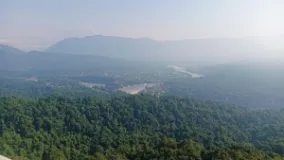
Among the many customs bound up with Dashain, few are as striking as the one remembered at Ligligkot, the hill in Gorkha that gives the tradition its name. According to the popular account, a race was reportedly held there on Vijaya Dashami, and the winner would become king. The explainer published by Khabarhub describes the contest in precisely these terms, presenting it as a tradition in which the outcome of a race on the festival's main day determined who would take the throne.
The idea of a kingship decided by a footrace gives the legend its lasting appeal. Rather than imagining a crown that passes by birth alone, the story presents power as a prize to be won in front of the community, on one of the most auspicious days of the year. The race and the festival become inseparable: the same day that carries deep religious meaning for households across Nepal is, in this legend, also the day on which the destiny of Gorkha is settled by the fastest runner.
The choice of day is equally telling. Vijaya Dashami, the principal day of the Dashain festival, carries within its very name the word for victory, and the legend fuses that sacred occasion with a public contest whose victor rises to kingship. It is this fusion of the devotional and the political that gives the Ligligkot tradition its distinctive character among the many stories told around Dashain.
Drabya Shah: From Lamjung Prince to King of Gorkha
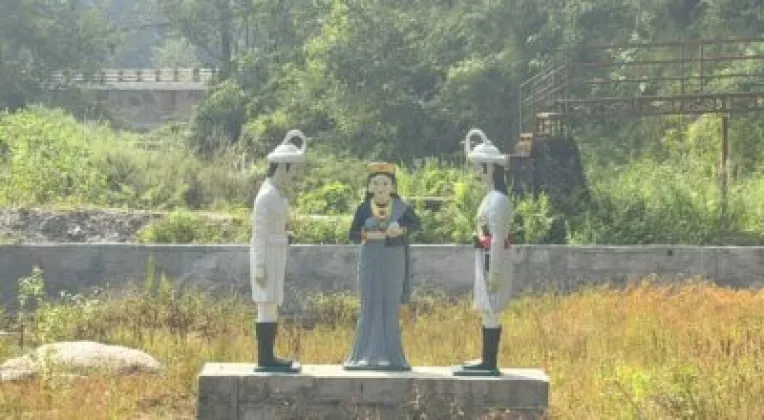
According to popular legend, the race is linked to Drabya Shah, a prince of Lamjung. His connection to the Dashain contest is the hinge on which the entire story turns. The Ratopati explainer frames the tale in exactly these terms, describing Drabya Shah's journey from the Vijayadashami race to the Gorkha kingdom. In the popular telling, it is the prince's participation in the race that sets in motion the events which carry him from Lamjung to a throne of his own in Gorkha.
A Kingdom Separate From Lamjung
What makes the legend historically resonant, the explainers suggest, is the destination of that journey: the establishment of a separate kingdom in Gorkha. The story does not merely recall a race won on a festival day; it presents that victory as the beginning of a new political chapter, with Drabya Shah founding a kingdom apart from the Lamjung into which he was born. Popular tradition thus chooses to mark the founding of the Gorkha kingdom with the Dashain race, binding the country's most widely celebrated festival to the story of its early kingdoms.
Religious, Cultural and Historical Layers
The explainers emphasise that the tradition carries religious, cultural and historical significance in Nepali society, and each of these dimensions can be traced through the legend itself.
- Religious significance: The race is tied to Vijaya Dashami, the most important day of the Dashain festival, weaving faith and public life together and presenting the festival day as one on which fortunes, and even thrones, could change.
- Cultural significance: The story has been passed down as popular legend, retold through generations, and it adds a distinctly local narrative from Gorkha to the festival season observed across the country.
- Historical significance: The legend anchors the establishment of the separate Gorkha kingdom under Drabya Shah to a specific and memorable event, linking the festival calendar to the political history remembered within Nepali society.
Seen together, these layers explain why the story endures. It is at once a religious tale of an auspicious day, a cultural asset preserved in folklore, and a popular memory of how a kingdom began.
A Tradition That Survives in Memory
Whatever the finer historical details, the endurance of the Ligligkot story says much about how Nepali society remembers its past. Legends of this kind survive not as court chronicles but as narratives told and retold, and the Ligligkot race has clearly secured its place in that category. The fact that news outlets such as Ratopati and Khabarhub continue to return to the tale in their explainers, tracing the race on Vijaya Dashami, the rise of Drabya Shah and the birth of the Gorkha kingdom, shows how the tradition still speaks to readers, particularly during the Dashain season when the story naturally resurfaces. In that sense, the race at Ligligkot is still being run, if only in memory, and its winner, Drabya Shah, claims his kingdom anew with every retelling.