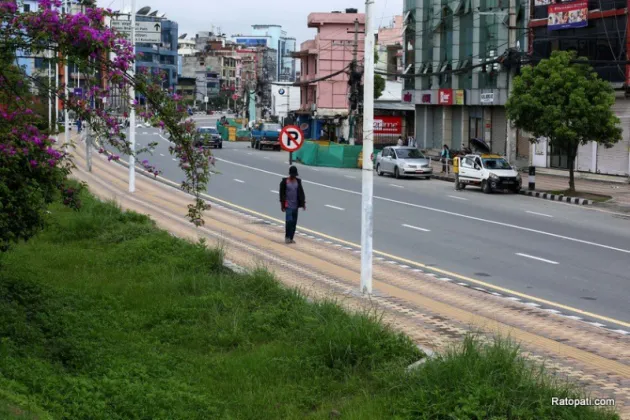
Kathmandu Valley's usually congested roads wore a strikingly deserted look on the day of Maha Navami, one of the most significant days of the Bada Dashain festival, as residents left the capital in large numbers for their home districts across the country. With tens of thousands of people already out of the Valley and many others keeping their cars and motorcycles at home for the traditional Navami vehicle worship, vehicular movement across the capital dropped to a near holiday hush. According to the Kathmandu Valley Traffic Police Office, more than 576,000 people have left the Valley since Ghatasthapana, the day that marked the formal beginning of the festival.
An annual exodus empties the capital
Every year, the Kathmandu Valley swells with people who arrive from across Nepal for work, study and business. Bada Dashain, the country's biggest and longest festival, reverses that tide. In the days between Ghatasthapana and the main days of the celebration, hundreds of thousands of residents travel back to their villages and hometowns to reunite with parents, elders and extended families, a journey that for many is the emotional heart of the festival year.
That movement has been continuous this season. By the time Maha Navami arrived, the cumulative count of departures since Ghatasthapana had crossed 576,000, according to figures released by the Kathmandu Valley Traffic Police Office, as reported by RatoPati and News of Nepal.
Key facts from the day:
- More than 576,000 people have left the Kathmandu Valley since Ghatasthapana, according to the Kathmandu Valley Traffic Police Office
- Roads across the Valley recorded very low vehicle traffic throughout Maha Navami
- The traditional worship of vehicles on Navami kept many cars and motorcycles off the streets
- Large numbers of residents travelled to their home districts to celebrate Dashain with their families
With offices and schools closed for the festival and so many regular commuters already gone, the Valley's roads presented a scene rarely witnessed at any other time of the year: wide stretches of asphalt where traffic normally crawls, moving freely for the few vehicles that remained.
The Navami custom that clears the streets
Beyond the festival exodus, the day itself carries a custom that thins traffic even further. On Maha Navami, it is traditional for Nepalis to worship their vehicles, along with the tools and machinery of their daily livelihood, seeking blessings for safety and prosperity in the year ahead. The practice is rooted in the belief that the objects people rely on should be honoured and blessed on this auspicious day.
For many vehicle owners, that means the car or motorcycle stays parked at home while the worship is performed in courtyards, garages and workshops. Vehicles are washed, decorated and offered prayers, turning driveways and service centres across the country into spaces of quiet celebration. The Kathmandu Valley Traffic Police Office noted that this tradition, combined with the departure of so many residents, contributed to keeping large numbers of vehicles off the roads on Navami.
The result was a double effect: the people who would normally fill the Valley's roads had already left, and many of those who remained chose to keep their vehicles stationary for the observance. Together, the two factors produced some of the emptiest streets the capital sees all year.
What the departure numbers show
The figure of more than 576,000 departures since Ghatasthapana offers a measure of just how thoroughly Dashain empties the capital. Kathmandu's permanent and seasonal population includes people from virtually every district of Nepal, and the festival draws the overwhelming majority of them homeward within a span of days.
The Valley Traffic Police Office's count, compiled as people have continued to stream out of the capital since Ghatasthapana, serves as an indication of the scale of this annual redistribution. It also reflects the pattern familiar to observers of festival season in Nepal: the Valley's population temporarily disperses to the districts, where families gather for the tika and blessings that lie at the centre of Dashain celebrations.
For traffic management authorities, the shift is equally visible. With routine inner city movement subdued by the combined effect of the holidays, the exodus and the vehicle worship tradition, the character of Maha Navami in the capital stands in sharp contrast to the congestion of an ordinary working day.
The quiet before the festival's peak
The stillness on Navami came as the festival built toward its most important day. With Dashami, the tenth day of Bada Dashain and the day of tika, immediately ahead, residents who made the journey home are settling in with their families for the heart of the celebrations.
The empty roads of the Valley, for now, tell the story of a capital on the move in the opposite direction, its people spread out across the country in observance of a festival that remains the most important date on the Nepali calendar. As in past years, the flow is expected to return in time, bringing the familiar rhythm of life in the capital back to its roads once the festivities conclude.