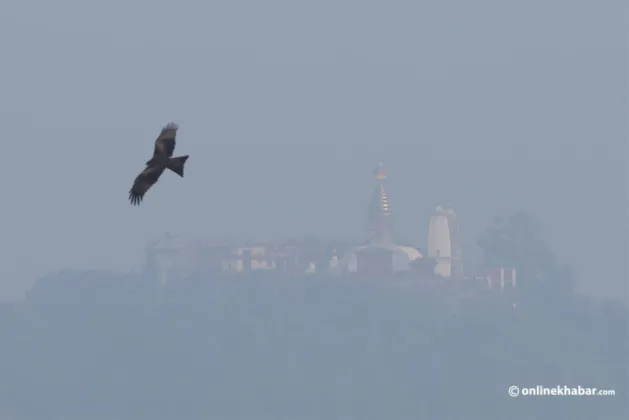
Air pollution in the Kathmandu Valley has deteriorated sharply with the onset of the dry season, with several areas of the capital recording unhealthy air quality on Friday. According to IQAir, a Switzerland-based air quality monitoring platform, Kathmandu logged an Air Quality Index (AQI) of 114 on Friday, November 6, placing the city in the "unhealthy for sensitive groups" category. Pollution remained at unhealthy levels across several parts of the valley through Friday morning, and forecasters expect conditions to stay unhealthy until Sunday.
The latest readings signal the start of what has become a familiar annual cycle for residents of the valley, where the arrival of dry, cooler weather typically coincides with a steady buildup of smog and haze. As reported by Onlinekhabar and Khabarhub, the deteriorating air quality comes as the valley transitions out of the wetter months, when rainfall helps keep particulate pollution in check.
Readings cross into unhealthy territory
An AQI of 114 places Kathmandu squarely within the 101 to 150 band of the index, the range classified as "unhealthy for sensitive groups." At this level, the general public is largely unaffected, but people in vulnerable categories may begin to experience health effects from prolonged outdoor exposure. Readings below 50 are considered "good," while values between 51 and 100 fall in the "moderate" range; Friday's figure indicates pollution has moved beyond those thresholds.
Monitoring showed that pollution levels remained unhealthy in several areas of the valley on Friday morning, suggesting the deterioration was not confined to a single hotspot but was spread across the basin. IQAir's live tracking, which updates air quality readings for cities around the world, is expected to keep recording the valley's conditions over the coming days. The current forecast anticipates unhealthy air persisting until Sunday, meaning residents face several consecutive days of elevated pollution before any improvement is expected.
The timing is significant. The dry season, which begins around this time of year, marks the point at which the valley's air quality typically begins its months-long decline, with pollution usually peaking in the depths of winter. Friday's readings, coming right at the season's start, are being watched as an early indication of how severe this year's pollution spell could become.
Why the valley's air turns toxic each winter
Kathmandu's pollution problem is rooted in a combination of geography and meteorology. The valley is a bowl-shaped basin ringed by hills, which naturally restricts airflow and makes it difficult for pollutants to disperse. During the dry months, clear skies allow the ground to cool rapidly overnight, creating temperature inversions in which a layer of warm air sits above cooler air near the surface. This acts like a lid, trapping vehicle exhaust, dust and smoke close to the ground where people breathe them.
The absence of rainfall compounds the problem. In the wetter months, rain scrubs particulate matter out of the atmosphere, but once the dry season sets in, there is no natural mechanism to wash the air clean. Pollutants accumulate day after day, and pollution levels frequently climb to their worst readings on cold, still mornings, precisely when many residents are out commuting.
The sources of the pollution are equally persistent. Emissions from a growing fleet of vehicles, dust from unpaved roads and ongoing construction, smoke from brick kilns operating around the valley's rim, and the open burning of household waste all contribute to the particulate load. Because these sources operate year-round, the arrival of favorable dispersion conditions in the dry season quickly pushes air quality from moderate into unhealthy territory, as Friday's readings demonstrate.
Health risks and precautions for residents
Health specialists generally advise particular caution during episodes like the current one. Sensitive groups include children, whose lungs are still developing, older adults, and people with pre-existing respiratory conditions such as asthma or chronic obstructive pulmonary disease, as well as those with heart ailments. For these groups, exposure to elevated particulate pollution can trigger coughing, throat irritation, shortness of breath and worsening of existing conditions.
Standard guidance during unhealthy air episodes is to limit prolonged or strenuous outdoor activity, particularly during morning hours when pollution tends to be most concentrated. Wearing protective masks outdoors, keeping windows closed during peak pollution periods and using air purifiers indoors are among the measures commonly recommended to reduce exposure. Residents with respiratory conditions are typically urged to keep medication at hand and seek medical attention if symptoms worsen.
With the forecast pointing to unhealthy air lingering until Sunday, schools, outdoor workers and families across the valley will be weighing those precautions in the days ahead. Real-time readings from platforms such as IQAir remain the best tool for tracking whether conditions ease or tighten further, and the coming weeks will show whether this early-season spike proves a brief episode or the opening stretch of another long pollution season for the Kathmandu Valley.