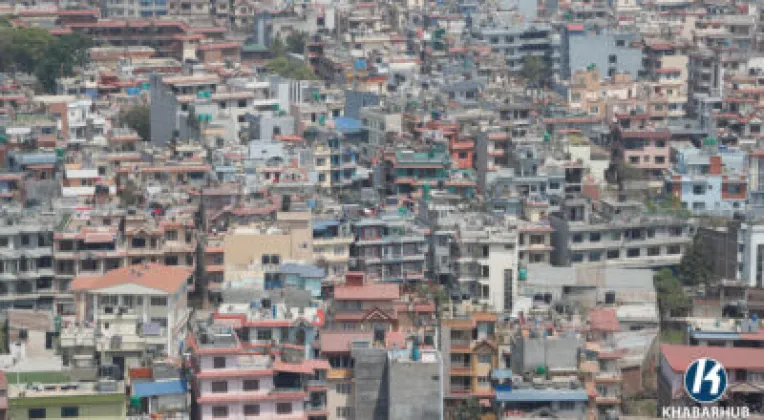
Air pollution in the Kathmandu Valley has risen to unhealthy levels as the dry season begins, with the capital's Air Quality Index (AQI) measured at 111 on Friday morning, according to IQAir, a Switzerland-based air quality monitoring organisation. The deterioration follows an even sharper spike the previous day, when the Mid-Baneshwor area of the city recorded an AQI of 153 on Thursday. With conditions not expected to improve until Sunday, residents across the valley are facing several more days of degraded air.
Readings climb across the capital
The latest measurements show a steep rise in pollution within a short span of time. On Thursday, the Mid-Baneshwor area logged an AQI of 153, a level that sits firmly in unhealthy territory. By Friday morning, the reading for Kathmandu as a whole stood at 111, according to figures reported by Khabarhub.
The AQI is a standard index used to communicate how polluted the air currently is and what those conditions mean for human health. On the scale employed by IQAir, whose real-time rankings are widely used to track urban air quality around the world, the categories run as follows:
- 0 to 50: Good
- 51 to 100: Moderate
- 101 to 150: Unhealthy for sensitive groups
- 151 to 200: Unhealthy
- 201 to 300: Very unhealthy
- 301 and above: Hazardous
Measured against this scale, Friday's citywide reading of 111 places Kathmandu in the "unhealthy for sensitive groups" band, while Thursday's 153 in Mid-Baneshwor crossed into the "unhealthy" category, at which point the general population, and not only the most vulnerable, can begin to feel the effects of the air they are breathing.
What the readings mean for health
On IQAir's scale, a reading above 100 signals that members of sensitive groups - children, older adults and people with respiratory or cardiac conditions - face a greater risk of adverse health effects and are advised to reduce prolonged or heavy outdoor exertion. When readings climb above 150, as they did in Mid-Baneshwor on Thursday, the air is considered unhealthy for everyone, and the concerns extend to the wider population.
Sustained exposure to air at these levels can trigger or worsen breathing difficulties, throat and eye irritation, and complications for people living with asthma and other respiratory ailments. For a densely populated capital where large numbers of people commute, work, and study in the open air, an AQI hovering above the 100 mark represents a meaningful public health concern, particularly while the pollution episode persists without a clear end in sight before the weekend.
Dry season arrives and pollution builds
The timing of the spike is no coincidence: pollution has risen to unhealthy levels precisely as the dry season begins. During the dry months, the valley receives little or no rainfall, and without rain to wash dust, smoke and other pollutants out of the atmosphere, particulate matter is left to accumulate in the air that residents breathe. The still conditions typical of the season also allow pollution to linger over the city rather than dispersing.
That pattern explains why air quality in Kathmandu can shift quickly at this time of year. A single day of elevated readings, such as Thursday's 153 in Mid-Baneshwor, can be followed by mornings in which the entire valley remains blanketed in haze, as reflected in Friday's citywide AQI of 111. Monitoring organisations such as IQAir track these fluctuations in real time, giving residents a rolling picture of how conditions are evolving across the city and its surrounding areas as the season progresses.
No improvement forecast until Sunday
For now, the outlook offers little comfort. According to the reports, air quality conditions are not expected to improve until Sunday, leaving the valley facing several more days in which AQI readings are likely to remain at or near current levels, with the potential for localised spikes of the kind recorded in Mid-Baneshwor on Thursday.
Until the situation eases, the readings published by IQAir will remain the clearest guide to day-to-day conditions, with Friday morning's citywide figure of 111 serving as the benchmark as this early-season pollution episode plays out. Residents, particularly those in sensitive groups, will be watching to see whether the forecast holds and whether the air over the Kathmandu Valley finally begins to clear by Sunday.