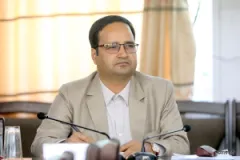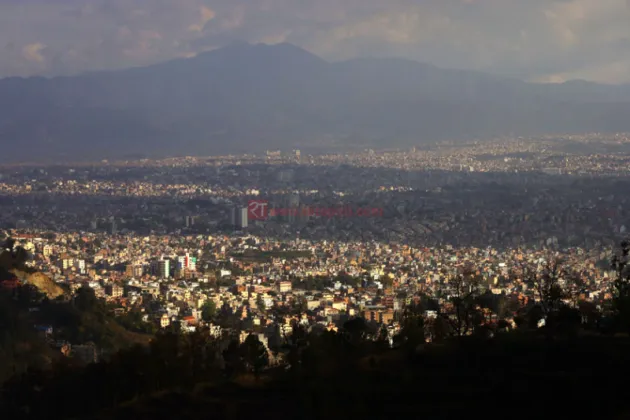
The District Administration Office, Kathmandu is studying a plan to operate the entire capital city around the clock, a proposal that would extend 24-hour operations beyond Thamel to the whole of Kathmandu. Chief District Officer Ishwari Prasad Poudel said talks are underway with the Prime Minister's Office and the Ministry of Home Affairs on running Kathmandu for 24 hours a day. He made the announcement while speaking at a discussion on peace and security organised by the Thamel Tourism Development Council, where he also reaffirmed that Thamel is being developed as a tourist hub.
The announcement, reported by Rato Pati and Khabarhub, offers the clearest indication yet that the district administration is weighing a fundamental change in how the capital functions after dark. While Thamel has long served as the focal point for the city's evening and night-time activity, the plan under study contemplates a Kathmandu that operates on a 24-hour basis as a whole.
From Thamel to the Entire Capital
The significance of the announcement lies in its scale. Discussion of round-the-clock activity in the capital has generally centred on Thamel, the district best known for its tourism-driven businesses and nightlife. Poudel's remarks signal that the administration is now studying whether that model could be applied across the whole city rather than being confined to a single tourist quarter.
According to the Chief District Officer, the proposal remains under active study. The administration has not outlined in detail how a 24-hour Kathmandu would function in practice, and no timeline for a decision or for the start of operations has been made public. What is clear, however, is that the idea has moved beyond casual discussion and into a formal process of study within the district administration, with consultations already under way at the federal level.
Consultations With Federal Authorities
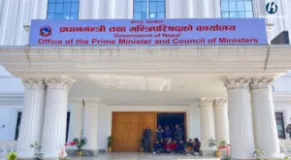
The most concrete element of Poudel's announcement concerned who is being consulted. Talks are ongoing with both the Prime Minister's Office and the Ministry of Home Affairs, indicating that the proposal is being examined as a matter of national importance rather than as a purely local administrative question. Neither body has been reported as having responded publicly to the plan so far.
The key points emerging from the announcement are:
- The District Administration Office, Kathmandu is studying a plan to operate the entire city around the clock
- The plan would apply to all of Kathmandu, not only Thamel
- Discussions are underway with the Prime Minister's Office and the Ministry of Home Affairs
- The announcement came at a discussion on peace and security organised by the Thamel Tourism Development Council
- Thamel is being developed as a tourist hub, according to the Chief District Officer
The involvement of the Ministry of Home Affairs in the talks underscores the security dimension of the proposal, while the participation of the Prime Minister's Office suggests the idea is being considered at the highest levels of government. The reports did not indicate when the discussions might conclude or what form the final decision could take.
Thamel's Place in the Plan
Alongside the city-wide study, Poudel reiterated that Thamel is being developed as a tourist hub. Thamel remains the capital's most recognisable destination for visitors, and its concentration of hotels, restaurants, travel agencies and shops makes it the commercial heart of Kathmandu's tourism economy. The district's development as a hub has been a central theme of the council that bears its name.
The choice of venue for the announcement was telling. The discussion on peace and security was organised by the Thamel Tourism Development Council, placing the district's tourism business community at the centre of a conversation about how the capital should operate. The twin messages from the Chief District Officer, that Thamel is being groomed as a tourism hub while the wider city is studied for round-the-clock operation, link the two initiatives closely. The tourist quarter serves as the natural reference point for what 24-hour operations could look like if extended across the capital.
Security Questions and the Road Ahead
The setting of the announcement matters as much as its content. Keeping a city of Kathmandu's size active through the night raises immediate questions about policing, public safety, street lighting, transport and municipal services, for residents and visitors alike. By presenting the proposal at a forum devoted to peace and security, the district administration has framed the 24-hour city as a question that must be answered with those considerations firmly in view.
For now, the administration has stopped short of committing to a start date, a framework or any operational details. The study is at an exploratory stage, and the outcome of the talks with the Prime Minister's Office and the Ministry of Home Affairs will determine whether Kathmandu proceeds toward becoming a 24-hour city. As those consultations continue, attention will focus on whether the capital can carry the round-the-clock model associated with its tourist quarter out into the city as a whole, and on what the federal authorities decide about the plan in the weeks ahead.