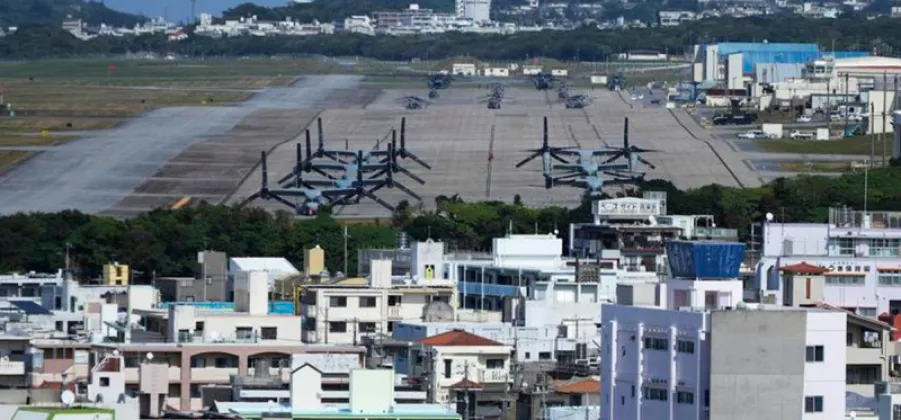
Japan and the United States agreed on Friday to take measures to prevent crimes allegedly committed by American military personnel on Okinawa, after a murder case involving a US Navy member on the island sparked widespread public outrage. The agreement puts renewed focus on the presence of US forces in Japan, where about 54,000 American service members are stationed, most of them on Okinawa.
Agreement follows public outrage
The decision came in response to anger over the murder case, which involved a member of the US Navy. The available information does not identify the victim or provide details of the case, and it does not establish the service member’s legal status. The matter has nevertheless become a flashpoint in public concern about crimes allegedly committed by American personnel on Okinawa.
The agreement is intended to prevent such crimes. Japan and the United States have agreed on measures, but the reports provided do not specify what those measures involve, how they will be implemented or when they will take effect. Those details will be important in assessing whether the decision leads to practical changes, rather than remaining a general commitment.
The case has also placed the issue of responsibility and prevention at the centre of attention. The agreement signals that both countries are addressing the concern through bilateral action. However, the information available does not describe any particular enforcement steps, new rules or changes to existing arrangements. It is therefore not possible to say from the reports what would change for military personnel or local residents.
Okinawa and the US military presence
Okinawa is home to most of the roughly 54,000 US military personnel stationed in Japan. That concentration makes the island a central part of the broader discussion surrounding the US military presence and alleged crimes by service members. The size of the force is an important part of the context for the agreement, although the reports do not give a breakdown of personnel by location or explain how the measures will apply across different bases or units.
The scale of the military presence also means that the issue involves both national governments and communities on the island. The reported public outrage following the murder case underscores the strength of local concern. At the same time, no specific statements from Okinawan residents, Japanese officials or US representatives are included in the information provided, so the precise range of responses cannot be established.
Details of the measures remain unclear
The agreement marks a stated effort by Japan and the United States to prevent crimes allegedly involving American military personnel. But without further details, key questions remain: what steps will be taken, which agencies will carry them out, and how progress will be assessed. The reports also do not say whether the measures are limited to Okinawa or form part of a broader approach across Japan.
For now, the central facts are that the two countries reached agreement on Friday, that the move followed widespread outrage over a murder case involving a US Navy member on Okinawa, and that most US military personnel in Japan are stationed on the island. The agreement’s impact will depend on the measures that are ultimately adopted and how they are put into practice. No timetable or further implementation details were provided in the information available.