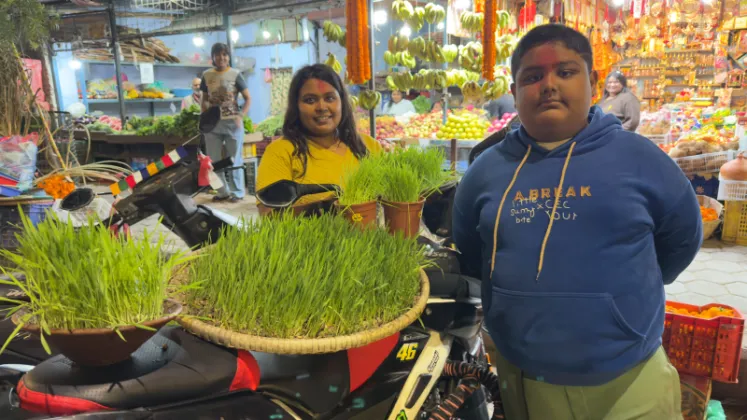
KATHMANDU - The sale of jamara, the golden barley sprouts that hold a central place in Nepal's biggest festival, has flourished during this year's Dashain celebrations, with growers and vendors seeing strong demand for the auspicious crop. What has long been a ritual offering prepared in household courtyards has also developed into a notable economic activity, as the festival season turns the humble sprout into a thriving seasonal trade that connects farm fields with festival-goers in towns and cities across the country.
A Symbol of Blessing at the Heart of Dashain
Jamara occupies a special position in the ten-day-long Dashain festival, Nepal's most widely celebrated occasion. The sprouts are traditionally germinated from barley seeds, which are sown in sand and kept away from direct sunlight so that the pale yellow shoots grow tall and tender. The timing of this preparation is tied directly to the festival calendar, with the sowing marking the beginning of the festive period and the harvesting of the sprouts coinciding with the peak days of celebration.
The demand for jamara is driven by its ritual importance. According to tradition, the sprouts are received as a blessing from elders, worn in the hair, and placed at household shrines and prayer rooms throughout the festival. As a result, almost every household observing Dashain seeks out fresh jamara during the festival days, creating a reliable and recurring wave of demand each year.
The cultural uses of jamara during Dashain include:
- Receiving jamara, along with tika, as a blessing from elders during family gatherings
- Wearing the yellow shoots in the hair as a mark of auspiciousness
- Placing the sprouts at household shrines and prayer spaces
- Offering jamara during worship as part of the festival's religious observances
Because these practices are observed by families across Nepal, the need for jamara is not limited to one region or community. This broad, nationwide participation is what gives the crop its strong seasonal market, turning a simple agricultural product into an essential festival item.
Strong Demand Powers a Seasonal Trade
Reports from this year's festival highlight how the jamara business has shined during Dashain, with sales flourishing as the celebrations peaked. As covered by Nepal Views, the trade in barley sprouts has become a notable economic activity tied to the festival season, demonstrating that the demand is not merely cultural but also commercial in scale.
For the growers and sellers involved, the festival represents the single most important window of the year for this product. Preparing jamara requires planning weeks in advance, since the barley seeds must be sown and nurtured so that the shoots reach the desired golden colour and length exactly when buyers come looking for them. The strong demand recorded this season suggests that this preparation has paid off for those engaged in the trade.
The business also supports a range of livelihoods along the supply chain:
- Farmers who sow and cultivate the barley sprouts ahead of the festival
- Traders and vendors who bring the jamara to market and sell it to festival-goers
- Local marketplaces that see increased activity as buyers gather for festival purchases
The appeal of the trade lies in the certainty of its timing. Unlike many agricultural products whose markets fluctuate, jamara has a guaranteed festival-driven demand window, and the reports of flourishing sales this Dashain indicate that sellers have been able to meet that demand successfully.
Where Agriculture, Business and Culture Converge
The boom in jamara sales illustrates a broader pattern in Nepal's festival economy, where agricultural products take on heightened commercial significance during religious celebrations. The trend reflects the intersection of agriculture, business and cultural tradition, with each element reinforcing the others. The cultural rituals create the demand, the agricultural cycle supplies the product, and the resulting trade provides seasonal income tied directly to the festival calendar.
This convergence also shows how traditional practices can sustain economic activity in modern times. The jamara trade does not depend on changing consumer fashions or new technologies; it draws on customs that families have observed for generations. As long as Dashain remains the country's most important festival, the custom of receiving jamara as a blessing will continue to underpin demand, giving growers a dependable seasonal market.
For Nepal's agricultural sector, the flourishing jamara business during this Dashain serves as a reminder of the value embedded in festival-linked crops. The strong sales recorded this season point to the steady relationship between the country's cultural heritage and its farming communities, where a handful of barley seeds, carefully nurtured, can grow into both a symbol of blessing and a source of seasonal prosperity.
As the festival celebrations continue, the golden sprouts will keep moving from fields to markets to family gatherings, carrying with them the dual significance that defines the jamara trade: a cherished tradition on one hand, and a flourishing business on the other.