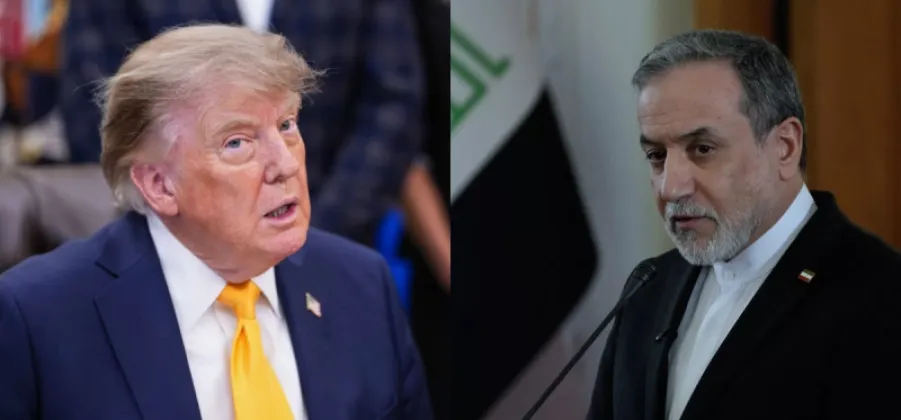
Iran has presented the United States with a seven-day proposal to reopen the Strait of Hormuz, the strategic waterway at the heart of global oil shipping, according to a report by Nepal's Nagarik News. Under the offer, Tehran is demanding that Washington lift its ban on oil exports and end its blockade of ports, steps Iran has tied directly to the reopening of the strait within the stated timeframe. Although talks have so far stalled because the two sides have not agreed on a set of seven conditions, the proposal has reportedly not been withdrawn, and discussions on the plan are said to be continuing.
A defined window to reopen the waterway
The most striking feature of Iran's proposal, as described in the report, is its unusually short deadline. Rather than an open-ended negotiating framework, Tehran has placed a seven-day window on the table, during which the Strait of Hormuz could be reopened if the United States acts on the demands Iran has attached to the offer.
Those demands, according to the report, centre on two American measures:
- Lifting the ban on oil exports that Washington has imposed, a condition Iran links to its ability to move crude and petroleum products through international markets.
- Ending the blockade of ports, a step that would restore normal shipping activity and ease pressure on maritime trade that has been squeezed by the restrictions.
Significantly, the report notes that the proposal remains on the table. That detail matters, because it indicates Iran has kept the offer alive rather than abandoning it after the initial deadlock, leaving the door open for the two sides to return to the terms under discussion.
Talks stalled over seven conditions
The immediate obstacle to progress, the report says, is a set of seven conditions on which Iran and the United States have not been able to reach agreement. It is this disagreement that has stalled the negotiation, even as both sides continue to discuss the substance of the proposal.
The contents of those seven conditions have not been spelled out in the reports available. What is clear, however, is the sequencing problem sitting at the centre of the dispute: Iran is insisting that American restrictions on its oil exports and ports be lifted as part of any arrangement to reopen the strait, while the two sides have yet to converge on the full terms.
Discussions on the proposal are continuing, according to the report. That suggests neither party has walked away from the process despite the impasse, and that the seven-day offer is being treated as a live diplomatic opening rather than a lapsed one.
Why the Strait of Hormuz matters
The Strait of Hormuz is a narrow waterway lying between Iran and the Arabian Peninsula, linking the Persian Gulf to the Gulf of Oman and, beyond it, the Arabian Sea. It is widely described as the world's most important oil transit chokepoint: a large share of the petroleum exported by Gulf producers passes through the strait on tankers bound for markets across Asia, Europe and beyond.
Because so much of the world's energy flows through such a confined passage, even the prospect of its closure is enough to unsettle oil markets, shipping insurance rates and global supply chains. A sustained shutdown would force tankers to reroute or wait at anchor, tightening supplies and pushing up costs far beyond the immediate region. It is against that backdrop that any proposal to reopen the strait, however briefly framed, carries significance well beyond the two capitals negotiating it.
The involvement of both oil exports and port access in Iran's demands underlines how tightly the strait's status is bound to the wider trade picture. Any understanding that reopens the waterway while leaving export restrictions and port blockades in place would fall short of what Tehran says it requires, which helps explain why the two sides remain at odds over the seven conditions.
What happens next
For now, the situation is one of stalled but continuing diplomacy. The seven-day proposal remains open, according to Nagarik News, and discussions between Tehran and Washington on the plan are ongoing.
Whether the offer matures into an agreement or joins the list of stalled initiatives will depend on whether the two sides can bridge their differences over the seven conditions attached to the arrangement. The key test will be Washington's response to Iran's two central demands: lifting the ban on oil exports and ending the blockade of ports.
Until one of those positions shifts, the strait's status and the wider tensions surrounding it remain unresolved, with the seven-day proposal standing as the clearest sign that both sides are still talking.