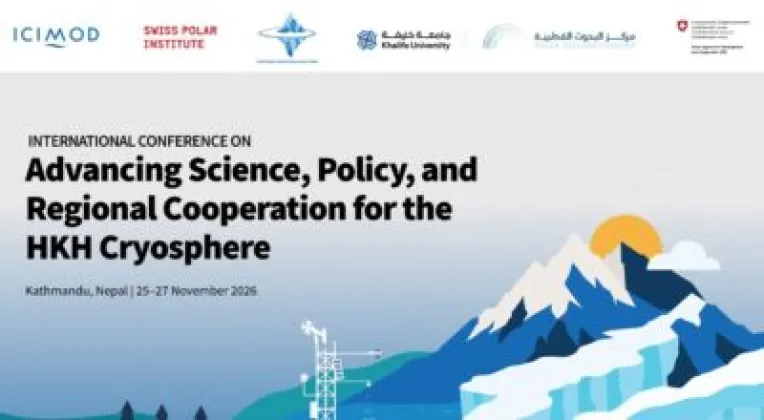
Kathmandu is set to host an international conference dedicated to the Hindu Kush Himalaya cryosphere from November 25 to 27, corresponding to Mangsir 9 to 11 of the Nepali calendar. The three-day event, focused on science, policy and regional cooperation, is being organised by the International Centre for Integrated Mountain Development (ICIMOD) at its headquarters in Khumaltar, Lalitpur.
The conference will bring participants together to discuss the rapid changes taking place in the region's snow and ice, the impacts of those changes on ecosystems and communities, and the measures that can be adopted to reduce the associated risks. By combining scientific evidence with policy dialogue, the event aims to strengthen regional cooperation on one of the most pressing environmental issues facing the Himalayan region.
A Forum for Science and Policy
The core agenda of the gathering centres on the cryosphere, the frozen components of the mountain system, including glaciers, snow cover and permafrost, which are undergoing rapid transformation. Scientists, policymakers and regional stakeholders attending the conference will examine how these changes are unfolding across the Hindu Kush Himalaya and what they mean for the hundreds of millions of people who depend on the region's water resources.
Discussions are expected to cover not only the state of the snow and ice but also the downstream consequences of their decline. Participants will explore risk reduction measures that can help communities and governments prepare for and adapt to the accelerating changes. The framing of the event around science, policy and regional cooperation underscores the need to translate research findings into concrete action at national and regional levels.
Organised by ICIMOD in Lalitpur
The International Centre for Integrated Mountain Development, an intergovernmental knowledge organisation, is hosting the conference at its office in Khumaltar, Lalitpur. ICIMOD has long worked on mountain development issues across the Hindu Kush Himalaya, making its Kathmandu-based headquarters a natural venue for a gathering of this kind.
The choice of Kathmandu as the host city reflects the country's position at the heart of the Hindu Kush Himalaya, a region whose frozen water towers feed major river systems across South and Southeast Asia. The conference dates, November 25 to 27 (Mangsir 9 to 11), span three full days of deliberations.
Why the Cryosphere Matters
The Hindu Kush Himalaya is often described as a critical water tower for the region, with its glaciers and snowpack sustaining river flows that support agriculture, hydropower and daily livelihoods far beyond the mountains themselves. Rapid changes in the region's snow and ice carry implications for water availability, natural hazards and the stability of ecosystems on which large populations depend.
By convening experts and policymakers in one place, the conference is intended to advance shared understanding of these impacts and to identify measures to reduce the risks they pose. The emphasis on regional cooperation recognises that the cryosphere and the rivers it feeds cross national boundaries, making coordinated responses essential.
The event is expected to contribute to a stronger regional dialogue on protecting mountain communities and managing the consequences of a changing cryosphere, as organisers and participants gather in Lalitpur at the end of November.