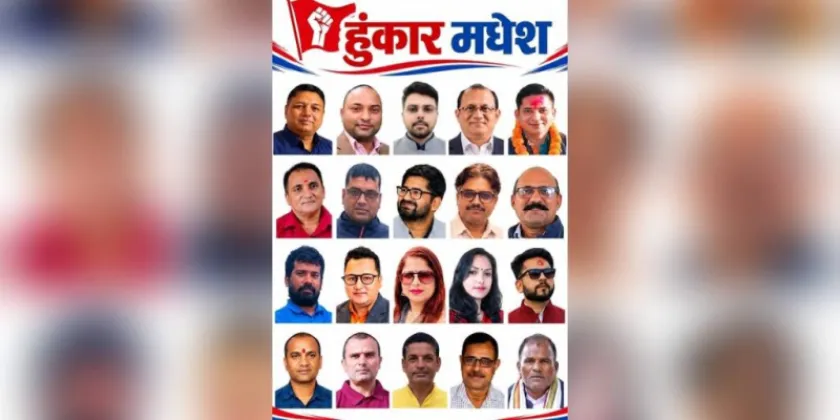
Hunkar Madhesh has appointed coordinators for 21 departments in the first phase of its campaign to connect the Tharuhat-Madhes region, according to a report published on October 13, 2026. The appointments followed a mandate from a central campaigners’ meeting held on Ashoj 9 and discussions with campaigners. The newly designated department heads have been told to prepare and submit a work plan, departmental procedures and a schedule for a 100-day programme within seven days.
Appointments follow campaigners’ mandate
The first-phase appointments establish departmental leadership within Hunkar Madhesh’s campaign structure. The decision was made on the basis of the central campaigners’ meeting mandate and subsequent dialogue with campaigners, spokespersons said. The announcement therefore combines a decision taken at the campaign’s central gathering with consultations held afterward.
The campaign’s stated purpose is to connect the entire Tharuhat-Madhes region. The appointments are the first phase of organising departments for that effort. The information provided does not detail the responsibilities assigned to each department or identify the individual coordinators, but it sets out an immediate requirement for all appointed heads: each must produce planning documents for the department they will lead.
That requirement gives the appointees a short first deadline. Within seven days, they must submit three items: a work plan, procedures for their department and a schedule for a 100-day programme. The instructions apply to the designated department heads and are intended to turn the appointments into a defined programme of work.
Selection based on education and expertise
A spokesperson said the departmental heads were selected on the basis of having at least a bachelor’s degree and expertise relevant to their respective departments. The stated criteria combine a minimum education threshold with subject knowledge. The campaign has not, in the information available, provided further details about how candidates were assessed or how expertise was matched to particular departments.
The selection criteria distinguish the appointments from assignments made solely through campaign participation: according to the spokesperson, candidates were considered for their education and departmental expertise. The announcement does not provide additional information about the appointees’ professional backgrounds, the composition of the departments or whether further appointments are planned after this first phase.
Seven-day deadline sets the next step
The work plans, procedures and 100-day schedules are the next deliverables expected from the 21 department heads. The deadline means the campaign’s initial organisational phase is to be followed quickly by proposals describing each department’s work and the programme it intends to undertake over the first 100 days. No details of those proposed activities have yet been included in the announcement.
The campaign has not set out, in the information reported, a separate timetable for reviewing or approving the documents. Nor has it described how progress under the 100-day schedules will be monitored. For now, the stated direction is the seven-day submission requirement and the three documents requested from every departmental head.
The appointments mark Hunkar Madhesh’s first phase of departmental organisation under its wider effort to connect the Tharuhat-Madhes region. The campaign’s next visible step will be the submission of the department-level plans and procedures requested from the newly appointed coordinators.