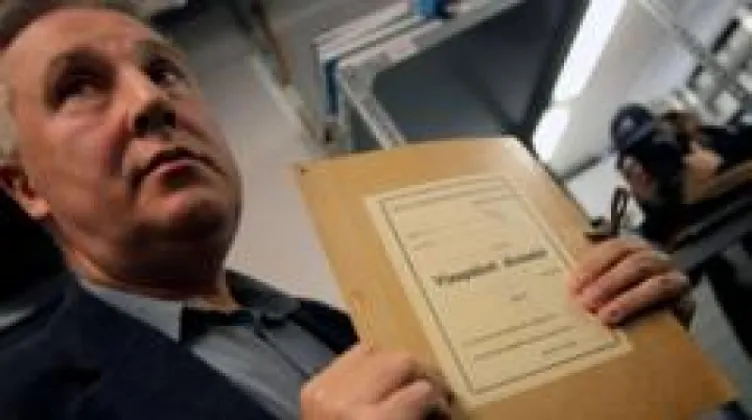
Hungary has begun publishing secret government documents from its four decades of communist rule online, in what the government describes as an important step in the country's democratic transition. The files, compiled during the years when the Communist Party controlled the Hungarian state, are expected to reveal one of the period's most sensitive questions: who informed on neighbours, colleagues, friends and relatives. As reported by BBC Nepali, the release opens formerly secret government records to the public, and with it the possibility that Hungarians will learn, in specific and personal terms, how the old regime watched and divided them. For a country still shaped by its authoritarian past, the publication represents one of the most direct forms of transparency a state can offer its citizens: the state's own secret paperwork.
An Important Step in the Democratic Transition
The government's framing places the release within the long process of moving out of communism's shadow. When a country transitions to democracy, it inherits not only new institutions but also the paper trail of the old regime, and governments must decide whether those records remain sealed, are restricted to researchers and victims, or are opened to everyone. By choosing to publish the documents online, Hungary's leadership has presented the disclosure as a democratic achievement rather than a purely administrative decision.
In practical terms, online publication means that access no longer depends on travelling to an archive or requesting special permission. Material that was once among the state's most closely held secrets can now be consulted by anyone with an internet connection. That accessibility is central to why the government calls the move an important step: in its view, the democratic transition is not complete until the record of the communist era is in the public's hands.
What the Release Involves
- Scope: The documents cover roughly four decades of communist rule in Hungary.
- Format: The files are being published online rather than kept as sealed state secrets.
- Expected content: The documents are expected to identify people who informed on neighbours, colleagues, friends and relatives.
- Official rationale: The government has described the publication as an important step in the country's democratic transition.
The Files Expected to Name Names
For the communist state, informers were an instrument of government. The expectation that the documents will show who informed on whom indicates that the material captures the human network on which the regime relied: neighbours reporting on neighbours, colleagues on colleagues, and, in the most painful cases, friends and relatives on each other. Publishing such records converts the history of surveillance from an institutional story into a set of individual choices, each with a name attached.
The personal consequences could be significant. People who suspected they were being watched may find confirmation of who was watching them. Others may discover that someone they trusted was passing information to the authorities. Because the files are being released online, such discoveries are likely to unfold in private homes as well as in public debate, giving this publication a reach that few historical records ever achieve.
Four Decades Under Communism
Hungary spent roughly four decades under communist rule following the Second World War, a period that ended in 1989 as communist governments across Eastern Europe collapsed. During those years, the documents now being published were produced and kept secret by the state itself, forming a record of how the regime gathered information about its own citizens and maintained its grip on power.
The democratic transition that followed has been shaped, in part, by unfinished questions about the old regime: who cooperated with it, who suffered under it, and who chose to look away. Secret police and state security files have been central to those questions across the former Eastern bloc, because they document the machinery of surveillance in the regime's own words. By making its records public, the Hungarian government is treating transparency about the communist past as part of consolidating democracy rather than as a burden to be left in storage.
A Reckoning That Begins at Home
News of the publication has travelled well beyond Hungary's borders, with Ajako Artha among the outlets carrying the report. The government's decision will now be judged by how the public uses the material: whether it brings clarity to victims and accountability to those who cooperated, or reopens wounds that had begun to heal. Those outcomes cannot be known in advance, but the government has made clear that it considers openness about the era to be the right path.
For decades, the question of who informed on whom in communist Hungary was answered only in whispers, if it was answered at all. With the documents now going online, those answers are being handed to the public in writing. The government has framed that transfer of knowledge as the fulfilment of a democratic promise, and for the Hungarians who read the files, it may finally bring one of the twentieth century's longest-running secrets out of the shadows and into the open.