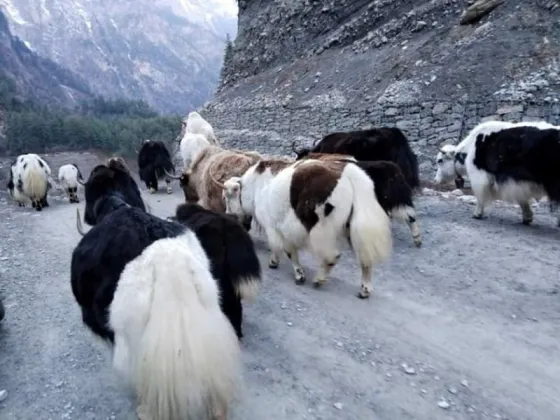
Yak and chauri herders from Nepal, Bhutan and India are set to gain their first shared regional platform, with the Himalayan Yak Farmers' Network due to be formally launched at the ninth Royal Highland Festival in Bhutan. According to a report published by Ratopati, the International Centre for Integrated Mountain Development (ICIMOD) has described the initiative as the first regional platform focused solely on the Himalayan yak farming communities. The launch follows roughly a decade of cooperation among farmers, governments and development partners, and the network's founding purpose is to strengthen joint action on the pressures reshaping life in the high Himalayas, including climate change, rangeland degradation and the out-migration of herding families.
A First-of-Its-Kind Regional Platform
The new network unites the keepers of yak and chauri, the yak-cattle hybrid raised widely in Nepal's high country, across three neighbouring Himalayan nations. As Nagarik News reports, no regional body has previously existed that speaks solely for these communities, whose livelihoods depend on some of the highest inhabited grazing lands in the world.
ICIMOD's description of the platform as a first underlines its singular focus. While regional cooperation on mountain livelihoods has often covered broad themes, the Himalayan Yak Farmers' Network is dedicated exclusively to yak farming communities and to the specific economic and environmental pressures they face. The platform has taken shape through the combined efforts of the farmers themselves, their governments and development partners, the same coalition whose years of joint work have made the launch possible.
A Symbolic Stage in Bhutan
The choice of venue carries weight of its own. The Royal Highland Festival, now in its ninth edition, is a Bhutanese celebration of highland culture and the traditions of high-altitude herding, and it brings together communities whose way of life closely resembles that of the herders the new network represents. Launching the Himalayan Yak Farmers' Network at the festival places the platform before exactly the audiences it hopes to serve: yak-keeping families, highland communities and the officials and partners who work alongside them.
Built on a Decade of Cooperation
According to Khabarhub, the launch is not a sudden development. It comes after about ten years of cooperation among yak farming communities, their governments and development partners, a period in which herders across the three countries built the relationships and shared understanding that the new platform will now formalize.
That timeline shapes what the network is meant to become. Rather than a one-off declaration, the platform represents the institutionalization of cooperation that has been developing for years across the borders of Nepal, Bhutan and India, where herding communities live in comparable environments and face common challenges. The reports announcing the launch emphasize precisely this point: herders from the three nations are uniting to address shared problems in the Himalayan region together, rather than separately.
Three Challenges, One Shared Response
The network's founding agenda centres on three interlocking pressures, as outlined by ICIMOD and reported across Nepali media:
- Climate change: the shifting conditions across the high Himalayas that bear directly on the pastures, seasons and herd management on which yak and chauri farming depends.
- Rangeland degradation: the deterioration of the grazing lands that sustain both the animals and the herding economy built around them.
- Out-migration: the departure of herding families from high-altitude areas, which threatens the continuity of yak and chauri farming itself.
Joint Action Across Borders
Each of these challenges crosses national boundaries, and the network's core premise is that herders will be more effective acting jointly than in isolation. Strengthened joint action, the stated aim of the platform, means herders sharing experience across the region, coordinating their engagement with their respective governments and working collectively with the development partners who have supported them over the past decade.
A New Voice for Highland Herders
For the farmers of Nepal, Bhutan and India, the formal launch converts years of informal cooperation into a recognized regional structure. The involvement of governments and development partners alongside the herders themselves signals that the platform is intended to carry weight beyond the festival grounds, giving yak farming communities a collective channel to the institutions whose decisions affect their future.
The launch also arrives at a time when the pressures on highland livelihoods, from climate stress and degrading pastures to the pull of migration, are mounting across the Himalayas. By naming these challenges at its founding and committing to joint action on them, the Himalayan Yak Farmers' Network begins its work with a clear mandate. When the ninth Royal Highland Festival opens in Bhutan, the herders gathered there will do so, for the first time, under a single regional banner of their own.