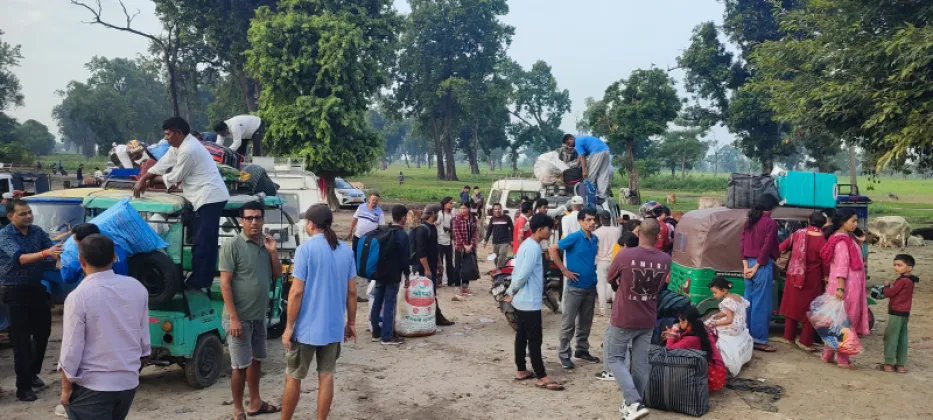
Nepali citizens returning from India for the Dashain and Tihar festivals are crowding the Gaddachauki border point in Kanchanpur district, where health screening has been made mandatory. Health desks at the crossing are checking returnees for malaria, tuberculosis, HIV, COVID-19, dengue and scrub typhus, with the District Health Office Kanchanpur saying the aim is to identify possible infections early and limit the spread of disease.
Screening targets six diseases
The checks cover six diseases: malaria, tuberculosis, HIV, COVID-19, dengue and scrub typhus. Screening at the border is intended to help identify possible infections among people arriving from India before they continue their journeys within Nepal. The District Health Office says early identification can allow people to receive treatment in time and help prevent disease from spreading.
The measure applies to Nepali citizens returning during the festival season, when people travel home from India for Dashain and Tihar. With returnees gathering at Gaddachauki, the health desks are being used as a point of screening at the border. The requirement makes health checks part of the arrival process for those passing through the crossing during this period.
The six diseases named for screening include conditions that are distinct from one another, but the stated purpose of checking for each is the same: to detect possible infections among returnees. The list includes COVID-19, as well as malaria, tuberculosis, HIV, dengue and scrub typhus. The screening effort is focused on early identification rather than waiting for possible infections to be recognized after travelers have moved on from the border area.
Early identification and treatment
The District Health Office Kanchanpur said the checks are intended to identify possible infections early so affected people can be treated in time. The office also said the measure is meant to prevent the spread of disease. In this way, screening serves two linked aims: helping returnees receive timely care and reducing the risk that an infection could be carried onward as people travel home.
Making screening mandatory places the health check at the point where returning citizens are entering Nepal through Gaddachauki. The health desks are conducting checks for all six listed diseases as part of the response during the festival period. The reported objective is to recognize possible cases among travelers and ensure that the opportunity for early identification is not missed during the busy return movement.
Festival travel brings a crowd to Gaddachauki
The crowd at the Kanchanpur border is linked to Nepali citizens returning from India for Dashain and Tihar. The flow of festival returnees has brought increased attention to health checks at the crossing, where screening has been made a requirement. The available reports describe the crowd and the screening measure but do not provide a total number of people checked, details of individual test results or figures for identified cases.
For people returning during the festival season, the message from the district health authorities is that screening at Gaddachauki is mandatory. The health desks are testing for malaria, tuberculosis, HIV, COVID-19, dengue and scrub typhus, and the District Health Office says early identification can support timely treatment and help prevent disease transmission. The measure is therefore being used as a public health safeguard alongside the return movement through the border point.