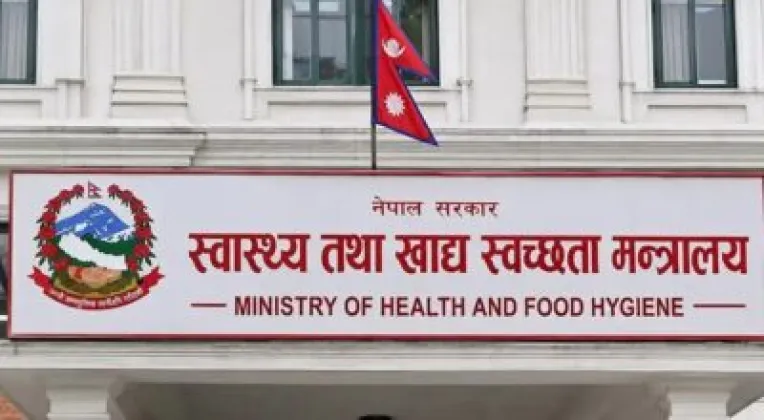
Nepal's Ministry of Health and Food Hygiene has approved a dedicated set of national standards for the management of altitude sickness in the country's high-altitude and Himalayan areas, a move intended to make the prevention, identification and treatment of the condition far more systematic in some of the world's most demanding terrain. The newly endorsed document, titled the Standards for the Management of Altitude Sickness in High-altitude and Himalayan Areas, 2083, was cleared by the ministry with the stated aim of ensuring that altitude-related illness can be identified and treated in time across Nepal's mountainous regions, as reported by Khabarhub.
The approval represents a formal policy response to a health risk that is inseparable from life and travel in Nepal's high Himalaya, where settlements, trekking routes and expedition trails sit at elevations where altitude sickness is a persistent threat. By attaching an official standards document to the problem, the ministry has signaled that altitude sickness will now be addressed through an organized framework rather than on a case-by-case, improvised basis.
A Framework Built on Prevention, Identification and Treatment
According to the ministry, the standards are designed to operate across three connected areas, and together these are expected to form the backbone of how altitude sickness is handled in high-altitude and Himalayan areas going forward.
- Prevention: The standards are intended to put prevention first, so that the circumstances in which altitude sickness develops can be reduced before people fall ill.
- Identification: The framework seeks to enable the timely identification of altitude sickness, so that symptoms are recognized early rather than after a case has grown severe.
- Treatment: The document aims to guide treatment so that people who do fall sick receive appropriate care without avoidable delay.
The word "systematically" is central to how the ministry has described the new rules. Rather than leaving the response to altitude sickness to depend on where a person happens to fall ill or who happens to be nearby, the standards are meant to establish a consistent approach across the high-altitude and Himalayan areas named in their title.
Why Timely Action Matters in Nepal's Mountain Regions
The emphasis on timing reflects a straightforward reality of mountain health care: the sooner altitude sickness is identified and treated, the better the outlook for the patient. Altitude sickness arises when the body has difficulty adjusting to the reduced oxygen available at higher elevations, and it can become dangerous when it is not recognized and managed promptly. The ministry has made "timely identification and treatment" the central promise of the new guidelines, and it has directed them specifically at the mountainous regions of Nepal, where reaching a health facility can be far more complicated than in urban centers or the plains.
Nepal's high-altitude and Himalayan areas are home to communities that live year-round at significant elevations, and they also receive trekkers, climbers and workers who ascend into terrain where altitude places real physiological stress on the body. In such settings, an illness that might be manageable if caught early can escalate when recognition and treatment are delayed, which is precisely the gap the new standards are intended to close.
The ministry's framing of the document, from its title onward, ties it explicitly to geography. By naming "high-altitude and Himalayan areas" within the standards themselves, the ministry has made clear that this is not a general health circular but a targeted instrument for the specific environments where altitude sickness occurs.
The 2083 Standards and What Comes Next
The document carries the Nepali calendar year 2083 in its title, corresponding to 2026-2027, and follows the standard practice of anchoring Nepali standards and directives to the Bikram Sambat calendar. The year designation marks the document as a formal reference point for health authorities working in the field.
With the standards now approved, the ministry's stated expectations are clear: the prevention of altitude sickness should be organized rather than improvised, identification should happen in time, and treatment should follow without unnecessary delay. The extent to which those expectations translate into everyday practice across Nepal's dispersed high-altitude terrain will depend on how the framework is carried forward, but the approval itself establishes the official baseline against which that work can now be measured.
For the health facilities, workers and residents of Nepal's mountain districts, and for the many visitors who pass through them, the Standards for the Management of Altitude Sickness in High-altitude and Himalayan Areas, 2083 now stand as the government's formal reference for how this condition should be prevented, recognized and treated. The ministry's announcement makes altitude sickness management an explicit, standardized component of health policy in the regions where it matters most.