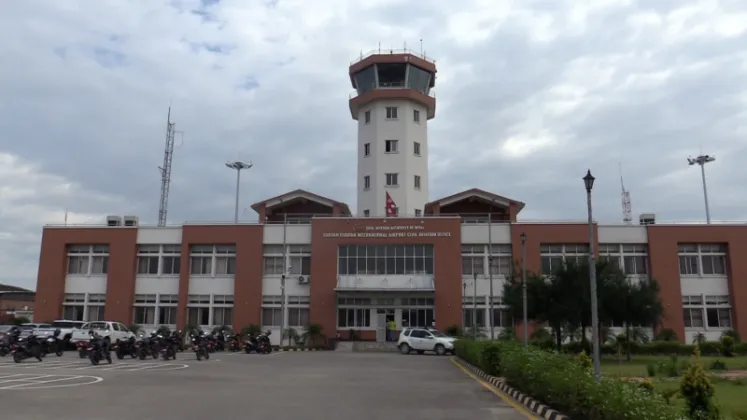
Hotel and tourism entrepreneurs in Bhairahawa invested billions of rupees in hotels, restaurants and tourism infrastructure on the strength of a single bet: that the Gautam Buddha International Airport would transform their region's economy. Four years after the airport was built, that bet is in jeopardy. The facility remains non-operational, and the investments made in anticipation of an international visitor boom now stand at serious risk, according to reports by Artha Sarokar and Pradeskhabar.
Billions Invested on the Promise of Connectivity
When the Gautam Buddha International Airport rose at Bhairahawa, entrepreneurs in the hotel and tourism business saw a once-in-a-generation opportunity. Confident that the airport would remake the town's fortunes, they committed billions of rupees to building and expanding hotels, restaurants and the wider tourism infrastructure needed to receive foreign guests.
The expectations attached to that spending were sweeping, and they were not confined to the hospitality sector alone. Entrepreneurs anticipated that the airport would:
- Draw a growing stream of foreign tourists to Lumbini, the birthplace of Gautam Buddha, which lies near Bhairahawa
- Keep hotels full and restaurants busy throughout the year
- Attract new industries to the region, broadening the local economic base
- Establish Bhairahawa as a hub of international trade and tourism
For a town positioned at the gateway to one of the world's most significant pilgrimage sites, the calculation appeared sound. An international airport beside Lumbini, entrepreneurs reasoned, would finally connect the birthplace of the Buddha to the global travelers who sustain pilgrimage economies elsewhere in Asia.
Four Years On, the Airport Stands Idle
That vision has yet to materialize. Four years after the airport was built, it remains non-operational, and the absence of activity at the facility has left the business community that organized its plans around it increasingly exposed.
The consequences fall most directly on the hoteliers and restaurateurs who expanded their businesses on the assumption that international flights would fill their rooms and tables. Investments worth billions of rupees, made in the expectation of a tourist inflow that never arrived, are now at risk. For the entrepreneurs who committed their capital to the airport's promise, the dormant facility represents not a symbol of future growth but a daily reminder of money tied up in anticipation of a boom that has not come.
The situation also illustrates a familiar hazard of infrastructure-led investment: private businesses frequently commit their funds in step with public projects, and when those projects stall, the private investment is left without the foundation it was built upon. In Bhairahawa, an entire tourism ecosystem, from lodging and dining to the supporting services that accompany a visitor economy, was constructed in expectation of the airport's operation. The longer the facility remains out of use, the greater the strain on the businesses that depend on it.
Lumbini's Untapped Pilgrimage Market
At the heart of the entrepreneurs' original optimism was Lumbini itself. As the birthplace of Gautam Buddha, the site holds deep religious significance for Buddhists around the world and is widely regarded as one of Nepal's foremost cultural and heritage destinations.
The entrepreneurs' expectation was that the international airport would serve as the key that unlocked this market, allowing foreign visitors to reach Lumbini in far greater numbers. Full hotels, busy restaurants and a broader service economy were all predicated on that flow of international arrivals. With the airport non-operational, the visitor traffic that was supposed to anchor Bhairahawa's transformation has remained out of reach, and the tourism infrastructure built to serve it sits underused.
The gap between expectation and reality is now the defining feature of the town's tourism economy. The ambitions entrepreneurs articulated when they invested, full occupancy, new industries, and Bhairahawa's emergence as a center of international trade and tourism, all traced back to a single precondition: an operating international airport.
Waiting for Takeoff
For Bhairahawa's business community, the path forward runs through a single point: the Gautam Buddha International Airport must come into operation. Until it does, the billions of rupees invested in the town's hotels, restaurants and tourism infrastructure remain exposed, and the wider aspirations of the region, from industrial expansion to its emergence as an international hub, remain on hold.
The entrepreneurs who invested in Bhairahawa's future did so because an international airport was built in their backyard. Four years later, their position is straightforward: the facility needs to operate so that the investments made around it can be realized rather than lost.