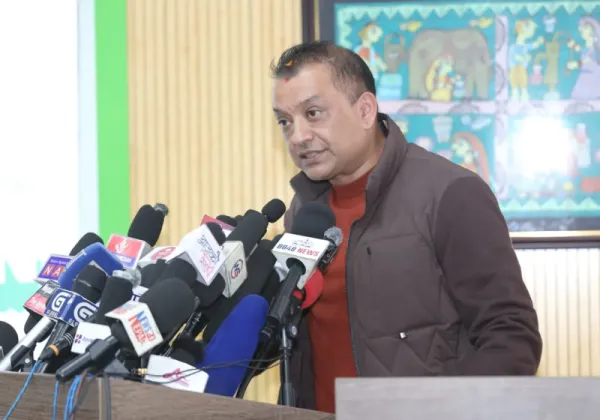
Nepali Congress President Gagan Kumar Thapa on Friday issued a stern warning that party leaders and activists who retain their Congress membership while joining another party will face disciplinary action under the party statute. Speaking at the party's Central Committee meeting, which began today at the party's central office in Kathmandu, Thapa said those who were elected on the Congress election symbol and then defected to other parties will not be spared by the party's disciplinary mechanisms.
The warning comes amid growing concerns within the party about members holding dual political affiliations, a practice Thapa made clear the party will no longer tolerate.
Strict Action Under Party Statute
Thapa told the Central Committee that the party statute provides clear grounds for action against such members. According to him, leaders and activists who officially remain within the Congress while simultaneously working with or joining another party are acting against the fundamental rules of the organization.
He singled out those who fought elections on the Congress's election symbol, secured public office through the party's support, and then moved to other political forces. Such conduct, he said, betrays the mandate given by voters and will be met with disciplinary measures.
The Nepali Congress has long grappled with questions of internal discipline, and Thapa's remarks signal a hardening of the party's position on defection at a time when political loyalties in Nepal are under strain. By raising the issue at the Central Committee, the party's highest decision-making body, he has effectively put all members on notice.
Defiant Challenge to the Government
In the same meeting, Thapa turned his fire on the government, delivering a defiant message directed at those who may be considering action against him. "If you are going to arrest me, come with handcuffs, not empty-handed," he declared, challenging the authorities to act openly rather than through indirect pressure.
He warned that state investigation and security agencies should not be misused as instruments of political revenge. Thapa's comments reflect his assessment that government machinery is being eyed as a tool to target political opponents, a practice he said must not be allowed to take root.
His remarks at the Central Committee meeting underline the deepening friction between the Nepali Congress leadership and the government. By framing the issue as one of democratic principle rather than personal safety, Thapa sought to rally his party colleagues around a broader message about the impartial use of state institutions.
Party Unity Message
Thapa's dual message, discipline for defectors and defiance before the government, set the tone for the Central Committee meeting convened at the party's Kathmandu headquarters. For the Congress rank and file, the signal was twofold: loyalty to the party will be enforced through its statutes, and the party's leadership will not bow to perceived pressure from the state.
Whether the party follows through with formal disciplinary action against specific members remains to be seen, but Thapa's warning marks one of the strongest statements yet from the Nepali Congress on the issue of members joining rival parties while retaining their Congress membership.
The meeting is expected to continue discussions on the party's organizational and political course in the coming days, with Thapa's remarks likely to dominate internal debate.