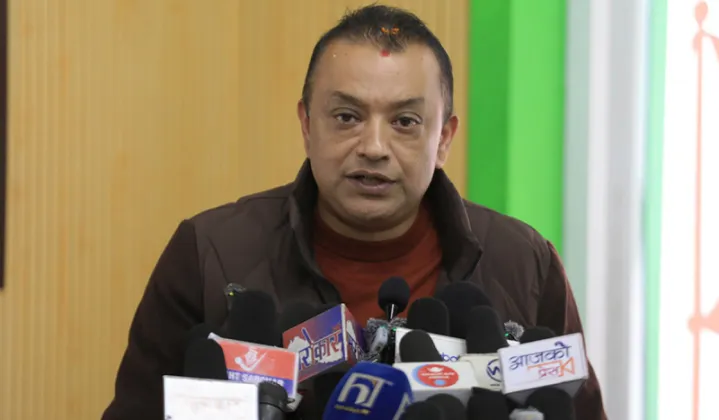
Nepali Congress President Gagan Kumar Thapa has issued a strong warning that leaders and activists aligned with the Sher Bahadur Deuba faction will face disciplinary action under the party statute if they continue down the path of holding a parallel general convention. Thapa delivered the warning during a central committee meeting of the party that began on Tuesday, making it clear that the establishment side of the party will not tolerate what it views as a breach of organizational discipline.
With this warning, the long-running internal dispute in the Nepali Congress has moved into a new and more serious phase. What had so far been a contest over the party's top leadership and the schedule of the general convention has now escalated to the stage of disciplinary action, raising the stakes for the Deuba faction and the party's unity.
Warning Issued at Central Committee Meeting
The warning came as the party's central committee meeting began on Tuesday. Thapa, speaking at the meeting, made it explicit that leaders and activists working toward the Deuba group's proposed parallel convention would be held accountable under the party statute.
The central committee meeting is the highest regular forum of the party outside the general convention itself, and statements made there carry formal weight. By raising the issue of disciplinary action at this platform rather than through informal channels, the party leadership has signaled that the threat is not rhetorical but a formal position backed by the party's rules.
Dispute Moves to Disciplinary Stage
The rift within the Nepali Congress has been building over the question of the party's general convention, with the Deuba group preparing to organize a parallel convention in defiance of the official program announced by the party. The establishment side, led by Gagan Kumar Thapa as party president, has treated this move as a direct challenge to the party's statutory processes.
Until now, the confrontation had largely been framed as competition between the two sides over legitimacy, dates, and organizational control of the convention process. Thapa's latest statement marks a turning point: the party leadership has now placed disciplinary measures on the table, meaning that leaders and cadres identified with the Deuba group's parallel effort could face formal punishment under the party's constitution.
What Lies Ahead for the Party
The escalation places the Deuba faction's leaders and activists in a difficult position. Proceeding with the parallel convention could invite statutory action, while backing down would mean abandoning the organizational push they have been preparing. How the Deuba group responds to the warning will likely determine whether the dispute deepens further or finds a path toward resolution within the party.
For the Nepali Congress, one of the country's major political parties, the internal standoff comes at a sensitive moment, with the parallel convention preparations already underway. The warning issued from the central committee meeting makes clear that the party leadership intends to defend its official convention process, and that any challenge to it will now carry formal consequences under the party statute.
As the central committee meeting continues, attention will shift to whether disciplinary measures are formally initiated and how the Deuba camp reacts. What was once a leadership contest has become a test of the party's internal rules, and the coming days are expected to clarify just how far each side is willing to go.
Source: Nepal Lead