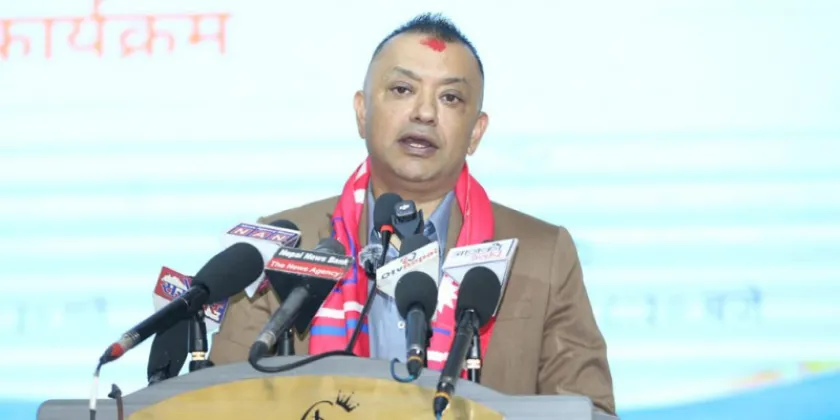
Nepali Congress President Gagan Thapa on Tuesday said he has met CPN (UML) Chairman KP Sharma Oli five times since assuming the leadership of the country's largest opposition party. Thapa made the remark while speaking at the Central Working Committee (CWC) meeting of the Nepali Congress, which began on Tuesday in Kathmandu, according to reports published by Nepal Press, Khabarhub and Ratopati.
Thapa's statement comes in the context of discussion within the party regarding his engagements with leaders of other political parties. Addressing the meeting directly, he defended his outreach to the UML chairman, noting that his fifth meeting with Oli had taken place recently. He framed such contacts not as private or informal exchanges, but as part of the duties attached to his position.
Meetings Fall Within Presidential Responsibilities
Speaking at the CWC gathering in Kathmandu, Thapa said that meeting top leaders of various political parties falls within his responsibilities as party president. His remarks appeared intended to clarify and justify his contacts with the CPN (UML) leadership to party members gathered at the Central Working Committee meeting.
The Nepali Congress president's comments came as he addressed the party's senior decision-making body, where internal matters and the party's political direction are discussed. Thapa, who leads the Nepali Congress, told the meeting that engagement with the leaders of other parties is a normal and necessary part of his role, rather than an exceptional or questionable activity.
Fifth Meeting With Oli Held Recently
Thapa told the committee that his fifth meeting with the CPN (UML) chairman had occurred recently, according to the reports. By specifying the number of meetings, he sought to put a clear figure on his contacts with Oli since he became Congress president, in what appeared to be an effort to address discussion of the matter within the party.
The disclosure that the Congress president has sat down with the UML chairman five times highlights the level of interaction between the leaders of Nepal's two largest political parties. Thapa presented the meetings as a routine element of inter-party engagement undertaken from his position as Nepali Congress president.
Context: Leadership Engagement Across Party Lines
Thapa's remarks at the Central Working Committee meeting underline the significance attached to interactions between the heads of Nepal's major political forces. As Congress president, Thapa said, engagement with top leaders of various parties is part of the job he holds, and his meetings with Oli should be understood in that light.
The Nepali Congress president made his comments as the party's Central Working Committee meeting got underway in Kathmandu on Tuesday. The meeting provides a forum for the party's central leadership to deliberate on political and organisational questions, and Thapa used the occasion to speak candidly about his contacts with the UML chairman.
Thapa's clarification that he has met Oli five times, with the most recent meeting taking place recently, formed a notable point of his address to the committee. He presented the record of meetings openly to the party's central body, positioning his outreach to the CPN (UML) leadership as consistent with the responsibilities of his office rather than separate from them.
Party Leadership Faces Committee
Thapa's statements were delivered at a meeting of the Nepali Congress's Central Working Committee, the party's top internal forum, which convened in Kathmandu on Tuesday. His acknowledgment of five meetings with Oli came as part of his address to the gathered central members.
As reported by Nepal Press, Khabarhub and Ratopati, the Congress president's comments made clear that he regards meetings with the leaders of other parties, including the UML chairman, as a core element of the role he occupies. With his fifth meeting with Oli having taken place recently, Thapa chose the CWC platform to state the facts of his engagement directly to his party.
Further details of the Central Working Committee meeting and any discussion of Thapa's remarks within it were not available in the reports at the time of writing.