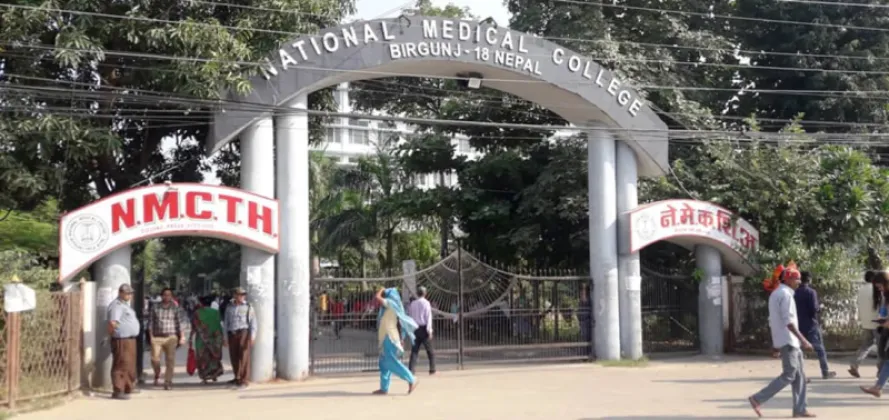
First-year postgraduate resident doctors at National Medical College in Birgunj have submitted mass resignations from their posts, escalating a confrontation with one of Madhesh Province's prominent medical institutions. The move comes after the doctors say their demands went unaddressed despite a two-month-long movement against the college's working style and practices.
The resignation letters were addressed to Minister for Education and Sports Sasmit Pokharel, underscoring the doctors' decision to bypass the college administration and take their grievance directly to the provincial government. In the letters, the resident doctors described their working environment as unsafe, humiliating and discriminatory, stating that the conditions at the institution had made it impossible for them to continue in their posts.
Two-Month Movement Ends in Resignations
The mass resignation marks a sharp escalation in a dispute that has simmered for at least two months. According to the residents, they had organised a sustained movement pressing the college to address its working style and practices, but the administration failed to respond to their demands despite the prolonged protest.
Frustrated by the lack of progress, the first-year postgraduate residents chose to step down collectively rather than continue working under conditions they say compromise their safety and dignity. The decision to resign en masse, rather than individually, reflects the collective nature of their grievance and signals that the dispute affects the entire first-year resident cohort at the institution.
Grievances of Safety, Humiliation and Discrimination
In their resignation letters addressed to Minister Pokharel, the doctors set out the core of their complaint: conditions at the college that they characterised as unsafe, humiliating and discriminatory. While the summary of their demands points to the institution's broader working style and practices, the framing of the letters suggests that the residents saw their treatment within the college as a systemic problem rather than a matter of isolated incidents.
Resident doctors occupy a critical position in Nepal's medical education system. Postgraduate residents staff hospital wards, emergency services and outpatient departments while pursuing their specialisation, and their working conditions have been a recurring flashpoint in medical institutions across the country. A mass resignation by an entire batch of first-year residents therefore has implications not only for the doctors themselves but also for patient services at the hospital where they were deployed.
Appeal Directed at Provincial Government
By addressing their resignation letters to the Minister for Education and Sports, the resident doctors effectively appealed to the provincial authorities responsible for overseeing medical education in the province. Minister Sasmit Pokharel is the named recipient of the letters, placing responsibility for a resolution squarely within the provincial government's orbit.
The choice to escalate to the minister indicates that the residents had lost confidence in resolving their concerns through internal channels at the college. It also places the onus on provincial education authorities to respond to allegations of unsafe, humiliating and discriminatory conditions at an institution under their regulatory watch.
What Lies Ahead
The mass resignation leaves National Medical College facing a serious administrative and service-delivery challenge. With the entire first-year postgraduate resident cohort having stepped down, the college must now contend with both the immediate gap in resident staffing and the reputational fallout of a protest that has culminated in collective resignation.
For their part, the resident doctors have made clear through their letters that their exit is the product of a prolonged and unresolved grievance process. Whether the minister's office and the college administration move to address the demands that sparked the two-month movement, and whether the resigning residents are willing to return if their concerns are met, remains to be seen. The episode adds to ongoing scrutiny of working conditions for resident doctors in Nepal's medical colleges and the mechanisms available to them when negotiations with institutional leadership fail.