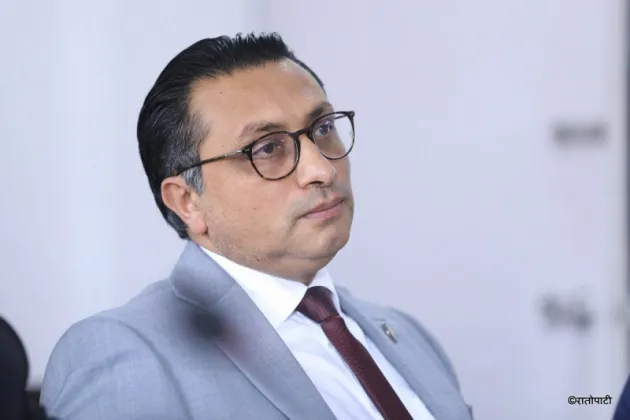
Finance Minister Dr. Swarnim Wagle said on Thursday that the Nepal Infrastructure Summit will be judged by the results it delivers rather than by the speeches delivered from its stage, pledging that the event will showcase the country's real investment environment instead of serving as a ceremonial gathering. Speaking at a press conference held in Kathmandu, Wagle said this year's summit is being organized with the deliberate aim of bringing discontinuity, marking a break with old practices rather than continuing them, as the government works to remove policy and legal obstacles in the infrastructure and investment sectors and to move ahead together with the private sector.
The minister's remarks, reported by Ratopati, set the tone for the upcoming summit and outlined what the government hopes the event will achieve beyond the usual round of panel discussions and formal declarations.
Results over rhetoric
The central message from Thursday's press conference was that the summit should be an exercise in substance. Wagle said the event will focus on results and will work to showcase a real investment environment, a phrasing that pointedly contrasted the summit's ambitions with gatherings that amount to little more than speeches.
In laying out his expectations for the summit, the finance minister highlighted a clear set of priorities:
- A focus on results, with the summit evaluated on what it actually delivers rather than on the statements made during its sessions
- A showcase of the real investment environment, presenting the conditions investors and partners would genuinely encounter
- Discontinuity with old practices, ensuring this year's edition does not simply repeat past formats and habits
- Removal of policy and legal obstacles in the infrastructure and investment sectors
- Joint progress with the private sector, with the government and business community moving forward together
By framing the summit around deliverables, Wagle signaled that the government intends the event to function as a working platform for reform rather than a symbolic occasion on the national calendar.
A deliberate break with old practices
Among the most notable elements of Wagle's address was his language on discontinuity. The minister said this year's summit aims to bring discontinuity rather than continue old practices, a statement that positions the event as an intentional departure from how such gatherings have been approached before.
The remark suggests that the government does not want the summit to become a routine fixture that repeats familiar exercises year after year. Instead, the finance minister's framing treats the 2024 event as a turning point, one in which the way the summit is conceived and conducted changes in step with the broader reforms he described.
That emphasis on breaking with precedent carried through the rest of his remarks. Wagle paired the call for discontinuity with concrete commitments on removing obstacles in the policy and legal landscape, linking the change in style to a change in substance.
Clearing policy and legal obstacles
Wagle told journalists that the government plans to remove policy and legal obstacles in the infrastructure and investment sectors. The pledge addresses head-on the kinds of barriers that the minister identified as standing in the way of progress in these areas.
The commitment to clearing such hurdles is closely tied to the summit's stated purpose. If the event is to showcase a real investment environment, as Wagle described, then the policy and legal framework governing infrastructure and investment becomes central to that picture. The finance minister's comments indicate that the government sees reform of this framework as a prerequisite for the summit to succeed on its own terms.
His remarks did not detail specific measures, but the direction was unambiguous: the government intends to act on the policy and legal fronts so that the infrastructure and investment sectors can function in an environment more conducive to results.
Moving ahead with the private sector
The other pillar of Wagle's message was partnership. The finance minister said the government will move ahead together with the private sector as it pursues its infrastructure and investment agenda.
That statement places the private sector at the center of the effort rather than at its margins. In Wagle's telling, the work of removing obstacles and delivering results in infrastructure is not something the government intends to do alone. The collaborative approach he described aligns with the summit's focus on presenting a genuine investment environment, one in which government and business operate in tandem.
The joint approach also reinforces the theme of discontinuity. Rather than the government dictating terms and the private sector reacting, Wagle's remarks sketched a relationship in which both sides advance the same agenda together, with the summit serving as the visible expression of that shared direction.
A summit to be measured by delivery
Taken together, the finance minister's comments present the Nepal Infrastructure Summit as an event intended to prove itself through action. The focus on results, the pledge to showcase a real investment environment, the stated aim of discontinuity with old practices, the plan to remove policy and legal obstacles, and the commitment to working alongside the private sector together form a coherent pitch from the government.
By Wagle's own standard, set out at the Kathmandu press conference on Thursday, the measure of the summit will not be the quality of its speeches but the reforms and outcomes that follow from it. The government, he made clear, intends to be held to that standard as it moves the country's infrastructure and investment agenda forward.