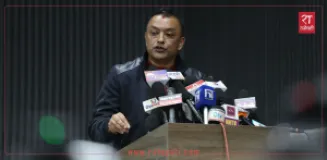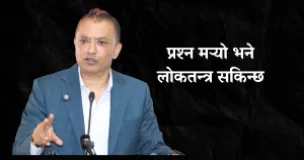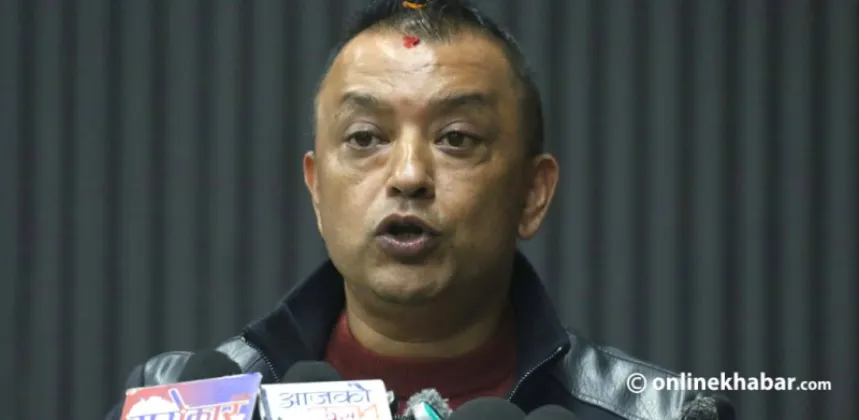
Nepali Congress President Gagan Thapa has categorically rejected allegations of financial misconduct linked to his party's official recognition dispute, declaring that his hands are clean and his conscience is clear. In a video message released on Thursday, Thapa said an attempt was made to defame him by associating him with an alleged middleman, Inam Sapkota, over an audio recording that has been circulating in connection with the controversy. He described the leak as part of a politically motivated conspiracy aimed at damaging his standing. The response, reported from Kathmandu on November 5, places the senior leader at the center of a storm that has erupted while the Nepali Congress, one of Nepal's major political parties, remains locked in an internal fight over official recognition.
Thapa responds through a video message
Thapa chose a video message to answer the allegations, a format that allowed him to address the claims directly and on the record rather than through intermediaries. His message, as reported by OnlineKhabar, left little ambiguity about his position on both the substance of the accusations and the motives behind them.
At the heart of the statement were three clear assertions:
-
A flat denial of financial misconduct. Thapa rejected the allegations of financial wrongdoing tied to the recognition dispute, summing up his position by saying his hands are clean and his conscience is clear.
-
Rejection of any link to the alleged middleman. He said attempts were made to defame him by associating him with Inam Sapkota, identified in reports as an alleged middleman, through the audio recording now in circulation.
-
A claim of political conspiracy. He characterized the leak, and the accusations built around it, as a politically motivated conspiracy rather than a good-faith accountability effort.
The decision to respond through a recorded message underlines the gravity with which the party president is treating the matter. For a leader facing questions about integrity, the video served a dual purpose: it was at once a denial of wrongdoing and a counter-narrative presenting him as the target of a deliberate smear rather than as a wrongdoer.
The audio recording at the center of the storm
The controversy stems from an audio recording that has been circulating and over which attempts have been made to connect Thapa with Sapkota. According to the reports, the circulating material has been used to allege financial misconduct connected to the recognition dispute, prompting Thapa's direct and public rebuttal.
The full contents and provenance of the recording have not been established through the public statements issued so far, and Thapa's message did not engage with its specifics. Instead, he attacked the foundation of the allegations themselves, arguing that the attempt to tie his name to an alleged middleman was designed to defame him. His response indicates that the party leadership views the recording as a serious enough threat to warrant an immediate and public denial.
A legitimacy dispute provides the backdrop
The allegations have surfaced against the backdrop of an unresolved internal dispute over the party's official recognition, a standoff described in reports as a legitimacy dispute within the Nepali Congress. It is this dispute to which the accusations of financial misconduct are tied, and it is also the lens through which Thapa has chosen to interpret the leak itself.
By framing the audio as part of a politically motivated conspiracy, Thapa is arguing, in effect, that the recording is not an act of accountability but a weapon in the party's internal battle. That framing shifts the question from what the recording contains to who benefits from its release, and it signals that he intends to contest the allegations on the terrain of motive as well as fact. It also raises the political temperature inside a party already engaged in a contest over which side holds official recognition.
The convergence of the two matters, the recognition dispute and the corruption allegations, means that neither can now be discussed in isolation. Any development in one is likely to be read through the other, both inside the party and among the public.
High stakes for leader and party
Corruption allegations against the president of one of Nepal's major political parties carry considerable political weight, and they carry still more when they surface in the middle of an internal legitimacy fight. For Thapa, the stakes are personal and institutional at once: his individual credibility has been directly challenged, and the party's recognition dispute now carries an added layer of allegation and counter-allegation.
His public response from Kathmandu, delivered through a video message, indicates an effort to counter the allegations head-on rather than let them circulate unanswered. Khabarhub's report on the statement similarly framed the message as Thapa's rejection of the financial misconduct claims and his assertion that he was being defamed through the audio.
For now, his position is unambiguous: the allegations are baseless, the association with the alleged middleman is an attempt to defame him, and the entire episode is a politically motivated conspiracy. Whether that framing persuades the public, and whether further material or statements emerge in the days ahead, will likely determine how the episode settles within the party's ongoing recognition battle. What is certain is that the Nepali Congress finds itself contending with two simultaneous crises, a fight over its official identity and a corruption controversy that its president insists is nothing more than an attempt to bring him down.