Nepal Police has tightened security across the country for the Tihar and Chhath festivals, deploying an additional 50,000 personnel to control criminal activity and prevent road accidents during one of the busiest holiday stretches of the Nepali calendar. The stepped-up mobilisation comes as households light up for Tihar, the five-day festival of lights, and prepare for Chhath, the sun-worship festival that follows soon after. With festival crowds filling markets, highways and transport hubs nationwide, the force has also rolled out a special traffic arrangement in the Kathmandu Valley, where the Metropolitan Traffic Police has assigned 1,600 personnel to manage vehicle movement and ensure the safety of passengers on the roads.
Nationwide Deployment to Deter Crime and Accidents
The additional 50,000 personnel have been put on duty across the country for the festival period, according to Gorkhapatra Online. As reported by Nepal Press, the security plan has been implemented with Tihar, Chhath and Nepal Sambat celebrations specifically in mind, ensuring that the main festivals falling in this stretch of the year are covered under a single, coordinated arrangement.
The core objectives of the deployment are twofold:
- Controlling criminal activity during the holidays, when busy markets, crowds and travel can create opportunities for offenders
- Preventing road accidents at a time when vehicle movement across the country surges
The measures are squarely aimed at the festival period itself, a stretch during which both crime and road accidents typically rise. By positioning a large additional force across the country, Nepal Police is seeking to place visible security where revellers, shoppers and travellers are most concentrated, and to respond quickly wherever incidents occur.
For the police, the challenge is scale. Tihar and Chhath draw people out of their homes in large numbers, whether to bazaars for shopping, to relatives' houses for celebrations, or onto highways for journeys to their home districts. Each of these movements multiplies the security tasks the force must handle simultaneously, from routine patrol duties in crowded commercial areas to vigilance along busy travel routes.
1,600 Traffic Personnel for the Kathmandu Valley
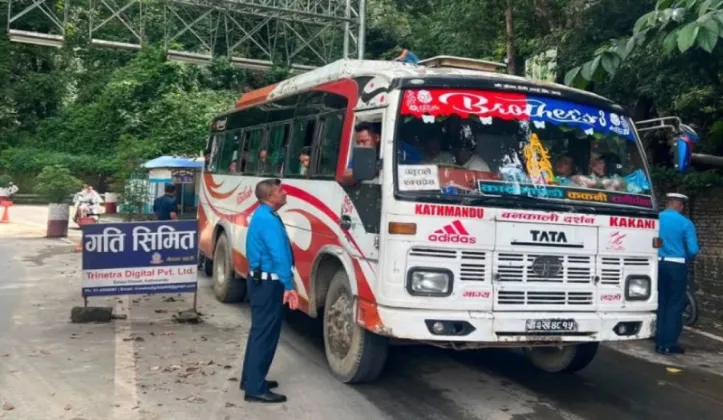
Nowhere is the pressure more visible than in the Kathmandu Valley, and the Metropolitan Traffic Police has responded with a special plan built around 1,600 personnel. The plan is designed to manage festival traffic and ensure passenger safety, with the additional staffing directed at keeping vehicle movement orderly through the holiday rush.
The valley's roads face a double burden during this season. On one side is the festive swirl of shopping, social visits and celebrations that fills city streets with vehicles and pedestrians, often well into the evening. On the other is the steady flow of people leaving the capital for their home districts to celebrate Tihar and Chhath with their families, which swells traffic on the main departure routes. The special plan places dedicated traffic manpower against both pressures, reflecting the authority's focus on ensuring that passengers can travel safely rather than merely keeping vehicles moving.
The arrangement also underscores how central road safety has become to the overall festival security strategy. With accidents climbing alongside crime during the festival window, traffic management in the densely populated valley is treated as an integral part of the nationwide deployment rather than a separate administrative exercise.
Why the Festive Season Strains Security
The scale of the deployment reflects a familiar seasonal pattern. The festival period is precisely when criminal activity and road accidents typically rise, as the summary of the security plan notes. Crowded markets and public gatherings, homes left unattended as families travel, and late-night festivities all combine to stretch routine policing, while the sheer volume of vehicles on the roads raises the risk of accidents.
The plan's coverage of Nepal Sambat alongside Tihar and Chhath further extends that responsibility. Nepal Sambat, the new year observed by the Newar community, falls within the Tihar period and adds its own celebrations and gatherings to the festive calendar, particularly in the Kathmandu Valley where the community's presence is most concentrated. Including it in the security plan means the additional forces are expected to remain stretched across the full span of the season's festivities rather than a single festival day.
Chhath, celebrated with devotion centred on the Sun god, brings its own large gatherings, typically along rivers and ponds, and prompts significant travel toward the Tarai. Together with Tihar's five days of worship and celebration, the season generates movement and crowds on a scale few other periods of the year can match.
A Visible Deterrent Through the Festival Period
For the public, the most immediate effect of the plan will be a substantially heavier police presence in the days ahead. The deployment of 50,000 additional personnel is intended to act as a deterrent to would-be offenders while giving revellers and travellers reassurance that help is close at hand should problems arise.
Thahakhabar also reported on the tightened security arrangements, underscoring the attention the festival-season plan has drawn across Nepali media. As Tihar lamps are lit and Chhath preparations get under way, the security apparatus will remain on heightened footing, with the additional forces in place to carry the country through the festivals and, police hope, to see the season pass with fewer crimes and fewer accidents on the roads.