An ear, nose and throat (ENT) health camp held in Jumla has provided specialist treatment to 1,037 people from Karnali, a province where access to such services has long been limited. Organized by the Karnali Health Sciences Academy in collaboration with RIDS Nepal, the camp also performed surgeries on 43 patients who were examined during the event, according to reports published by Nagarik News and Ratopati.
For residents of Jumla and surrounding areas, the camp offered something rarely available close to home: the chance to be seen by an ENT specialist. Patients attending the camp were examined for ear, nose and throat conditions, and those found to require operations were able to undergo surgery on the spot, without being referred elsewhere.
Bringing specialists to Karnali's doorsteps
Specialist medical services in Nepal are heavily concentrated in urban centers, and the gap is felt most sharply in the hill and mountain districts of Karnali Province. Long distances, difficult terrain and limited transport links mean that reaching a hospital with an ENT department can involve days of travel and considerable expense for families in the province.
It was against this backdrop that the Karnali Health Sciences Academy and RIDS Nepal organized the health camp in Jumla. By bringing specialists and surgical services directly to the district, the camp removed the two barriers that most often keep people in remote areas from receiving treatment: distance and cost. The camp was explicitly aimed at the people of Karnali who have limited access to specialist ENT care, and the response it drew underlined how deep that need runs.
43 surgeries performed during the camp
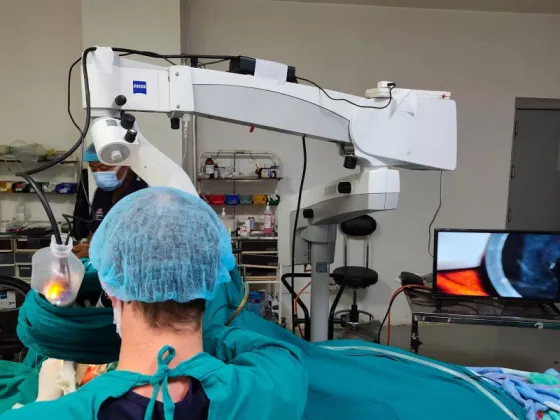
The most significant outcomes of the camp were the 43 surgeries carried out on patients examined there. Under the camp format, people were first screened by specialists, and those diagnosed with conditions requiring operations received treatment during the camp itself rather than being asked to travel to larger hospitals in other parts of the country.
The headline results of the Jumla camp can be summarized as follows:
- 1,037 people benefited from the ENT health camp in Jumla.
- 43 patients underwent surgery after being examined at the camp.
- The camp was run by the Karnali Health Sciences Academy in collaboration with RIDS Nepal.
- It was designed to serve communities in Karnali with limited access to specialist ENT services.
For the patients who underwent surgery, receiving treatment within their own district spared them the disruption, cost and risk of traveling to hospitals in bigger cities. For families living on modest incomes in remote settlements, that difference can determine whether an operation happens at all. The camp thus functioned not only as a medical event but as a bridge across the gap between remote districts and the country's specialist health infrastructure.
Why camps like this matter in Karnali
ENT conditions are among the most common health complaints across all age groups, ranging from hearing problems and ear infections to nasal and throat disorders. Many of these conditions are straightforward to treat when detected early, but left unaddressed they can worsen over time and affect hearing, speech and overall quality of life. In provinces where specialist services are scarce, health camps of this kind are often the first point of contact between patients and a specialist.
The collaboration between the Karnali Health Sciences Academy and RIDS Nepal reflects a model in which institutional medical expertise and partner organizations combine to deliver services at the community level. Instead of expecting patients to navigate the journey to distant hospitals, the camp moved the specialists, equipment and surgical capacity to the patients. That approach is particularly significant in Karnali, where the geography makes every journey to a health facility a major undertaking.
A measure of unmet demand
The turnout itself was telling. That more than a thousand people came forward for examination at a single camp in Jumla points to the scale of unmet demand for ENT services in the province, and to the appetite among residents for specialist care when it is made available locally. Every one of the 1,037 beneficiaries represented a consultation that, in the ordinary course of events, would most likely not have taken place.
The 43 surgeries performed at the camp add a further dimension to its impact. Surgical care is the most resource-intensive form of treatment a camp can offer, requiring specialists, facilities and aftercare to come together in one place. Delivering that level of service in Jumla demonstrated what coordinated outreach can achieve, and the camp's outcomes, as reported by Nagarik News and Ratopati, stand as a concrete example of specialist healthcare reaching communities that the regular system too often bypasses.