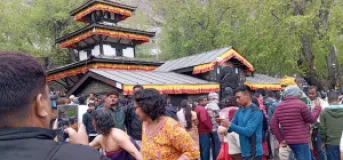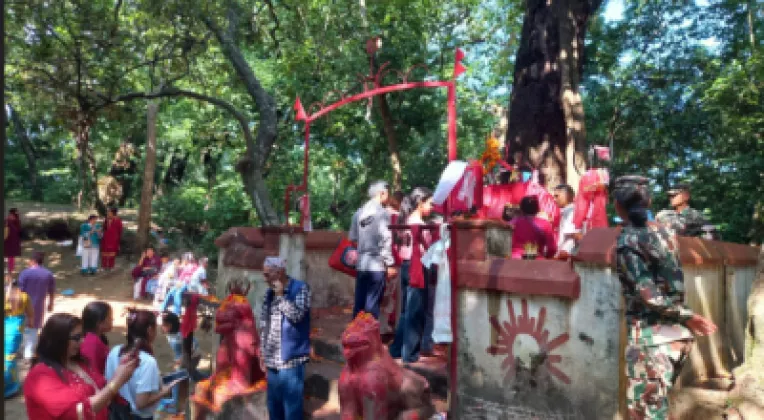
A large number of devotees visited the historic Ban Devi temple in Gokarna forest on Tuesday for worship and darshan during the autumn Sharadiya Navaratri festival. Located in Gokarneshwar Municipality-4 inside the national forest area, the temple is opened to the public only once a year during Navaratri, making the annual occasion an opportunity for visitors to enter the site and offer prayers. The location was formerly known as Rajnikunj and now falls under the Nepal Trust office.
Annual opening draws devotees
Visitors gathered at the forest temple to worship Ban Devi and receive darshan, with a queue of people reported at the site. The large turnout brought attention to a temple whose access is limited: unlike a place open to the public throughout the year, Ban Devi temple welcomes visitors only during Sharadiya Navaratri. The annual opening places the temple within the festival’s calendar as a destination for devotees seeking to worship there.
The occasion was marked by people arriving for the specific purpose of worship and darshan. Those two activities were central to the visit, as devotees came to offer prayers and see the deity. The reported queue reflects the number of people seeking access during the limited public opening, though no attendance figure was provided.
The temple’s annual availability also distinguishes it from sites that can be visited at any time. For devotees, Navaratri is the period when the forest location becomes accessible to the public. The opening is therefore both a religious occasion and a rare chance to visit the historic shrine in its forest setting.
Historic site in Gokarna forest
Ban Devi temple is situated within the national forest area in Gokarneshwar Municipality-4. Its location in the forest is a defining part of the site described in reports of the Navaratri gathering. The temple is not presented as a regular public attraction: access is restricted for most of the year, with the public opening taking place once annually during the autumn festival.
The place was formerly known as Rajnikunj and now comes under the Nepal Trust office. That administrative detail links the historic site’s former identity with its present institutional status. The temple continues to draw devotees during the period when it is opened, while its location and limited access set it apart from more regularly accessible places of worship.
Worship during Sharadiya Navaratri
Tuesday’s visit formed part of Sharadiya Navaratri, the autumn festival during which the temple opens to the public. The reported gathering was focused on worship and darshan at Ban Devi temple. The annual opening gives devotees a defined opportunity to reach the shrine, and the queue at the site showed that many people came during that window.
The available information does not specify how long the temple remains open, the precise number of visitors or details of the arrangements at the site. What is clear is that the temple is opened once a year during Sharadiya Navaratri and that a large number of devotees visited on Tuesday. The shrine’s historic character, its location in Gokarna forest and its association with the former Rajnikunj site provide the setting for the annual gathering.
For visitors, the occasion brought together access to a rarely open temple and the chance to worship during Navaratri. Ban Devi temple remains a notable site in Gokarneshwar Municipality-4, under the Nepal Trust office, with its annual public opening drawing devotees to the forest area for darshan and prayer.