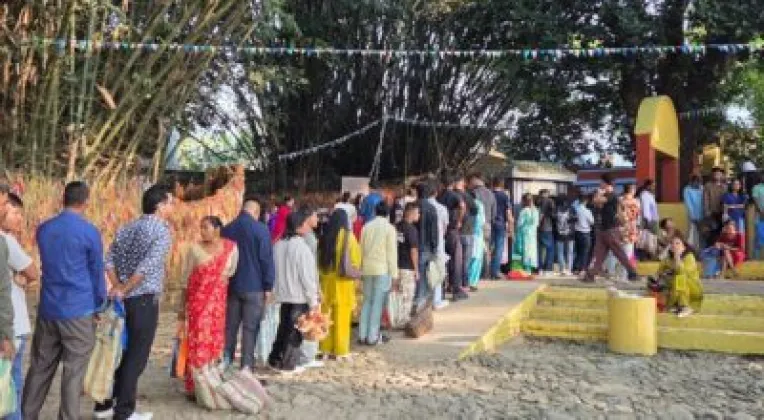
Devotees gathered in large numbers at the Budhasubba Temple in Vijaypur, Dharan Sub-Metropolitan City-14, on the day of Maha Navami, lining up to offer prayers, seek blessings and honour the vows they had made to the deity. The temple, one of the most revered shrines in the Sunsari district, remained crowded with worshippers on the ninth day of the Dashain festival, as the faithful waited patiently for their turn to worship and present their offerings at the shrine.
Devotees line up to fulfil their vows
The temple premises remained packed as devotees queued to pay obeisance at the renowned shrine. For the worshippers, the visit on Maha Navami was an act of devotion rooted in a deeply held conviction: that worship offered at Budhasubba does not go unheard, and that the deity listens to the prayers of those who come with sincere hearts.
According to temple priest Dambar Alemagar, devotees come to the temple offering prayers wishing for their wishes to be fulfilled. His remarks, as carried in reports by Khabarhub, RatoPati and Nepal Press, capture the spirit in which the faithful approached the temple on the festival day.
All three reports described scenes of worshippers gathering in significant numbers at the Vijaypur-based temple and lining up to fulfil their vows, underlining the enduring pull the shrine holds among devotees during the Dashain festival.
Priest describes a tradition of prayer and thanksgiving
The account offered by the priest points to a two-stage tradition that shapes worship at Budhasubba. A devotee first arrives at the temple with a wish and offers prayers seeking its fulfilment. Once that wish has been granted, the devotee returns to the shrine to sacrifice rooster chickens, completing the vow made before the deity.
This cycle of petition and thanksgiving, as explained by Alemagar, lies at the heart of the rituals observed at the temple. The sacrifice of rooster chickens is not carried out at the moment of prayer but only after a devotee's vow has been fulfilled, turning the offering into an act of gratitude and completion rather than a simple request.
On the day of Maha Navami, the rituals described by the priest were on full display, with devotees arriving at the shrine to offer prayers for their desires and to discharge the obligations they had promised once their earlier wishes had come true.
Faith in happiness, peace and prosperity
Devotees believe that worship at Budhasubba brings happiness, peace and prosperity, along with the fulfilment of their wishes. It is this conviction that draws worshippers to the temple on auspicious occasions such as Maha Navami, when the desire to seek divine blessings is at its strongest.
Maha Navami, the ninth day of the Dashain festival, is observed across Nepal as one of the most significant days of worship during the country's biggest Hindu celebration. Temples around the nation traditionally see a surge of devotees on this day, as the faithful offer prayers and sacrifices to mark the occasion. The gathering at Budhasubba followed the same pattern, with the Vijaypur temple drawing a steady stream of pilgrims who came to worship on the festival day.
For the devotees who filled the temple grounds, the observance was more than a ritual obligation. Each prayer offered at the shrine, and each rooster sacrificed in fulfilment of a vow, reflects a personal bond between the worshipper and the deity, built on promises made in moments of hope and honoured in moments of gratitude.
A shrine at the centre of Dashain devotion
The crowds at Budhasubba on Maha Navami underline the special place the temple occupies in the religious life of Dharan and the wider region. As the priest Dambar Alemagar noted, the flow of devotees who come to pray for their wishes and return to sacrifice rooster chickens after their vows are fulfilled continues to define the character of worship at the shrine.
With the belief that worship here brings happiness, peace, prosperity and the fulfilment of wishes, devotees turned the temple into a hub of devotion on the festival day. The scenes at Vijaypur offered a vivid picture of how faith draws the faithful together during Dashain, and of how a centuries-old tradition of vows and thanksgiving continues to shape the way worshippers mark Maha Navami at one of eastern Nepal's most revered shrines.