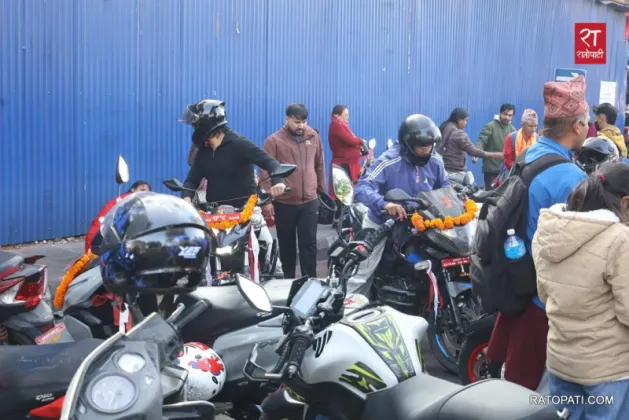
The premises of the Bhadrakali Temple in Kathmandu were filled with devotees, drivers and vehicle owners on Maha Navami, the ninth day of the Bada Dashain festival, as crowds gathered from the morning to worship their vehicles. Motorcycles, cars, taxis and buses were brought to the temple one after another for worship and offerings, turning one of the capital's well-known shrines into a bustling centre of faith on one of the most important days of the festival.
Crowds Fill the Temple Premises from Morning
The temple area remained crowded throughout the day as drivers and vehicle owners began arriving with their two-wheelers and four-wheelers from early in the morning. The steady flow of devotees kept the shrine and its surroundings busy for hours, with crowds of people worshipping vehicles in what has become one of the most recognisable rituals of Dashain in Kathmandu.
The worship followed the pattern traditionally observed on this day. Devotees:
- Brought their motorcycles, cars, taxis and buses to the temple premises from the morning
- Performed puja and made offerings to their vehicles
- Applied tika to the vehicles after the worship
- Received prasad within the temple premises
For many drivers and vehicle owners, the visit to the temple is an annual ritual that combines gratitude for the journeys of the past year with a prayer for safety on the road in the year ahead. The scale of the gathering, with vehicles lined up across the temple premises, captured how deeply rooted the custom remains in the lives of those who depend on their vehicles every day.
Scenes Documented by the Media
The vibrant scenes at the temple were widely documented. RatoPati published photographs showing the crowds of people worshipping vehicles at Bhadrakali on Maha Navami, while Khabarhub also reported on the gathering of devotees at the shrine.
A Tradition of Worshipping the Tools of Livelihood
The scenes at Bhadrakali were part of a wider tradition observed across the country on Maha Navami. On this day, people worship the tools, machinery, equipment and vehicles associated with their work, a custom that links the religious observances of Dashain with the everyday instruments of modern livelihood.
The tradition covers a broad range of objects, including:
- Vehicles such as motorcycles, cars, taxis and buses
- Machinery and equipment used in factories and industries
- Tools associated with construction work
- Equipment related to technology
Underlying the practice is the belief that the implements on which people depend for their living deserve honour and blessing. By worshipping the machines that carry passengers to their destinations, power workshops and drive industries, devotees express respect for the role these instruments play in daily life. The presence of buses, taxis, cars and motorcycles at a temple dedicated to the goddess offered a striking picture of how ancient religious custom continues to embrace the machinery of the modern age.
Maha Navami in the Dashain Calendar
Maha Navami is the ninth day of Bada Dashain, Nepal's biggest festival, celebrated over fifteen days with the worship of Goddess Durga at its heart. The day holds particular significance in the festival calendar, and the worship of vehicles, tools and machinery has become one of its most visible customs, observed in cities and villages across the country.
In Kathmandu, the Bhadrakali Temple stands out as a focal point for the vehicle worship ritual. The temple's premises, packed with devotees and their vehicles from the morning, reflected the enthusiasm with which the day is marked in the capital. Similar observances connected to workplaces, from construction sites to factories and industries, take place across the country as part of the same tradition.
Blessings for the Road Ahead
For the drivers and vehicle owners who spent the morning at the temple, the worship carried both thanksgiving and hope. After applying tika to their vehicles and receiving prasad, devotees returned to the festive rhythm of Dashain, their machines blessed for the journeys that lie ahead.
The annual gathering also underscores the way the festival weaves together faith, family and work. As celebrations continue toward Vijaya Dashami, the tenth and principal day of the festival, the ritual at Bhadrakali added to the celebratory atmosphere in the capital, where the country's largest festival is being observed with devotion and fervour.
With vehicles worshipped, blessings received and prasad distributed, this year's Maha Navami at the Bhadrakali Temple once again demonstrated why the tradition has endured: it transforms the everyday act of driving into an act of faith, and the road ahead into a path taken under the goddess's protection.