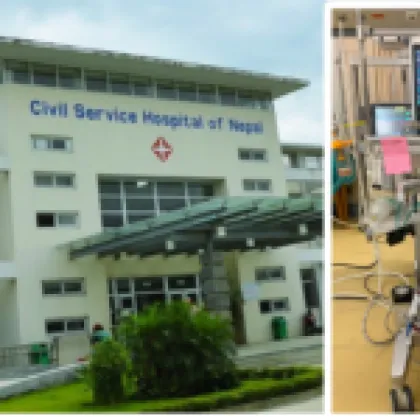
Civil Hospital, also known as Nijamati Karmachari Hospital, in Minbhawan, Kathmandu, has become the first hospital in Nepal to successfully launch extracorporeal membrane oxygenation (ECMO) service, marking a historic milestone in the country's critical care capability. The hospital used the advanced life-support technology to treat a 43-year-old man suffering from acute respiratory distress syndrome (ARDS) triggered by an influenza virus infection. The patient responded to the therapy, made a full recovery and has been discharged from the hospital, with the milestone reported on November 4, 2026.
A landmark achievement for Nepali healthcare
The introduction of ECMO at Civil Hospital is the first time the technology has been made operational in Nepal. According to Dr. Pradeep, head of the hospital's intensive care department, this is the first ECMO service with ECMO retrieval in Nepal, a distinction that places the Minbhawan-based facility at the forefront of advanced critical care in the country.
ECMO is widely regarded as the highest level of life support available in intensive care medicine. The service is typically introduced only in hospitals with highly specialized teams, dedicated equipment and substantial infrastructure, which is why its launch at Civil Hospital is being seen as a significant step for the country's health sector. With this initiative, the hospital becomes the first in Nepal to offer the therapy to critically ill patients.
The inclusion of ECMO retrieval further distinguishes the new service. Retrieval capability in critical care refers to the practice of initiating and sustaining ECMO support for patients who need to be moved to the treating center, ensuring that even the most unstable patients can be transported safely while receiving life support. According to Dr. Pradeep, Civil Hospital's program is the first in Nepal to combine the therapy itself with this retrieval component.
The first patient: from influenza to ARDS
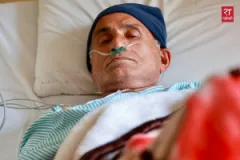
The hospital's inaugural ECMO case involved a 43-year-old male patient who developed acute respiratory distress syndrome following an influenza virus infection. ARDS is a severe, life-threatening lung condition in which the air sacs become inflamed and can no longer deliver enough oxygen to the body's vital organs. In the most serious cases, even mechanical ventilation may not be sufficient to keep a patient alive.
By placing the patient on ECMO, the medical team was able to support his failing respiratory system while his lungs were given time to heal from the viral infection. The treatment proved successful: the patient's condition improved over the course of therapy, and he was ultimately discharged from the hospital in good health after his recovery.
The outcome of this first case carries particular weight, as it demonstrates not only that the hospital can initiate ECMO therapy but also that patients treated with it can recover and return home. For a service being introduced for the first time in Nepal, the recovery of the inaugural patient represents an encouraging start.
What ECMO actually does
ECMO, or extracorporeal membrane oxygenation, is an advanced form of prolonged life support used in intensive care when a patient's heart or lungs, or both, cannot function adequately on their own. Key aspects of the technology include:
- External oxygenation: Blood is drawn out of the patient's body, passed through an artificial membrane oxygenator that adds oxygen and removes carbon dioxide, and then returned to the circulation.
- Rest for failing organs: By taking over the work of gas exchange, ECMO allows severely injured or infected lungs to rest and recover, and it can likewise support the heart in cases of cardiac failure.
- Reserved for the most critical cases: The therapy is generally used for patients with severe, potentially reversible cardiac or respiratory failure who have not responded to conventional treatment such as mechanical ventilation.
- Resource-intensive care: Running an ECMO program requires specialized intensive care expertise, dedicated equipment and round-the-clock monitoring, which is why the service is available at only a limited number of centers worldwide.
Because influenza can occasionally progress to severe ARDS, the availability of ECMO gives clinicians in Nepal a vital option for the sickest patients whose lungs can no longer sustain them on a ventilator alone.
Strengthening advanced care within Nepal
The launch of ECMO with retrieval capability at Civil Hospital represents a major strengthening of Nepal's capacity to manage the most critically ill patients. For people facing severe respiratory or cardiac failure, access to ECMO within the country means that advanced life support is no longer beyond reach in moments when every hour of support counts. The hospital's intensive care department, led by Dr. Pradeep, has now demonstrated that the full cycle of care, from the initiation of ECMO through recovery and discharge, can be achieved in Nepal.
The milestone was reported by News of Nepal, which highlighted the successful treatment and discharge of the hospital's first ECMO patient. As Civil Hospital consolidates the service, the experience gained from this first successful case is expected to lay the foundation for the therapy to benefit more critically ill patients across the country in the days ahead.