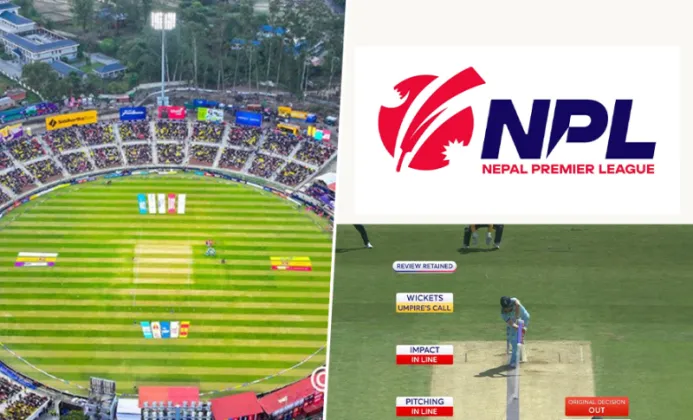
The Cricket Association of Nepal (CAN) on Tuesday announced that the Decision Review System (DRS) will be used in the third edition of the Nepal Premier League (NPL), marking the first time the technology will feature in the history of Nepali cricket. The governing body confirmed the decision through a social media announcement, according to CAN, settling a question that has followed the country's flagship domestic tournament since its inception: whether Nepali cricket was ready to embrace the review tools now standard across the international game.
A Landmark for Nepali Cricket
Until now, Nepali cricket has competed without formal recourse to technology for reviewing umpiring decisions. On-field calls stood as the final word, and teams had no mechanism to challenge them, however close or contentious the moment. By bringing DRS to the NPL, CAN has aligned its premier franchise competition with the operational standards followed at international fixtures and leading Twenty20 leagues around the world.
The announcement was made on Tuesday via CAN's social media platforms, as reported by Onlinekhabar. Ratopati similarly highlighted that the third edition of the NPL will see DRS technology used for the first time in the tournament, underlining the significance of the move for a competition that has quickly grown into the biggest stage in Nepali domestic cricket.
DRS itself is no newcomer to the sport. First trialled in international cricket in the late 2000s, the system has since become a fixture at International Cricket Council (ICC) events and franchise leagues, where it is credited with removing many of the most glaring umpiring errors from the game.
From Pledge to Practice
Tuesday's confirmation did not come out of nowhere. CAN Secretary Paras Khadka had earlier said that efforts were under way to introduce the technology, comments that raised expectations among players, coaches and followers of the domestic game. His remarks made clear that the board regarded the arrival of review technology as a priority, and the announcement follows through on that direction.
With the decision now public, those efforts have moved from intention to implementation. The third edition of the NPL will give teams the ability to review umpiring decisions, a first for any Nepali tournament. For a competition that showcases the country's best cricketers alongside overseas talent, the introduction of DRS represents one of the most significant operational upgrades in its history.
How the Decision Review System Works
DRS allows teams to challenge certain decisions made by on-field umpires, with the third umpire consulting technological aids before upholding or overturning the original call. While exact configurations differ from competition to competition, the system typically includes:
The core components
- Ball-tracking technology that projects the likely path of the delivery, assisting with leg-before-wicket (LBW) decisions.
- Edge-detection tools, such as UltraEdge, which combine audio and video to determine whether the ball touched the bat, pad or gloves.
- High-speed, multi-angle cameras that help settle close calls on catches, run-outs and stumpings.
- A limited number of reviews per innings, with teams retaining a review when a challenge is successful and losing it when the on-field call stands.
Once a review is taken, the third umpire's verdict replaces the on-field decision, adding a layer of verification that was previously absent from Nepali domestic cricket.
What It Means for the NPL
The practical impact of the change should be felt immediately. Moments that routinely decide tight matches, such as marginal LBW calls, thin edges behind the wicket and contested catches at the boundary, can now be examined in detail rather than left to the naked eye. That reduces the scope for human error to influence results and gives players a safeguard in game-changing situations.
For fans and broadcasters, DRS brings a familiar rhythm of referrals, replays and verdicts that has become part of the fabric of modern cricket. For the league itself, adopting the technology signals an intent to operate at the level of established T20 competitions abroad, a step likely to bolster confidence among domestic and international players alike.
Attention will now turn to how the system is integrated when the third edition of the NPL gets under way. What is already clear is that Tuesday's announcement marks a milestone for the sport in the country: Nepali cricket, at its premier tournament, will for the first time allow technology to help decide what happens on the field.