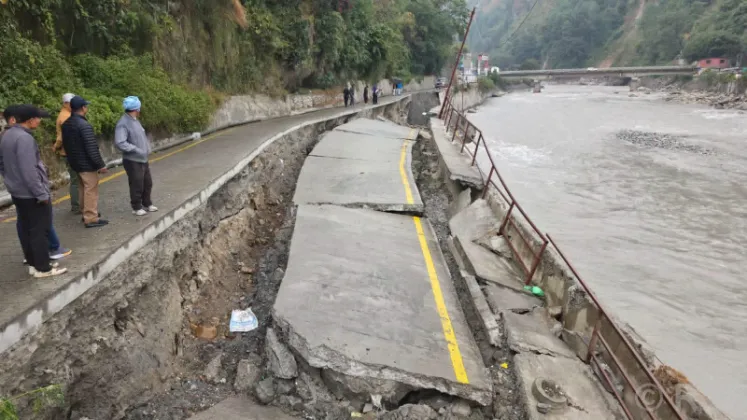
Preparations are underway to rebuild the concrete embankment that protects Beni Bazaar in Myagdi district after flooding and erosion along the Kali Gandaki River damaged the protective wall. An initial estimate puts the cost of reconstruction at about Rs 50 million, and authorities are moving to award the contract within a month so that the river control and bazaar protection work can be completed before the next monsoon, according to reports by Rato Pati and Nepal Press.
The damaged structure is no ordinary wall. It is the main engineered barrier standing between the Kali Gandaki and the densely built market area of Beni, the headquarters of Myagdi district. When floodwater and strong currents scoured the riverbank, the concrete embankment was damaged, leaving the bazaar side exposed to further erosion. The decision to begin reconstruction now, outside the monsoon season, is aimed at ensuring the settlement is not left vulnerable when the river swells again next year.
A Bazaar on the Banks of the Kali Gandaki
Beni Bazaar sits directly on the banks of the Kali Gandaki, one of Nepal's major rivers with a trans-Himalayan course. The settlement serves as the commercial and administrative center of Myagdi district and lies at the confluence of the Kali Gandaki and the Myagdi River, which makes riverbank protection a matter of constant importance for residents and traders alike.
Embankments and river control structures of this kind are the first line of defense for bazaar areas like Beni. When they fail, floodwater does not merely pass by: it eats into the land itself, undermining houses, shops, roads and other infrastructure built close to the water's edge. The damage to the Beni embankment therefore represents a direct risk to the core of the district headquarters, which is why authorities have prioritized its reconstruction.
The Rs 50 Million Reconstruction Plan
Key facts at a glance
- What is being rebuilt: the concrete wall, or embankment, built to protect Beni Bazaar from the Kali Gandaki River
- Cause of damage: flooding and riverbank erosion in the Kali Gandaki
- Initial cost estimate: about Rs 50 million
- Contract timeline: to be awarded within a month
- Completion target: before the next monsoon
According to the initial estimate, the reconstruction will cost around Rs 50 million, a figure that covers the rebuilding of the damaged concrete wall and the associated river control work. Initial estimates of this kind are typically refined as detailed designs and cost calculations are finalized, meaning the final contract value could move up or down once the bidding process is complete. Authorities plan to move quickly, with the contract scheduled to be awarded within a month.
Awarding the contract promptly is the critical first step. It allows the contractor to mobilize equipment, materials and workers during the dry season, when water levels in the Kali Gandaki are at their lowest and riverbank construction is most feasible.
Racing the Monsoon Calendar
The timeline is driven by one overriding factor: the monsoon. Nepal's monsoon rains, which generally last from June to September, swell rivers across the country and are the main trigger of flooding and bank erosion in settlements built along riverbanks. Rivers such as the Kali Gandaki, which gather force as they rush through deep gorges, become at their most powerful during these months.
That is why authorities have set the completion of the Beni Bazaar protection work for before the next monsoon. Working during the dry months gives engineers a window in which the river is calmer, making it possible to lay concrete, reinforce the bank and restore the wall's protective alignment. If the work were to slip into the monsoon, rising water could disrupt construction and leave the partially rebuilt embankment exposed to the same forces that damaged the original structure.
Completing the work on time also matters for the rhythm of local commerce. Beni Bazaar is a market hub whose shops and trade links serve communities across Myagdi, and every monsoon spent without a fully intact embankment extends the period of uncertainty for those who live and do business beside the river.
What Comes Next
The immediate milestone is the award of the contract within the coming month. Once awarded, attention will shift to construction, and to whether the rebuilt embankment can be delivered within the Rs 50 million initial estimate and finished before the rains return.
For now, the message from the preparations underway is clear. The protective wall that was overwhelmed by the Kali Gandaki is to be rebuilt, and the work is being timed so that Beni Bazaar heads into the next monsoon with its riverbank defenses restored and the threat of erosion once again held at bay.