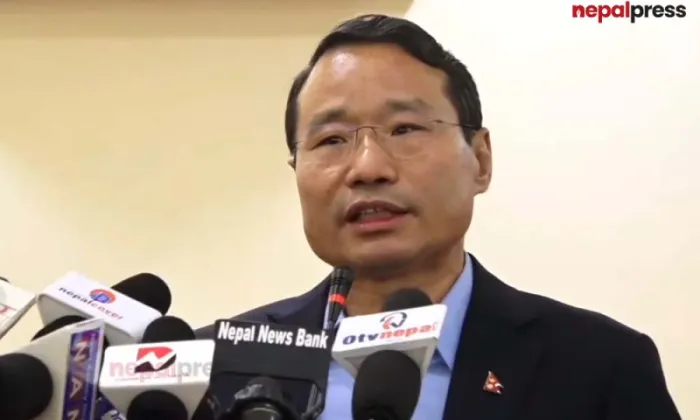
Nepal Communist Party (Nepal) leader and former finance minister Barshaman Pun 'Ananta' has warned the National Independent Party (RSP) not to misuse state machinery for political revenge, saying no party remains in power forever. Speaking at a programme held in Pachhawang, Rolpa, on Tuesday, Pun cautioned that the misuse of state bodies by the current government would set a dangerous precedent for the country's politics.
A cycle of retaliation
Pun made it clear that the tendency to use state bodies as a tool against political opponents would not stop with any single government. According to him, when the current government misuses state machinery, future governments will follow the same path, institutionalising a cycle of retaliation in the country's politics.
"You will not remain in power forever," Pun said, directing his warning at the RSP. He argued that whatever practices the ruling side normalises today will come back to shape how power is exercised in the future, making retaliation a permanent feature of governance rather than an aberration.
Threat to democracy and the state
The former finance minister went further, saying that such a tendency would ultimately weaken the democratic system itself. In his view, a state that becomes an instrument of revenge loses its neutrality, and when that happens, the entire state machinery becomes arbitrary.
Pun's remarks reflect a broader concern among political leaders that state bodies should serve all citizens rather than the interests of the party in power. He stressed that respect for democratic norms requires governments to refrain from turning administrative and security institutions into weapons against their opponents.
Context of the remarks
The warning was delivered at a programme in Pachhawang of Rolpa district, a area with deep significance for Nepal's communist movement. Pun, a senior leader of the Nepal Communist Party (Nepal) and a key figure in the party, has previously held ministerial responsibilities, including as finance minister.
His comments come at a time when questions about the conduct of the current government and the treatment of political rivals have been increasingly raised in public discourse. By naming the RSP directly, Pun signalled his party's position that the ruling side must be held accountable for how it exercises state power.
Pun concluded that the responsibility for protecting democratic institutions lies with those currently in government, and that failure to exercise power responsibly today would have lasting consequences for the country's political system.