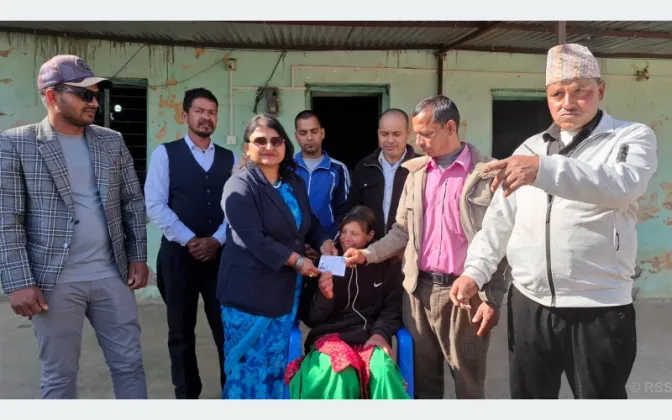
Dhana Saud, a 73-year-old resident of Kathmada in Surnaya Rural Municipality-8 of Baitadi, finally received her Nepali citizenship certificate on Thursday, and she did not have to leave her village to get it. Chief District Officer Meena Aryal travelled to Dholiyamod, near Saud's home, and handed her the document in person under the 'CDO at the home of the helpless' programme, an initiative that carries citizenship services from the district administration to people who cannot make the journey themselves. Saud had spent her entire life without citizenship and, as a direct result, had been deprived of the social security allowance meant for senior citizens like her.
A lifetime without the basic document
For seventy-three years, Saud remained outside the formal reach of the state. In Nepal, the citizenship certificate is the foundational identity document, widely required for opening a bank account, obtaining a passport, registering property and accessing government entitlements. A person without it lives in an administrative shadow, officially unrecognized and therefore unable to claim the benefits the state promises its citizens.
For someone of Saud's age, that exclusion carried a direct and daily cost. The social security allowance for senior citizens is tied to citizenship, and because Saud held no certificate, the support never reached her. She passed her old age without the allowance that others in her position receive routinely, simply because the paperwork that unlocks it had never been completed in her name. Her case illustrates how a single missing document can cut a person off from decades of entitlements.
The office travels to the applicant
The 'CDO at the home of the helpless' programme reverses the normal logic of public service delivery. Instead of waiting at the district administration office for an applicant who may never be able to come, the CDO travels out to the applicant's doorstep. That is what happened in Baitadi on Thursday: Aryal reached Dholiyamod, close to Saud's home in Kathmada, and handed the elderly woman her citizenship certificate on the spot, according to reports published in Rato Pati and Nepal Press.
With the certificate finally in her hands, the door that had stayed closed throughout Saud's adult life can begin to open. The document formally records her as a Nepali citizen, ending her lifelong status as someone the state could not see, and it clears the way for her to access the social security allowance she was previously denied.
Reaching the people the system misses
Both reports describe the programme as effective in bringing citizenship services to people who cannot travel to district offices. Its strength lies in a simple recognition: the citizens most likely to have spent decades without citizenship, including the elderly, the infirm and those living in scattered hill villages, are the very people least able to travel to a government office to fix the problem. By moving the service to the applicant, the programme closes a gap that standard procedures had left open for years.
As Saud's case shows, the approach works on several levels:
- Doorstep delivery: the CDO and the citizenship service travel to the village, removing the burden of travel from the applicant altogether.
- Targeting the excluded: the programme is aimed at helpless people who cannot reach the district office on their own.
- Unlocking entitlements: a certificate delivered this way reconnects the holder to benefits such as the senior citizen social security allowance.
- Ending lifelong exclusion: for Saud, the visit concluded 73 years of living without official recognition of her identity.
For elderly and helpless residents of remote wards in districts like Baitadi, such a programme addresses a problem that paperwork alone never could: a person who cannot come to the office will not be served by an office that only waits.
More than a certificate
For Dhana Saud, Thursday marked more than the delivery of a document. After a lifetime without the certificate that ties a citizen to the state, she now holds formal proof of her identity, placed in her hands at her own doorstep by the most senior administrative officer of the district. Her case has been presented in the reporting as evidence that the 'CDO at the home of the helpless' programme is achieving its purpose: carrying citizenship, along with the rights and allowances that flow from it, to the people the system had left waiting.