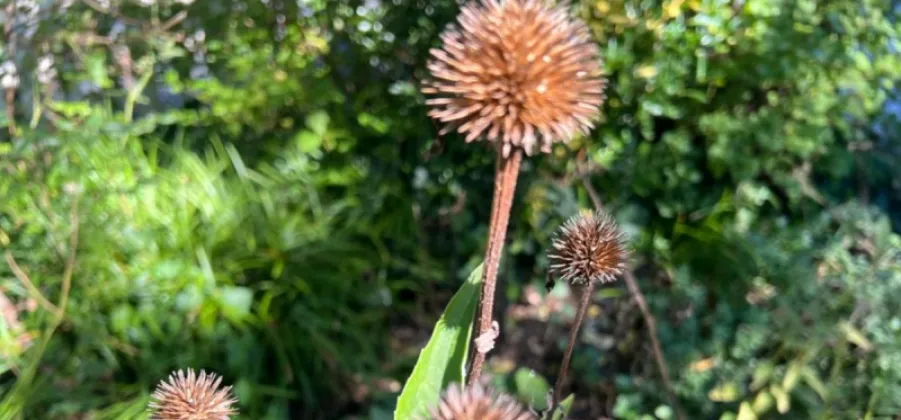
Nepali gardeners reaching for the shears this autumn are being urged to pause before cutting their beds to the ground. A series of gardening explainers published by Lokaantar, Rajdhani National Daily, Ratopati and Nagarik News argues that not all plants need to be removed when the garden is cleaned up for winter. According to the articles, leaving some perennial plants standing through the cold months provides food and shelter for birds and beneficial insects, while clearing away others helps prevent disease and pest outbreaks. Which plants a gardener keeps and which ones are removed, the explainers stress, strongly affects garden health, disease control and flowering the following year.
Cleanup should be selective, not total
Autumn cleanup is among the most familiar tasks in the gardening calendar, and the instinct at this time of year is often to cut down and clear away everything once the growing season ends. The explainers published this season push back against exactly that habit. Not all plants, they advise, need to be cut back when the garden is tidied in the fall.
The guidance, carried by Nagarik News and Ratopati among others, frames the task as a series of individual decisions rather than a single sweeping operation. Each plant in the bed is either a candidate for removal or a candidate for keeping, and treating them all the same way, whether by cutting everything down or leaving everything in place, creates problems in both directions.
The stakes are higher than appearance alone. According to the articles, deciding correctly which plants to keep and which to remove strongly affects garden health, disease control and flowering the following year. The work done in autumn, in other words, is not just housekeeping: it sets the conditions for the entire next growing season.
Why some plants should stay standing all winter
The most striking part of the advice concerns the plants that should be left alone. Perennial plants kept standing through the winter, the explainers note, continue to serve the garden long after their flowers have faded. They provide food for birds and shelter for beneficial insects, meaning a bed that looks untidy to human eyes is actually supporting the creatures that help keep the garden healthy.
For gardeners accustomed to neat, closely cropped beds, this asks for a change of perspective. The standing perennials that might otherwise be the first things cut down are, under this advice, best understood as winter provision for wildlife: food that birds can rely on through the cold months and cover in which beneficial insects can survive until spring. Clearing such plants away removes that support at precisely the time the garden's wildlife needs it most.
The explainers present this as a genuine trade-off rather than a stylistic preference. A garden stripped bare for the winter may look well maintained, but it offers neither food nor shelter, while a garden with selected perennials left in place carries a living population of helpful birds and insects into the next season.
What removal protects against
The other half of the advice is equally firm: some plants should go. Removing certain plants during the autumn cleanup, the articles explain, helps prevent disease and pest outbreaks. Cleanup, in this framing, is a disease-control measure as much as a cosmetic one, and the plants that fall into this category are the ones whose removal denies diseases and pests the chance to carry over into the following season.
Taken together, the two principles give gardeners a clearer basis for the decisions they face. The choice is not between a tidy garden and a messy one, but between informed cutting and uninformed cutting. Plants that support wildlife stay; plants that carry risk are removed.
The core of the guidance published by the Nepali outlets can be reduced to four points:
- Not every plant needs to be cut back when the garden is cleaned in the fall.
- Perennials left standing through the winter provide food and shelter for birds and beneficial insects.
- Removing certain other plants helps prevent disease and pest outbreaks.
- Getting the keep-or-remove decision right strongly affects garden health, disease control and flowering the following year.
A decision that shapes next year's garden
Both halves of the advice point to the same conclusion: what happens in autumn does not stay in autumn. The explainers published by Lokaantar, Rajdhani National Daily, Ratopati and Nagarik News emphasize that the keep-or-remove decision has consequences reaching into the following year, influencing the garden's overall health, its exposure to disease and pests, and how well it flowers.
The guidance has been carried across several Nepali platforms this season, with Khabarhub also publishing the advice for readers preparing their gardens for winter. The approach marks a departure from the idea of a complete autumn strip-down, arguing instead for a more discriminating cleanup in which each plant is judged on its own merits.
For gardeners, the practical message is straightforward. Before cutting anything down this fall, look at the plant and weigh what removing it would take away and what leaving it might invite. Some plants, kept standing, will feed and shelter birds and beneficial insects through the winter. Others, removed now, will spare the garden disease and pests next year. The difference between the two, the explainers caution, is the difference between a garden that struggles next season and one that thrives.