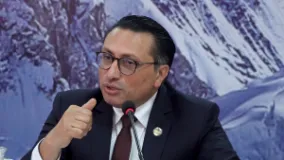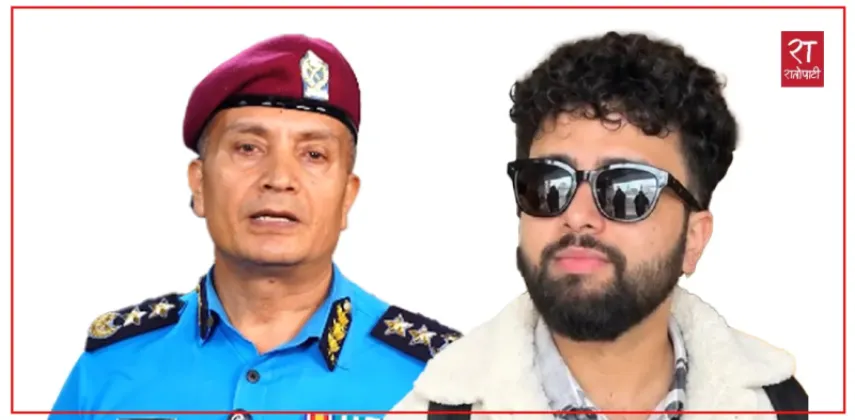
Kathmandu police are facing pointed questions after an audio recording of Inam Sapkota, a man currently held in their custody, was leaked into the public domain in recent days, reportedly capturing his contacts with a Supreme Court justice, the Prime Minister's Secretariat and senior police officials. The leak has pulled three of the country's most powerful institutions into a widening controversy and placed the capital's police leadership under scrutiny over how material linked to a live case escaped its control. A senior superintendent of police (SSP) from Kathmandu has sought to contain the fallout, saying that all details will be made public once the investigation is completed.
What the leaked recording reportedly contains
According to reports, the audio features Sapkota and contains details of his contacts with a justice of the Supreme Court, the Prime Minister's Secretariat and senior police officials. The recording surfaced while the underlying case remains under investigation, and its contents have not been officially verified. That has not stopped it from becoming the subject of intense discussion, with attention shifting quickly from Sapkota himself to the offices and individuals he reportedly contacted.
The significance of the reported contents lies less in the recording than in the names and institutions it touches:
- A Supreme Court justice: any suggestion of contact between a man in police custody and the country's top judiciary is legally and politically charged, touching directly on public confidence in judicial independence.
- The Prime Minister's Secretariat: the chief office of the executive being named in a custody-related recording invites questions about the channels through which a detained person could reportedly reach the highest levels of government.
- Senior police officials: that members of the very force holding Sapkota are reportedly part of the recording places the investigating institution itself under a cloud.
Together, these elements have turned what might otherwise have remained a routine custody matter into a story about access, influence and accountability at the top of the state.
Police promise full details after the investigation
Addressing the controversy publicly, Kathmandu's senior superintendent of police said that all details connected to the case will be made public once the investigation is completed. The statement reads as an attempt to reassure the public that the force intends to be transparent, while also signalling that officers are not prepared to discuss the recording's contents or how it leaked before their own inquiry is finished.
The balancing act is a delicate one. By promising eventual disclosure, the police have implicitly acknowledged the seriousness of what the recording reportedly contains. At the same time, the decision to say little in the interim has left the leaked audio itself to drive the narrative. Coverage of the affair, including a RatoPati report, has even raised the question of whether an "innocent police officer" has been caught up in the case, a framing that reflects uncertainty inside and outside the force over where responsibility actually lies.
The question at the centre of the storm
Behind the institutional anxiety sits one basic question: how did a recording of a man in police custody leave the force's control in the first place? The answer matters on two fronts. If the recording is genuine, its leak points to a serious breach of custody and evidence-handling procedures within an institution that is itself implicated by the recording's reported contents. And whoever released it, and for whatever reason, has shaped public perception of a live case before investigators have been able to present their findings. Neither the source of the leak nor the motive behind it has been established so far.
Supreme Court and Prime Minister's Secretariat drawn into controversy
The fallout has spread well beyond the police. The case has now drawn the Supreme Court, the Prime Minister's Secretariat and senior police officials into a shared controversy, an unusual convergence that ensures the story will not fade quickly. For the judiciary, the concern is reputational: a reported association between a justice and a custody case, however unproven, is the kind of allegation that lingers. For the government, the reported link to the Prime Minister's Secretariat raises questions it did not anticipate. For the police, the leak compounds the institutional damage of a case in which their own senior officers are reportedly named.
The reports available so far do not include a formal public response from the Supreme Court or the Prime Minister's Secretariat. That silence has done little to slow speculation, and each day without an official account of how the recording leaked has allowed the controversy to grow.
What to expect next
Everything now hinges on the investigation that Kathmandu police say must run its course. When it concludes, the public will expect answers on several fronts:
- the authenticity of the leaked audio and the circumstances of the contacts it reportedly documents;
- how the recording left police custody, and whether internal procedures were violated in the process;
- whether the conduct of any individual named, whether judicial, political or police, warrants further action;
- and who will be held accountable for the leak itself.
Until those answers arrive, the leaked audio will continue to pose the very questions Kathmandu police have promised to resolve: what Inam Sapkota's contacts actually involved, and how a recording connected to a man in custody ended up in public hands.