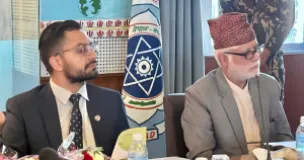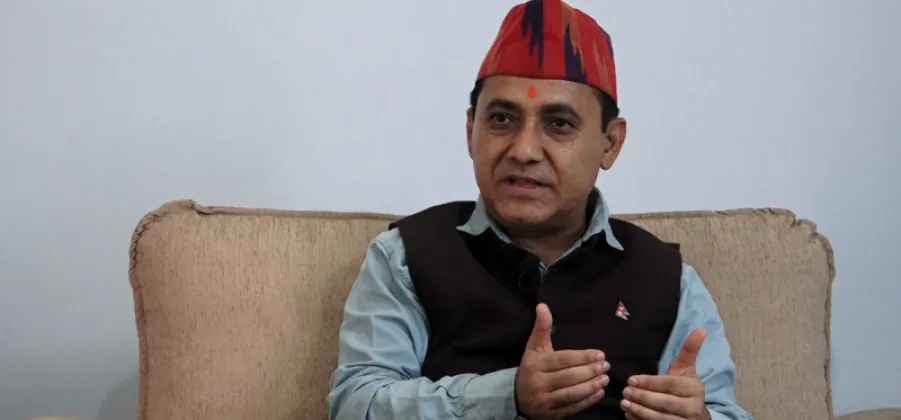
Nepali Congress senior vice-president Vishwaprakash Sharma questioned the security of press freedom and journalists in Nepal at a party-organised press conference in Kathmandu, saying government conduct and interference in the media raise concerns about whether reporters can work without fear. He also raised questions about political decorum and controversial incidents, and called interference in press freedom unacceptable.
Sharma raises concern over journalists’ safety
Sharma’s remarks focused on a basic question: whether journalists in Nepal are safe and able to carry out their work freely. By asking whether reporters can report without fear, he drew attention to the conditions in which journalists operate and to the importance of protecting their ability to cover public affairs.
The senior vice-president’s comments came during a press conference organised by the Nepali Congress in Kathmandu. He used the event to criticise the government’s recent conduct and to question whether its actions were consistent with respect for press freedom. The concerns he raised linked the treatment of the media with the wider responsibility of political leaders and institutions to uphold democratic norms.
Interference in the press called unacceptable
Sharma said interference in press freedom is unacceptable. His criticism placed the issue beyond a general discussion of media rights, focusing instead on whether journalists can report independently and without intimidation. His question about reporters’ safety highlighted the practical implications of interference: the ability of journalists to gather and communicate information may be affected when they do not feel secure in their work.
He also raised questions about political decorum and various controversial incidents. The remarks, as reported, did not identify specific incidents in the summary of his statements, but Sharma connected these concerns to the broader question of how public officials and political actors conduct themselves. His comments therefore addressed both the treatment of journalists and the standards expected in political life.
A wider question about reporting without fear
Sharma’s challenge was framed as a question to journalists: are they safe? That question brought the focus back to the people responsible for reporting events and scrutinising those in power. His remarks asked whether journalists can perform that role without fear, while emphasising that press freedom cannot be taken for granted if interference is tolerated.
The press conference provided a platform for the Nepali Congress leader to express concern about the government’s recent conduct. His comments did not, in the information available, set out a detailed account of particular restrictions or incidents. Instead, he raised broader concerns about press freedom, journalist safety, political decorum and the circumstances under which reporting takes place in Nepal.
Sharma’s remarks place the question of journalists’ safety alongside the wider public interest in independent reporting. His central message was that interference in press freedom is unacceptable and that the ability of journalists to report without fear should be taken seriously.