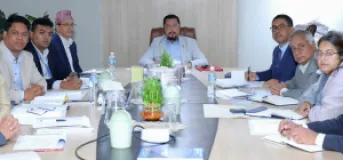
A four-member team has been formed to hold talks with senior orthopedic surgeon Dr Govinda KC, according to reports published by Nepali news outlets on November 4, 2026. Nepal Views and Baahrakhari both carried the news, stating that the team was constituted for the specific purpose of negotiating with Dr KC, the campaigner whose hunger strikes have repeatedly brought successive governments to the negotiating table over the reform of Nepal's medical education sector. Neither report, however, identified the members of the team or clarified which authority formed it, and further details of the planned dialogue were not provided, leaving central questions about the announcement unanswered on the day it was reported.
What the reports say
According to Nepal Views, a four-member team has been formed to hold talks with Dr Govinda KC. Baahrakhari published a matching report the same day, likewise stating that the team had been constituted for the purpose of negotiations with the senior doctor.
Beyond that core information, both accounts stopped short of elaboration. The available reports do not disclose:
- the names or institutional affiliations of the four members of the team;
- the ministry, agency or official responsible for forming it;
- the agenda identified for the proposed negotiations; or
- the expected timing, venue and format of the talks.
The reports also make no mention of any statement from the government, from Dr KC or from his supporters confirming the formation of the team, and neither outlet has so far followed up with additional reporting on its mandate or purpose.
Key questions that remain open
The composition of a talks team is usually the first detail the public seeks in such announcements, because the membership of a negotiating committee often signals the level of engagement and the seriousness of intent behind it. In past rounds of dialogue involving Dr Govinda KC, negotiating teams have typically been fielded by the government of the day, drawing on the health administration and political representatives, and the fate of earlier pacts has frequently turned on the mandate given to those negotiators.
The reports of November 4 do not say who formed the newly announced team, whom it answers to, or what instructions it carries. They also do not indicate whether the move is linked to a fresh hunger strike, to an ongoing protest, or to the implementation of agreements reached in earlier rounds of talks.
That gap is significant. Dr KC's fasts have historically followed a familiar pattern: demands are made public, tensions build, and the government responds by sending a team to negotiate before a protest escalates. Without knowing who the four members are or what they have been empowered to discuss, readers are left with an announcement of dialogue but little indication of its likely direction or outcome.
Background: Dr Govinda KC and the medical education movement
Dr Govinda KC is a senior orthopedic surgeon long associated with Tribhuvan University Teaching Hospital in Kathmandu, and he has become one of the most prominent figures of public pressure in Nepal through a series of hunger strikes that began in the mid-2010s. His fasts, often staged over weeks at a stretch, have centered on the reform of medical education: stricter regulation of private medical colleges, merit-based admission and licensing, accountability within the sector's regulatory bodies, and the fair, geographically balanced expansion of medical colleges across the country.
Those campaigns have repeatedly forced governments to negotiate. The National Medical Education Act, adopted in 2018 after prolonged dialogue with the doctor, stands as the most prominent legislative outcome associated with his movement, and the commissions and committees created under it have featured in his subsequent demands. Agreements signed at the end of earlier fasts have covered matters ranging from the enforcement of expert recommendations to the operation and oversight of medical colleges nationwide.
Because of that record, news that a team has been formed to hold talks with Dr KC is likely to be read against the long history of negotiation, agreement and, at times, unfulfilled commitments that has characterized the government's dealings with him over nearly a decade of protest and dialogue.
What to watch next
As of the reports published on November 4, 2026, neither Nepal Views nor Baahrakhari has provided details of the talks, the mandate of the team, or any response from Dr KC and those around him. The two outlets are expected to update their coverage as more information becomes available.
Until then, the constitution of the four-member team stands as the only concrete development in the story. For readers and for stakeholders in Nepal's health sector, the questions to watch are straightforward: who sits on the team, who formed it, what has been placed on the agenda, and whether the dialogue leads to a formal agreement with the doctor whose fasting campaigns have repeatedly shaped national policy on medical education.