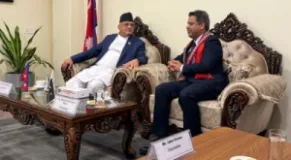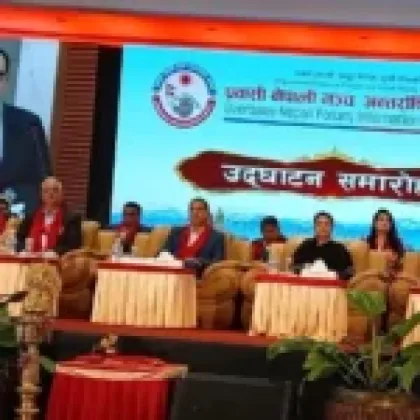
Former President and CPN (UML) senior leader Vidyadevi Bhandari has said the Nepali state must give special priority to the timely rescue and safe return of Nepali citizens who face problems while living or working abroad. Addressing the opening of the second convention of the International Committee of the Pravasi Nepali Manch in Kathmandu on Wednesday, Bhandari said that protecting the security and interests of Nepalis overseas is the responsibility of the state, and she stressed that the government must be serious about the safety of its citizens wherever they live.
The remarks, delivered in the capital at a gathering built around the concerns of the Nepali diaspora, place the welfare of citizens abroad at the centre of the convention's opening day, according to a report published by News of Nepal. They also add a prominent political voice to a subject that touches a large share of Nepali families across the country.
State responsibility for citizens beyond the borders
At the heart of Bhandari's address was a simple proposition: the state's duty to its citizens does not stop at the country's borders. In her view, Nepalis who live, work or travel in other countries do not cease to be the state's concern, and their protection is not a matter of goodwill but of obligation. She told the gathering that safeguarding both the security and the interests of Nepalis abroad must be understood as the state's own responsibility.
That framing matters because it shifts the question from whether the state should act to how quickly and how effectively it does so. By describing rescue and return as matters of state responsibility, Bhandari argued that when citizens abroad run into trouble, the response should not depend on chance, delay or individual pleading. It should follow, she said, as a matter of course from the state's duty to its own people.
Timely rescue and safe return at the core of the appeal
Bhandari's call contained a number of distinct strands, each of which she linked to the same underlying duty of the state:
- Special priority: the rescue and safe return of citizens facing problems abroad should be treated as a priority concern, not as one issue among many.
- Timely rescue: when Nepalis find themselves in difficulty overseas, the effort to bring them out of danger should begin without delay.
- Safe return: the goal is not simply movement out of a crisis but a journey home that is safe and secure.
- Seriousness and attention: the state must remain serious about the safety of Nepalis living overseas on a continuing basis, not only when problems erupt.
Her emphasis on timeliness is a notable feature of the address. In situations where citizens are stranded, at risk or otherwise in distress, delays in response can compound the hardship for those affected and the anguish of their families back home. By pressing for timely rescue and safe return together, Bhandari pointed to both speed and care as the measures by which the state's commitment should be judged.
The platform: a diaspora organisation's second convention
The setting gave the message a natural audience. Bhandari was speaking at the opening of the second convention of the International Committee of the Pravasi Nepali Manch, an organisation whose very name points to its focus on Nepalis living outside the country. The holding of the committee's second convention in Kathmandu brought together participants connected to the Nepali diaspora, and the opening session was addressed by the former head of state.
For an organisation built around the concerns of Nepalis abroad, the issues Bhandari raised are central to its purpose. Her appearance at the convention underscored the link between the country's political leadership and communities of Nepalis living around the world, and it signalled that the welfare of citizens overseas belongs firmly within national political debate rather than at its margins.
Why the message resonates
Large numbers of Nepali households have a member living or working abroad, which means the question of how the state responds when those citizens face difficulties is felt personally in communities across the country. When a Nepali abroad is in danger or distress, the expectation of families at home is that the state will act promptly and bring their loved ones back safely.
Bhandari's remarks speak directly to that expectation. As a former President and a senior leader of the CPN (UML), she carries a stature that few voices on this issue can match, and her insistence that the state must be serious about the safety of Nepalis overseas is a reminder that responsibility for citizens abroad endures regardless of who holds office.
With the second convention of the International Committee of the Pravasi Nepali Manch now under way in Kathmandu, the message from its opening day stands as a clear benchmark: the rescue and safe return of Nepalis in trouble abroad should be treated as a priority responsibility of the state, pursued with seriousness and without delay.