
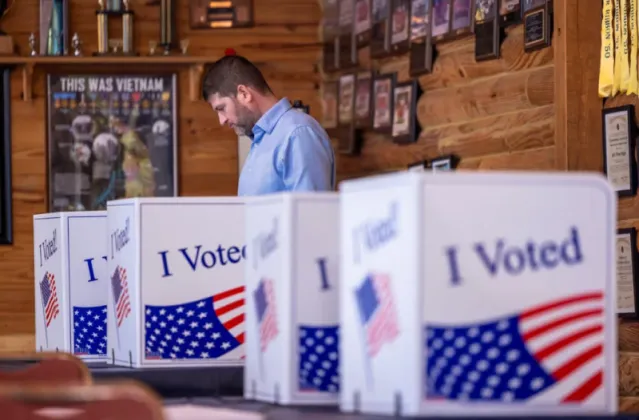
Voting is underway across the United States today in the 2026 midterm elections, with the outcome set to determine control of the Senate. More than 56 million voters have already cast early ballots, according to reports, while closely contested races stretch from Michigan to Alaska. The results are not yet known, leaving the balance of power in the Senate to be decided by votes cast across the country.
Senate control at stake
The central question in this election is which side will control the Senate after the votes are counted. That makes races in states across the country significant, not only for voters in those states but also for the make-up of the chamber. The contests from Michigan to Alaska have been described as close, underscoring how multiple state-level results may shape the overall outcome.
Midterm elections are held between presidential elections, and Senate contests are among the races that can determine the chamber's composition. In this election, voters are choosing candidates in contests that will decide whether control remains with its current holders or changes hands. The available reports do not give a final result or identify a confirmed winner in any of the closely watched races.
The closeness of the contests means the national picture cannot be settled by looking at a single state alone. Results from different parts of the country will contribute to the overall Senate balance. With races described as competitive from Michigan to Alaska, attention is focused on how votes in multiple states will combine to determine control.
Early voting and election-day participation
More than 56 million people had already cast early ballots, according to reports cited by RatoPati and Nepal Views. That figure represents ballots cast before the main voting day; voters are continuing to participate as polling takes place across the country today.
The early-vote total provides a measure of participation ahead of election day, but it does not by itself indicate which candidates are leading or who will control the Senate. The reports do not provide a breakdown of early ballots by state, candidate or party. Nor do they establish how many additional votes will be cast during today's polling. The outcome will depend on the votes counted across the races that are part of the contest.
Closely watched contests
The broad geographic span of the close races - from Michigan to Alaska - highlights the national reach of the fight for Senate control. Each contest contributes to the chamber's final balance, while the overall result depends on the combined outcome of the relevant races. The reports describe the competition as tough but do not provide state-by-state polling figures, candidate positions or projections, so no individual contest can be described as decided.
For voters, the election offers a direct say in who represents their states in the Senate. For the country, the results will determine the chamber's political balance. Until results emerge, the key facts are that voting is in progress, early ballots have already exceeded 56 million and several contests are being closely watched. The final answer on Senate control will come only after votes from the competitive races have been counted and their outcomes established.


