
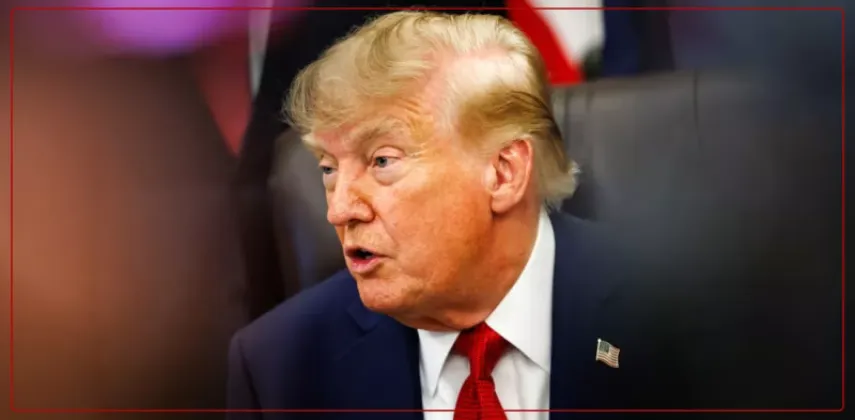
A United States federal court has dismissed President Donald Trump's defamation lawsuit against The Wall Street Journal and media mogul Rupert Murdoch, rejecting a claim that sought 10 billion dollars in damages. Judge Darrin Gales of the US District Court threw out the case, describing it as built on weak and baseless arguments and citing the press freedom protections guaranteed by the First Amendment of the US Constitution. The ruling, reported on 1 November, marks a sharp legal setback for the US president and a clear win for one of the country's most influential newspapers and the media mogul behind it.
The lawsuit stood out even among the many legal battles involving Trump and the American media, largely because of the extraordinary size of the damages it pursued. Its dismissal on constitutional grounds, rather than on a procedural technicality, gives the decision added weight and will be read as an affirmation of the protections US law extends to news organisations covering powerful public figures.
At a glance: what the court decided
The key elements of the ruling, as reported by Ratopati and Nepal Press, can be summed up as follows:
- Plaintiff: US President Donald Trump
- Defendants: The Wall Street Journal and media mogul Rupert Murdoch
- Court: The US District Court, with Judge Darrin Gales presiding
- Damages sought: 10 billion dollars, although some reports had put the claimed figure at 20 billion dollars
- Outcome: The defamation lawsuit was dismissed
- Reasoning: The judge described the case as built on weak and baseless arguments and cited First Amendment press freedom
A case built on weak foundations
In dismissing the suit, Judge Gales delivered a blunt assessment of its legal merits. The president's complaint, the court found, rested on arguments that were weak and baseless, a conclusion that left little room for a damages claim of this magnitude to proceed.
Central to the dismissal was the First Amendment. Judge Gales cited the constitutional guarantee of press freedom, the principle that shields journalists and news organisations in the United States from legal action that would punish or deter reporting on matters of public interest. The citation is significant because defamation sits at one of the sharpest points of tension in American law, between protecting personal reputation on one side and protecting free expression on the other.
US courts have long treated defamation claims brought by powerful figures against news organisations with particular caution, precisely because such suits carry the potential to chill critical coverage. By anchoring the dismissal in the First Amendment, the judge signalled that this lawsuit ran into exactly that constitutional barrier. For the defendants, the reasoning matters as much as the outcome: it frames the case not simply as one newspaper's victory, but as a reaffirmation of the constitutional space in which the American press operates.
Ten billion dollars, and a disputed figure
The scale of the claim drew as much attention as its fate. The suit sought 10 billion dollars in damages from The Wall Street Journal and Murdoch, an extraordinary sum for a defamation case against a major news organisation.
Adding to the sense of scale, some reports had put the claimed damages even higher, at 20 billion dollars. The discrepancy in the reported figures underlined just how large the demand was and how much attention the case attracted as it moved through the courts.
The court's decision means that no damages will be paid. The dismissal brings to an end, for now, the effort to extract what would have been an enormous financial judgment against the newspaper and the media mogul, and it removes a legal threat that carried a potential liability running into the billions of dollars.
A setback for the president
For Trump, the ruling is a clear setback, as Nepal Press characterised the outcome in its coverage. The dismissal forecloses, at least for now, the possibility of a multi-billion-dollar judgment against the newspaper and Murdoch, and it does so in terms that are unfavourable to the president: the court found the case to be built on weak and baseless arguments.
The reports did not indicate whether the president's legal team intends to appeal or to pursue the claim in another form, leaving open the possibility that the broader dispute may not yet be fully resolved.
Beyond the immediate outcome, the decision carries broader significance for the relationship between the US presidency and the press. A defamation suit brought by a sitting president against a major national newspaper and one of the world's best-known media proprietors was always going to be closely watched, and the constitutional framing of the dismissal ensures it will feature in ongoing debates over press freedom in the United States.
For The Wall Street Journal and Murdoch, the ruling removes a legal threat measured in billions of dollars. For the wider American press, the judge's reliance on the First Amendment will be read as a reminder that even the most powerful figures in the country remain bound by the free-press guarantees of the Constitution.


