
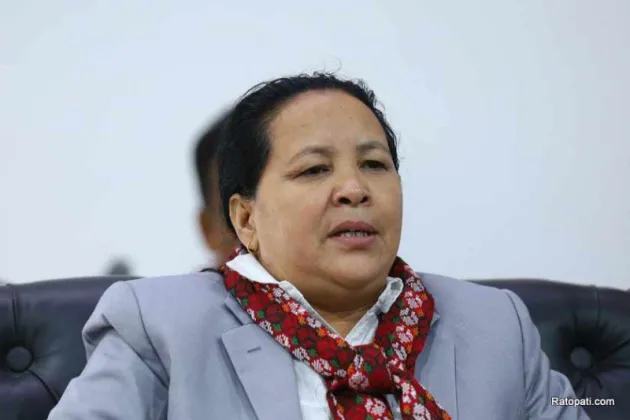
The Nepal Communist Party (NCP) led by Uma Bhujel is merging into the Nepali Communist Party, with the two sides set to formally announce their unity on Saturday, Kartik 17. The unification programme is scheduled to be held at the Nepali Communist Party office in Koteshwor, Kathmandu. The development brings to a close the separate political existence of Bhujel's party, which had earlier split away from the group led by Biplav, and places its organization under the banner of the Nepali Communist Party led by Prachanda.
Unity announcement at Koteshwor on Kartik 17
The merger will be made official at a unity programme that both parties have scheduled for Saturday, Kartik 17. The venue for the announcement is the Nepali Communist Party's office in Koteshwor, Kathmandu, where the two parties will formally declare that they are now one.
The choice of venue underlines the direction of the union. Bhujel's Nepal Communist Party is the party joining, and the Nepali Communist Party is the party receiving it. Once the announcement is made, the organization Bhujel has led will no longer function as an independent communist outfit. Instead, it will operate within the structure of the Nepali Communist Party, whose office at Koteshwor will have hosted the moment of formal unification.
Unity announcements hold particular weight in Nepal's communist movement, where organizational mergers are treated as milestones that redraw the map of left politics. The Kartik 17 programme is intended as the public declaration of a decision the two sides have settled on, and it will stand as the formal starting point of their united existence.
A breakaway from the Biplav-led group
The party now merging into the Nepali Communist Party carries a history of division. Bhujel's party had earlier split away from the group led by Biplav, stepping out of that organization to run as a separate communist party under Bhujel's leadership.
That parting of ways set Bhujel's faction on a course distinct from the Biplav-led group it had left behind. The upcoming merger marks a second organizational turn for the party. Having once departed a larger communist organization to stand on its own, it is now dissolving its separate identity altogether by uniting with the Nepali Communist Party.
The trajectory fits a familiar pattern in Nepal's left politics, where splits and unity drives have repeatedly reshaped party structures. Factions break away from established parties, operate under new banners, and eventually reunite with other communist forces. Bhujel's Nepal Communist Party, born of a split from the Biplav-led group and now headed for unity with the Prachanda-led party, is the latest example of that ongoing dynamic.
What the merger brings together
The unity programme at Koteshwor will bring together two parties with distinct organizational histories. The key facts of the merger are as follows:
- The joining party: The Nepal Communist Party led by Uma Bhujel, which had earlier broken away from the group led by Biplav.
- The receiving party: The Nepali Communist Party led by Prachanda.
- The occasion: A formal unity announcement scheduled for Saturday, Kartik 17.
- The venue: The Nepali Communist Party office in Koteshwor, Kathmandu.
The planned merger has been reported by RatoPati and Nagarik News, both of which point to the same sequence: a party formed through a split from the Biplav-led group now uniting with the Prachanda-led party.
With the merger, the Nepali Communist Party takes under its banner a faction whose leaders and cadres have, until now, functioned separately following their exit from the Biplav-led group. For Bhujel's party, the move ends a period of independent operation and secures a place within a larger communist organization.
The significance of Saturday's announcement
The formal announcement on Saturday, Kartik 17, will convert the two parties' coming together into an official act. From that point on, Bhujel's Nepal Communist Party will cease to operate separately, and its organization will be counted as part of the Nepali Communist Party.
The merger also closes a chapter that opened when Bhujel's faction split from the Biplav-led group. That split left the faction outside the party it had once belonged to; the unity announcement at Koteshwor now places it inside a new political home. For the Nepali Communist Party, the programme will serve as a public demonstration of its expanding organizational base as it absorbs a party that arrives via its own path of division and realignment.
Both parties have fixed their plans to the Kartik 17 date, and the Koteshwor office is set to host the announcement. When the programme concludes, the communist political map of Nepal will have changed by one party: the Nepal Communist Party led by Uma Bhujel will have become part of the Nepali Communist Party led by Prachanda.


