
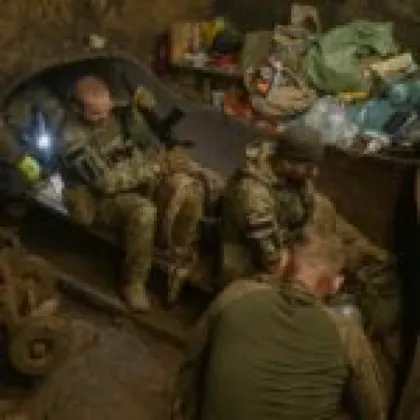
Ukrainian soldiers defending the embattled Kupiansk area of northeastern Ukraine are taking refuge from relentless Russian drone attacks in an unlikely place: deep underground, inside the country's old gas pipeline network. According to a report published by News of Nepal, troops in the sector are using a pipeline stretching roughly 129 kilometres as both a shelter and a hidden supply corridor, moving food, ammunition and other essential items to front-line positions that would otherwise be exposed to drones above. The adaptation highlights how the war, now in its fifth year, has pushed Ukrainian forces to operate below ground as much as above it.
An underground lifeline beneath the front line
With Russian drones able to detect and strike movement on open ground, conventional resupply by road has become one of the most dangerous tasks on the battlefield. In the Kupiansk area, Ukrainian troops have responded to that challenge by disappearing into the pipeline network beneath them.
According to the report, the roughly 129-kilometre pipeline serves multiple functions for soldiers in the sector:
- Underground shelter: Troops retreat into the pipeline to hide from Russian drone attacks, which have made surface movement and positions increasingly hazardous.
- Hidden supply route: The corridor is used to deliver food, ammunition and other essential supplies to Ukrainian units, keeping them stocked without exposing convoys to aerial surveillance.
- Extended stays: Soldiers have been forced to remain inside the pipelines for weeks at a time, with some staying underground for as long as two months.
The dual use of the infrastructure, as both a shield and a supply line, reflects the pressure Ukrainian units face in the area. Where forces might once have moved between positions in vehicles or on foot, the constant threat of drone strikes now means that the safest route between two points often runs directly beneath the battlefield.
Cramped, demanding conditions underground
The physical reality of life inside the pipeline is stark. The pipe is approximately four feet wide, leaving those inside with very little room to move, rest or carry out even basic tasks. Yet soldiers have been required to stay within that narrow space for extended periods, ranging from several weeks to as long as two months.
Enduring such confinement is one of the clearest indicators of how difficult conditions on the surface have become. The pipeline offers protection, but it demands that troops trade open space, daylight and mobility for safety, remaining underground until it is safe or necessary to emerge.
Drone warfare reshapes the battlefield
The driving force behind this subterranean adaptation is the intensity of Russian drone activity. According to the report, continuous Russian drone strikes have made open movement on the ground extremely difficult for Ukrainian forces. Any soldier, vehicle or supply point that is visible from above risks being detected and attacked.
In a conflict now defined by drones, the skies over front-line areas such as Kupiansk are watched almost constantly, and traditional resupply methods put soldiers at serious risk. Underground routes like the gas pipeline allow Ukrainian troops to sidestep that threat entirely, moving supplies out of the line of sight of Russian drones.
The tactic also illustrates the broader shift in how the war is being fought. As drone strikes have made open movement hazardous, troops have been pushed toward cover, from trenches and dugouts to, in the case of soldiers in Kupiansk, the large-scale repurposing of existing infrastructure as underground shelter and logistics space.
A conflict now in its fifth year
The situation in Kupiansk is unfolding as the Russia-Ukraine war enters its fifth year. Russia launched its full-scale invasion of Ukraine in February 2022, and what many expected early on to be a brief conflict has instead settled into a prolonged and grinding struggle.
For Ukrainian soldiers, this stage of the war looks markedly different from earlier phases. Drone strikes now shape nearly every decision about movement, resupply and positioning, and the report from Kupiansk shows the lengths to which troops are going simply to stay supplied and alive. Spending up to two months inside a four-foot-wide pipe is an extraordinary measure, but it has become a practical necessity in a sector where the surface remains under constant threat.
For now, the pipeline remains what the report describes: a long, narrow artery running beneath the Kupiansk area, carrying food and ammunition to soldiers who cannot safely walk the ground above it. As long as Russian drone strikes continue to dominate the skies, underground passages of this kind are likely to remain a vital, if uncomfortable, lifeline for Ukrainian forces on the front line.


